Tag: Japan Things To Do

Drugstores in Japan (Part 1)

Drugstores in Japan (Part 1)

You should never skip a visit to the drugstores in Japan. It’s where you can find a vast collection of Japanese beauty products at a “bargain”– your cosmetics, facial care, body care, etc. Not only that, you can also find effective over-the-counter (“OTC”) medicine, household products, 

Shimokitazawa | Tokyo, Japan

Shimokitazawa | Tokyo, Japan

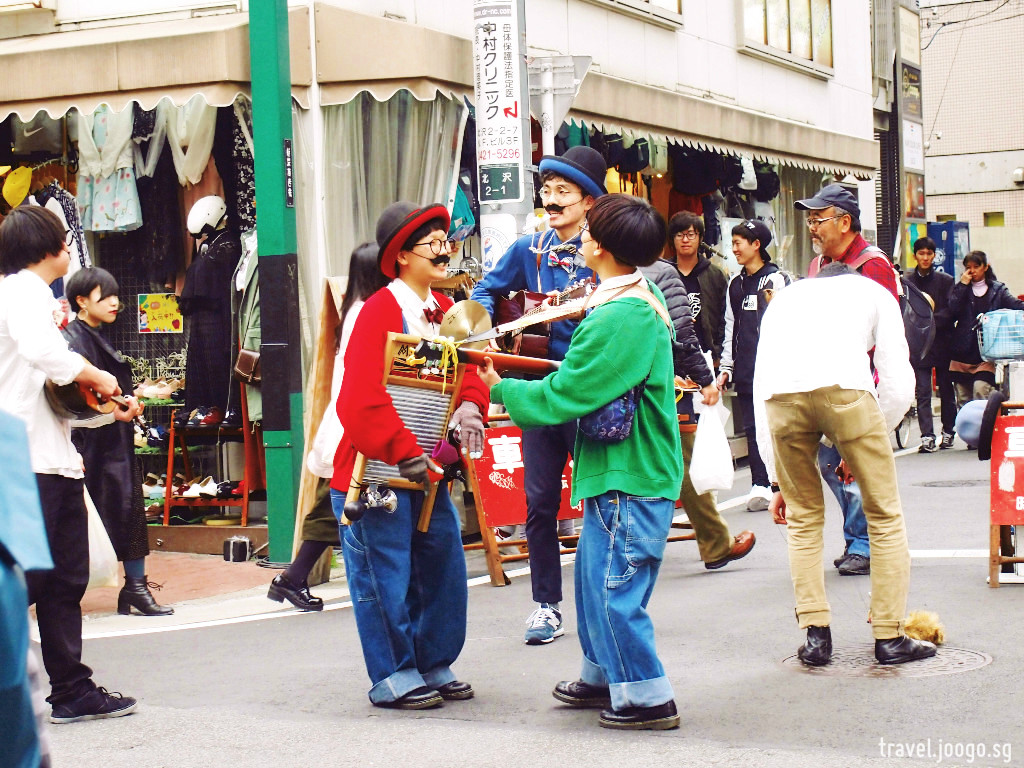
On our way back to Shinjuku from Doraemon Museum, we passed by Shimokitazawa, commonly known as Shimokita. It’s only a few stops away from Shinjuku station. Located at the western part of Tokyo, Shimokita is a small hipster town that’s popular among the young crowd. It’s comparably smaller 

Shinjuku Gyoen National Garden in Spring Sakura

Shinjuku Gyoen National Garden in Spring Sakura

After all the shopping and eating in Shinjuku (What to Do at Shinjuku Tokyo, Japan?“,What to Eat in Shinjuku Tokyo? (Part 1)” and (Part 2)“), I needed to find some respite in the nature. So glad there’s a huge garden, Shinjuku Gyoen National Garden, walkable from our Shinjuku airbnb and Shinjuku train station. Depending on the flowers you like and the time of the year you are going, it’s not necessarily a must go on your first trip to Tokyo (read on to find out which season to visit).

Shinjuku Gyoen National Garden - travel.joogo.sg


History


Shinjuku Gyoen was first built during the Edo period on the private residence of Naito Kiyonari, a trusted vassal of Ieyasu Tokugawa, Japan’s first shogun (military dictator/de facto ruler). During Meiji era, the government converted the site for agricultural experiments and research. It later became an imperial estate, named “Shinjuku Imperial Botanical Garden” and then opened to the public after World War II as “Shinjuku Gyoen National Garden”.

Shinjuku Gyoen Spring Sakura 1 - travel.joogo.sg


General Visitor Information


If you are coming from Shinjuku train station, you will walk about 10-15 mins walk before reaching the Shinjuku Gate. Then, proceed to purchase your ticket at the information center for ¥200 (S$2.50) / adult.

It will probably take you 1 to 2 hours to walk around Shinjuku Gyoen  and appreciate its beauty and of course, take photos. :) Best to go early to avoid the crowd!

accessmap


Different Parts of the Garden 


With an area of 58.3 hectare, the garden is subdivided into a few major gardens: French Formal Garden, English Landscape Garden, Japanese Traditional Garden, and Mother & Child’s forest (Hahato-Kono-Mori). Other than these themed gardens, there are other areas in Shinjuku Gyeon to visit as well.

Shinjuku Gyoen Map - travel.joogo.sg

These other points of interest in the Shinjuku Gyeon include:

  • Old Imperial Rest House: Built for the imperial family, it used to be a clubhouse during the latter half of Taisho era.
  • The Greenhouse: Visit to enjoy the tropical and subtropical plants, orchids and endangered plants.
  • Taiwan Pavilion: It’s built in 1928 using the architectural style of southern Fujian province of China to commemorate the wedding of Emperor Showa. Enter the Pavilion and look out the windows on 2nd floor.
  • Restaurant Yurinoki: The building is built using solar panels and environmental friendly materials. You can find an exhibition hall and restaurant here.
  • Tea House (in the Japanese traditional garden): Enjoy powdered green tea served with Japanese sweet in this traditional tea house. Beside it, you can find Yulan Magnolia and snowy blossoms during spring.

Shinjuku Gyoen National Garden in Spring - travel.joogo.sg


Different Season, Different Flowers


The garden is worth a visit, but like I said, it also depends on the type of flowers you like.

Winter

This is when fewer blooms are seen, except sightings of fragrant paperwhite flowers and red berries on certain types of trees. Or you can also enjoy orchid flowers reaching their full bloom in the greenhouse. However, if you are a bird lover, then winter is the best for bird watching in Shinjuku Gyeon–spot thrush (birds) from Siberia and also mandarins and mallard ducks swimming in the ponds of Japanese Traditional Garden.

Autumn

Shinjuku Gyoen 2 - travel.joogo.sg

Immersed in autumn colours as the leaves on the tulip trees, sycamores, ginko trees and maples begin to change colours. Enjoy the autumn foliage at the Avenue of Sycamore trees that’s near to French Formal Garden. It wasn’t autumn when we were there, hence we only get to see bare trees. Even then, it was beautiful.

Also during this period (1-15 Nov), you can visit the annual Chrysanthemum exhibition, related to the Imperial household, held at the Japanese Traditional Garden.

Summer

During summer, the roses in the French Formal Garden and the tulip trees in the English Landscape Garden bloom. Cicaadas will be buzzing and dragonflies flying above the luscious lawn. But when we were there during early March, these gardens were almost barren.

p.s. these European gardens were designed by a French engineer. 

Shinjuku Gyoen 1 - travel.joogo.sg


Spring

I read that the cherry blossom season only starts from late March to early April. So I was disappointed that we were going to be in Tokyo but have to miss it by 2 weeks! >.< We were there in early March. However, I didn’t give up hope, I started scouring Instagram hashtags to see if any Sakura is spotted yet. Turned out, there were some early blooms in other parts of Tokyo but we wouldn’t be able to make it there. But it represents a slim hope for us in Shinjuku Gyeon.

We stepped into Shinjuku Gyeon, and quickly looked around for the early blooms of Sakura. I was so desperate to find it that we even mistook a tree for being a cherry blossom tree. We walked for about 15-20 minutes and still didn’t spot any. So I was getting a little disappointed.

Shinjuku Gyoen Spring Sakura 2 - travel.joogo.sg

Hubby went to toilet near the Tea House (Shouten-Tei) and I continued to walk around, through a narrow path and out to an opening. Lo and behold, there stood a huge cherry blossom tree. I gasped out loud. It literally took my breath away. Too bad hubby wasn’t by my side to see Sakura for our first time!

It was simply stunning. And since there weren’t many Sakura trees around, many tourists were crowding around this tree to take picture perfect photos! We took countless photos before leaving the grounds reluctantly, only to find another two to three Sakura trees along Middle Pond (Nakano-Ike). Nevertheless, we still had to take a couple more photos of the trees, now with different background. Hur hur.

Shinjuku Gyoen Sakura - travel.joogo.sg

The cherry blossom trees were simply stunning, especially as we see those pretty pink petals falling softly to the ground like gentle rain, covering the ground in pink. It was therapeutic for me.

Be sure to visit if you are there during the season! According to Shinjuku Gyeon’s brochure, there are about 65 varieties of cherry blossom and 1,100 trees blossoming successively in the garden. I cannot imagine the spectacular sight.

Oh ya, we also managed to see the Yulan Magnolia tree, which has large flower blooms, as we were about to exit the Shinjuku Gate. However, after seeing the beauty of sakura, it paled in comparison. (p.s. On the other side of the Tea House, not the Sakura tree side, you may also find the Yulan Magnolia bloom.)

Before the beauty fades away in a moment, let us enjoy the present.

Shinjuku Gyoen Spring Sakura 3 - travel.joogo.sg

For food and other things to do in Shinjuku, refer to “What to Do at Shinjuku Tokyo, Japan?“,What to Eat in Shinjuku Tokyo? (Part 1)” and (Part 2)“. 

Do you have other recommendations of where to go in Shinjuku? Tell us below or on our Facebook Page or Instagram. Moreover, bookmark this page > Overview Itinerary: Hokkaido and Tokyo (Winter/Spring 2016).

What to Do at Shinjuku Tokyo, Japan?

What to Do at Shinjuku Tokyo, Japan?

Other than Ginza, Shibuya and Harajuku (Nature or Shopping), Shinjuku is the other famous district of Tokyo. So, what to do at Shinjuku? Tonnes! Firstly, we stayed in Shinjuku We were contemplating where to base ourselves in Tokyo — Shibuya or Shinjuku? Many advice pointed us to stay in Shinjuku because 

From Harajuku’s Cat Street to Shibuya

From Harajuku’s Cat Street to Shibuya

From Harajuku (part 1, part 2), we walked through Cat Street to Shibuya. It was a long and tiring walk! But after we reached the end of Cat Street, it just didn’t make sense for us to walk back the street to take the train. It 

Takeshita Dori and Shopping | Harajuku Tokyo (Part 2)

Takeshita Dori and Shopping | Harajuku Tokyo (Part 2)

Harajuku Tokyo (原宿) lies between Shinjuku and Shibuya on the Yamanote Line. If you’re all excited about the shopping in Harajuku, you’re at the right place! Other than joining the young crowd at Takeshita Dori and the mature one in Omotesando Hills, there are many other options for you: Cat Street, LaForet, Tokyu Plaza, and other interesting shops as Oriental Bazaar, Porter Bag and Line Friends.

If shopping is not your thing or you can’t stand the crowd, you might find respite at Meiji Jingu (one of Tokyo’s major shrines), Yoyogi Park or Ota Memorial Museum of Art (where beautiful ukiyo-e paintings are exhibited). >> Read about these three places in Harajuku Tokyo (Part 1)After all the walking, replenish yourself with delicious food in Harajuku! Find out what you can eat atWhat to Eat in Harajuku and Shibuya Tokyo?‘.

The above is a quick snapshot of what you might find at Harajuku. To know more details and the best way to explore Harajuku, follow our trail from Part 1 and continue on here:


Takeshita Dori


Takeshita Dori 2 - travel.joogo.sg

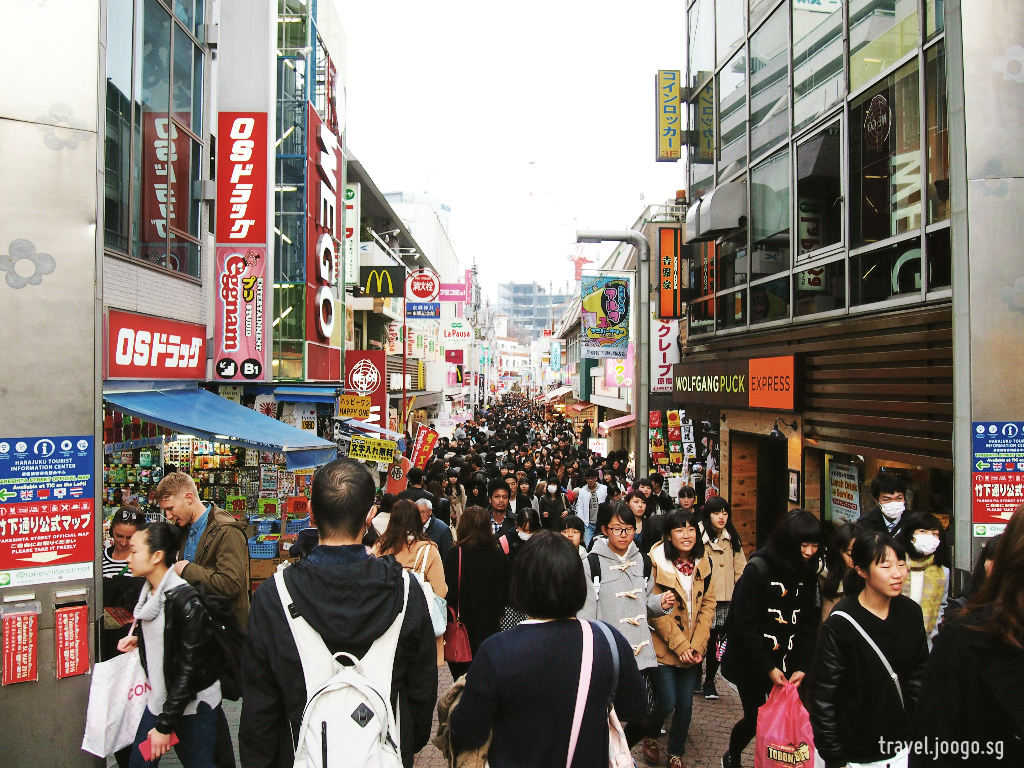
If you think Singapore is crowded, wait till you hit Harajuku on a Sunday! The streets are packed to the brim with people. After you have walked around Meiji Jingu, Yoyogi Park or Ota Memorial Museum of Art, you can start your Harajuku “shopping” journey from Takeshita Dori. This is where you get to witness Japan’s teenage scene and eccentric fashion

Harajuku 3 - travel.joogo.sg

Even though we have heard about the loud fashion at Harajuku, we were still shocked at what greeted us: the man in ritualistic make up and costume, the man from ancient past, and the apple head. Excited to witness such fashion, I find it a pity that there were far fewer around than expected.

Harajuku 3a - travel.joogo.sg

Takeshita Street is about 400m long and lined with fashion boutiques, purikura (Japanese photo booth) shops, cafes and food stalls to target the teenage crowd. The shops tend to open from 11:00am to 8:00pm.

Directions: If you are coming from Meiji Jingu’s South shrine gate (main gate), walk towards the direction of JR Harajuku Station. Then, cross the street in front of the station, turn left and walk on. Takeshita street will be on your right side.

Takeshita Dori 1 - travel.joogo.sg

Daiso Harajuku

Along Takeshita street, you will find Daiso’s biggest shop in central Tokyo spanning across three floors. I assume all Singaporeans are familiar with Daiso, the discount chain store. If you love to shop at Daiso Singapore, be sure to come here and grab goodies for ¥105 (S$1.30) per item, much cheaper than the S$2 in Singapore! It opens from 10:00am to 9:00pm daily.

Calbee+ 

Love Calbee potato chips? Be sure to pop by Calbee+ (Calbee Plus) for potato chips fried on the spot in front of you. You can choose the cut of the chips and the toppings you want on them.

Takeshita Dori - Calbee - travel.joogo.sg

Fresh and crisp out from the deep fryer, our order was drizzled with Royce Chocolate sauce for ¥250 (S$3.20). Other Calbee toppings include Salt & Butter, Double Cheese and Maple Syrup & Cream Cheese.

More about our experience with Calbee+ in “What to Eat in Harajuku and Shibuya Tokyo?”.

Crêpes

Most of Harajuku’s crêperies are located on Takeshita Street. The classic sweet crepes of fruit and airy whipped cream are more popular than savoury wraps of egg, tuna, pork cutlets, hot dogs, etc. Prices start from ¥350 (S$4.40).

Takeshita Dori - Crepe 1 - travel.joogo.sg

Based on online research, we were about to queue at the supposedly famous Marion Crepes when we saw a longer queue forming at Angel’s Heart that’s right opposite. So being Singaporeans, we trust the long queue syndrome as an indication of good food. Moreover, the pinkish shopfront attracted me! (P.s. if you don’t know I wrote a novella years ago called ‘Love, Pinkie’!)

Takeshita Dori - Crepe - travel.joogo.sg

We ordered a crepe of berries and ice cream for ¥440 (S$5.50). Interested in trying too? More about it in “What to Eat in Harajuku and Shibuya Tokyo?”.

p.s. There’s a toilet near to Angel’s Heart and Marion Crepes. Be warned it’s unlike normal Japanese toilets, it’s dirty.

Gigantic Candy Floss

Takeshita Dori - Floss - travel.joogo.sg

Walking along Takeshita street, we noticed gigantic candy flosses among groups of young girls. Looking up, we saw more coming down from the 2nd floor of Totti Candy Factory! More about it in “What to Eat in Harajuku and Shibuya Tokyo?”.

www.totticandy.com/about


Shopping around Harajuku


Head Porter Tokyo

Harajuku 2 - travel.joogo.sg

Directions: For Porter bag fans, continue to walk straight as you exit Takeshita Dori. You’ll arrive at Head Porter Tokyo soon enough.

Line Friends Store

Line Friends Harajuku 4 - travel.joogo.sg

Directions: If you’re not a Porter fan, instead of walking straight, turn right at the end of Takeshita Street at the intersection with Meiji Dori. Keep walking and Line Friends Store will be on your left.

Line Friends Harajuku 2 - travel.joogo.sg

We were so excited to visit the Line Friends Store! We first passed by their pop up store in Taiwan back in 2014. Line Friends was significant to my hubby and me — being the messaging APP during our dating journey.

Line Friends Harajuku 1 - travel.joogo.sg

With cute stickers peppering our conversation, my hubby was slowly projected in Brown, the male bear who is silent and calm. Moreover, hubby looked so much like Brown when he doesn’t smile! Hee. According to Line Wiki, he is a caring and gentle spouse of Cony (true of hubby!). And so I am Cony, Brown’s wife! :)

Line Friends Harajuku 3 - travel.joogo.sg

There are many photo-taking spots in the shop, along with many cute and lovely merchandise I want to fill my house with. But considering the price tag, we didn’t get much. :P

  • fs.line.me/en/harajuku
  • 11:00am – 9:00pm (Weekdays); 10:00am – 9:00pm (Weekends and Holidays)
  • JPR Jingumae 432 / 4-32-13 Jingumae Shibuya-ku Tokyo (Opposite Forever 21)

Line Friends Harajuku - travel.joogo.sg

Shopping Malls: LaForet Harajuku and Tokyu Plaza

Directions: If you’re not a Line fan, then continue to walk straight along Meiji Dori after you turn right at the end of Takeshita Street. You can make a small detour to Ota Memorial Museum of Art on the right. But if you keep walking straight, you will see Tokyu Plaza and LaForet Harajuku on your left and right.

Enter Tokyu Plaza Omotesando Harajuku through a spectacular wall of mirrors. Here you can find American Eagle Outfitters, The Shel’tter Tokyo and Tommy Hilfiger spanning across three floors of the 8-storey Tokyu Plaza of fashion shops and cafes. You can also enjoy Starbucks and a green space at the terrace on 6th floor. Free WiFi available.

  • omohara.tokyu-plaza.com/en
  • 11:00am – 9:00pm (Shops), 8:30am – 11:00pm (Restaurants)
  • 4-30-3 Jingumae, Shibuya-ku, Tokyo, 150-0001
  • Meiji-Jingumae Metro Station (Chiyoda, Fukutoshin lines); Harajuku Station (JR Yamanote Line)

Tokyu Plaza - travel.joogo.sg

LaForet Harajuku is a multi-storey shopping mall comprising of numerous small fashion boutiques. They’re mainly selling to young female patrons. This is also a place with trendsetting influence and a good venue to buy loud and eccentric fashion. Exhibitions and multimedia events are also held at its event space anchored by the Laforet Museum. Free WiFi available at food section.

  • www.laforet.ne.jp/en
  • 11:00am – 9:00pm
  • 1-11-6 Jingumae, Shibuya-ku, Tokyo 150-0001
  • Meiji-Jingumae Metro Station, Exit 5 (Chiyoda, Fukutoshin lines); Harajuku Station, Omotesando Exit (JR Yamanote Line)

Kiddy World

Directions: After shopping at LaForet or Tokyu Plaza, walk towards Meiji-Jingumae Metro Station, cross the road and turn left. Kiddy Land is about 300m away.

Kiddy Land - travel.joogo.sg

For the young at heart, make your way to Kiddy Land! Step into the land and allow kawaii-ness to explode on you with your favourite characters: Sanrio, Rilakkuma, Disney, Doraemon, etc. The store, including its stairs and escalators, is wholly designed and decorated with these characters.

Shop a wide selection of toys, from character items to the limited to the Japan-exclusive editions! There’s something for everyone here–young and old. Their range is constantly updated with newer products and carries seasonal toys such as Halloween-themed items.

p.s. if you are a Doraemon fan, you might want to stop by Doraemon Museum in Tokyo.
p.s. p.s. if you are are looking for Cat Street’s main entrance, it’s at the road intersection right next to Kiddy Land. Cat Street is a vibrant but less crowded place to buy your clothes in trendy shops and drink coffee in a cafe. 

  • www.kiddyland.co.jp/en/index.html
  • 11:00am – 9:00pm (Weekdays); 10:30am – 9:00pm (Weekend & PH);
  • 6-1-9 Jingu-mae, Shibuya-ku, Tokyo 150-0001
  • Meiji-Jingumae Metro Station (Chiyoda, Fukutoshin lines)

Oriental Bazaar

Oriental bazaar - travel.joogo.sg

On the same stretch as Kiddy Land, Oriental Bazaar is where you can find typical Japanese souvenirs, such as magnets, t-shirts, samurai related goods, etc. It’s also a good place to get reasonably priced Kimonos as compared to departmental stores. With its exterior mimicking traditional Japanese architecture, it’s hard to miss the shop.

I only wished it doesn’t close that early! It’s such a good stop to get all your souveniers for family and friends. We had to rushed around the 3 floors to grab all we can within the last 15 minutes of closing time. For those buying much, look out for JCB promotions or tourist booklet’s discount coupon.

  • www.orientalbazaar.co.jp/en
  • 10:00am – 7:00pm (Closed on Thurs);
  • 5-9-13 Jingumae, Shibuya-ku, Tokyo
  • Meiji-Jingumae Metro Station (Chiyoda, Fukutoshin lines)

Omotesando & Omotesando Hills

Omotesando Hills - travel.joogo.sg

If you haven’t realised by now, the road you’re on is lined with trees on both sides. It is also known as Omotesando Road, a one-kilometer long avenue that stretches from the entrance of Meiji Jingu (Shrine) to Omotesando metro station.

Along this avenue are many fashion flagship stores of international brands which include Chanel, Louis Vuitton, Dior, Zara, Apple, etc. There are also numerous cafes and restaurants found along this stretch. This place generally caters to a older and wealthier crowd than Takeshita Dori.

Across the road from Kiddy Land and Oriental Bazaar, you can find Omotesando Hills, a shopping complex that caters to clientele in their 30s to 40s. This complex doesn’t have many good reviews. However it recently underwent a renovation in 2016 and probably has a better offering mix now.

  • www.omotesandohills.com/en/shops_restaurants/shops/
  • Opens at 11:00am
  • Shops Closing: 9:00 pm (Mon – Sat, PH); 10:00 pm (Sun, Post-PH); some store hours may vary.
  • Food Closing: 9:30pm – 10:30pm (Mon – Sat, PH); 8:30pm – 9:30pm (Sun, Post-PH)
  • Omotesando Metro Station Exit A2 (Ginza, Chiyoda, Hanzomon Lines); Meiji-Jingumae Metro Station Exit 5 (Chiyoda, Fukutoshin lines); Harajuku JR Station, Omotesando Exit (JR Yamanote Line)

Hope on to my next post to know more about Cat street and Shibuya: ‘From Harajuku’s Cat Street to Shibuya‘.

Do you have any questions or suggestions for Harajuku? Tell us below or on our Facebook Page or Instagram. Bookmark this page >> Overview Itinerary: Hokkaido and Tokyo (Winter/Spring 2016)

Meiji Jingu, Yoyogi Park and Ota Museum | Harajuku Tokyo (Part 1)

Meiji Jingu, Yoyogi Park and Ota Museum | Harajuku Tokyo (Part 1)

Harajuku Tokyo (原宿) lies between Shinjuku and Shibuya on the Yamanote Line. At Harajuku, you get to witness Japan’s teenage scene and eccentric fashion at Takeshita Dori (Takeshita Street). And you get to shop at stylish Omotesando Hills or the nearby hipster district, Cat Street. There’s more shopping at LaForet 

Walking Around Glitzy Ginza, Japan

Walking Around Glitzy Ginza, Japan

Ginza (銀座) is Tokyo’s famous upmarket shopping, dining and entertainment district on one of Japan’s most expensive real estate. In this district, you will be surrounded with high-end boutiques, department stores, art galleries, restaurants, night clubs and cafes. Ginza used to be the site for silver coin mint from