Tag: Korea

Travelogue: Seoul and Jeju (South Korea), Oct 2018

Travelogue: Seoul and Jeju (South Korea), Oct 2018

I was having my nails painted one week before the Korea trip. “Jeju 好像会有海啸,” the manicurist told me that Jeju might have Tsunami. She had checked the weather forecast and was planning to change her travel plans. That was one of the many things that 

14 Places to visit in Seoul (Autumn)

14 Places to visit in Seoul (Autumn)

Thankfully, our flight from Jeju to Gimpo airport was uneventful, unlike our flight from Singapore to Jeju. It was almost evening by the time we settled in our accommodation at Ever8 Residence (serviced apartments). So we had Nene Chicken for dinner and slept early for 

What to Eat in Seoul, South Korea? | 15 Food Choices

What to Eat in Seoul, South Korea? | 15 Food Choices

We spent a whole week in Seoul, and that meant lots of time to try out different restaurants! Click and jump to your preferred restaurant:

  1. MiGaBon 味加本 (Porridge)
  2. Bon-Juk (Porridge)
  3. Myeongdong Kyoja (Noodles and Dumplings)
  4. Tosokchon Samgyetang (Ginseng Chicken Soup)
  5. Jinwonjo Dak Hanmari (Chicken Soup)
  6. Hanokjib Kimchi-Jjim (Kimchi Soup)
  7. Palsaik Samgyupsal (8 Colours Korean BBQ meat)
  8. Tongin Market
  9. Nene Chicken (Fried Chicken)
  10. The Original Pancake House (Pancakes)
  11. Bover Lounge (Western Food)
  12. Isaac Toast (Sandwich)
  13. 171plus Cafe (Bread and Coffee)
  14. Cafe Kong (Coffee)

1. MiGaBon 味加本 (Porridge)

Myeongdong


To power up for a day of shopping in Myeongdong, we started our day with bowls of piping hot porridge (Juk) at MiGaBon 味加本 (미가본). Would recommend this if you are in the area during autumn/winter. I still prefer the porridge in Jeju, but this ranks second before Bonjuk in Ewha.

Best to come early for breakfast to beat the queue. Make sure you join the right queue though. We jumped into the queue snaking out of the stairway, only to realise that it’s leading to the shop at level 1, Sinseon Seolleongtang 神仙雪濃湯. It’s also a famous food chain but specialises in ox-bone soup. Inside the stairway, you’ll find the queue leading to MiGaBon on level 2.

Choose from an extensive menu of more than 20 kinds of porridge — Abalone, Mushroom and Beef, King Crab, Chicken, etc. Prices range from ₩7,000 (S$8.50) to ₩20,000 (S$24.50).

Details

  • Hours: 8:00AM – 9:00PM, Daily
  • Add: 2F, 2-2, Myeongdong 2(i)-ga, Jung-gu, Seoul, South Korea; 서울특별시 중구 명동2가 2-23, 2F
  • Tel: +82 2-752-0330

2. Bon-Juk (Porridge)

EWHA (and various Locations)


Like MiGaBon, Bonjuk (본죽) has a wide variety of porridge choices. As mentioned, we preferred MiGaBon to Bonjuk. Bonjuk’s porridge felt like it came from a convenience/microwavable pack; tasted like fast food. The fact that Bonjuk has many franchise outlets islandwide makes the porridge feels even more mass market produced. Ewha branch was not crowded when we visited.

On Bonjuk’s website, you can see all the porridge choices and prices. Prices range from ₩8,000 (S$9.80) for its black porridge to ₩23,000 (S$28) for its truffle abalone or black crab-beared porridge.

Details (EWHA)


3. Myeongdong Kyoja (Noodles and Dumplings)

Myeongdong and Itaewon


Myeongdong Kyoja (명동교자) is popular among locals and foreigners alike. They have two outlets in the same street, with the main outlet beside H&M. There’s also an outlet in Itaewon. Usually there’s a long queue, but since we were there at odd hours, we got a table immediately.

Do order their famous dishes — Kalguksu (soup noodle) and Mandu (dumplings). Remember to eat their free flow of garlicky kimchi! Hubby loves their kimchi here, he loves garlic, so yeah. The shop claims to be the founder of handmade Kalguksu noodles, in which the knife cut up the dough into thin slices of noodles. Total damage for these 2 dishes was ₩18,000 (S$22).

Details (Main Outlet)

  • Hours: 10:30AM – 9:30PM
  • Add: 29, Myeong-dong 10-gil, Jung-gu, Seoul, South Korea
  • Tel: +82 2-776-5348
  • Website: www.mdkj.co.kr/en/menu/all_menu.php (Refer to footer of website for other outlets’ addresses and telephones)

4. Tosokchon Samgyetang (Ginseng Chicken Soup)

Tongui, Near Gyeongbokgung Station


The first time I visited Seoul 10 years ago, everyone was shocked I didn’t try Korea’s Ginseng Chicken Soup (Samgyetang). Hence, this time I made it a point to try it. And since we were visiting Gyeongbokgung Palace, we visited the nearby Tosokchon Samgyetang (토속촌 삼계탕). Albeit touristy, it’s a popular restaurant that many locals patronize too.

We were expecting a long queue. Hence, we were pleasantly surprised that we got ushered to a table upon arrival. The Hanok-style restaurant is huge, with a seating capacity of 400. So I supposed even if there’s a queue, it will move quite fast. In traditional seating style, most people were seated without footwear on the wooden floor. So wear shoes that’s easy to take off!

We went for the signature ginseng chicken soup ₩16,000 (S$19.50). Or for an “upgraded version”, Black Chicken Ginseng Soup is available at ₩23,000 (S$28). Initially we wanted to order rice for our soup but seeing that no one ordered, we refrained ourselves. Good we didn’t embarrass ourselves. Glutinous rice was hidden in the chicken!

Each of us was served a small cup of ginseng liquor. It’s to be drunk before the soup. I was breastfeeding and so passed my cup to hubby. The stout drinker found the ginseng liquor liquor bitter or spicy. Should be high in alcohol content.

The ginseng chicken soup is worth a try if you are nearby. Otherwise, we didn’t think it was fantastic enough for us to intentionally make our way there. We prefer the chicken soup without ginseng at Jinwonjo Dakhanmari (read on).

Details

  • Hours: 10:00AM – 10:00PM
  • Add: 5 Jahamun-ro 5-gil, Jongno-gu, Seoul, South Korea
  • Tel: +82 2-737-7444; 2-733-7444 (annex)
  • Website: tosokchon.com/index.php?lug=en

5. Jinwonjo Dak Hanmari (Chicken Soup)

Sinchon


It was a cold night, and I was craving for some soup. Walked past this chicken soup shop and decided to try it. There was no English menu or poster for us and the staff know minimal English. Without taking our orders, the staff went ahead to prepare for us when we told them it’s just us two people.

Turns out Jinwonjo Dak Hanmari (진원조닭한마리) only sells one dish, and that is chicken soup. Dak Hanmari means one whole chicken. For 2 pax, you get a whole chicken in a big soup pot for ₩20,000 (S$24.50); 3 pax, 1.5 chicken for ₩30,000 (S$36.60); 4 pax, 2 chickens for ₩40,000 (S$48.80).

Minimum order is for 2 pax, but since the portion is quite big, you can order 3pax for 4 people and add on other stuff. Not knowing how to read the menu, we didn’t have much add-on, such as potato and rice cake, to the soup.

I wanted some rice for my chicken soup, but they don’t have it. They suggested noodles and that’s what we added on. Later, I read that it’s common to leave some soup at the end of the meal and order porridge (Juk 죽) to add in. Porridge costs ₩3,000 (S$3.70) and you can order just 1 portion for 4 people.

Details

  • Hours: 11:00AM – 1:00AM
  • Add: 57-53 Changcheon-dong, Seodaemun-gu, Seoul
  • Tel: +82 2-3141-1140

6. Hanokjib Kimchi-Jjim (Kimchi Soup)

Seodaemun (and various Locations)


I am a big fan of kimchi soup. Having tried various ones around Singapore, I’m surprised that kimchi soup was not easily available in Korea. Or at least I didn’t notice it in any menu. Hence, I intentionally googled for it and found found Hanokjib Kimchi-Jjim (한옥집김치찜).

Housed in a hanok, this famous kimchi jjim restaurant ferments their kimchi for a long period of time with their unique concoction of specially sourced ingredients. With no English menu, and staff speaking limited English, we had the staff order their popular dishes for us. (Blog with menu translation into English.)

In the end, we had kimchi jjigae (stew) and kimchi jjim. Jjim is a braised dish that has less soup than jjigae. See photo above. Each of this dish is priced at ₩8,000 (S$9.80). And with the tastebuds of Koreans, the staff recommended us to add ramen noodles (₩1,000, S$1.30) into the stew. You can also add extra meat or tofu, or order more side dishes.

I didn’t know how to appreciate kimchi jjim, the taste was a bit overpowering for me. On the other hand, my hubby loves the big chunks of braised meat. I much prefer the kimchi jjigae (stew) and we finished every drop of it! :) We didn’t know then, but there is Korean instructions on the wall to eat kimchi jjim. Firstly, snip the base of the kimchi head, then tear the pork meat into smaller pieces. Lastly, wrap the long strips of kimchi around the pork and eat it with rice.

Like Tosokchon Samgyetang, this place requires you to remove footwear and sit on the wooden floor with low tables. So again, wear easy to put on shoes!

Details (Seodaemun)

  • Hours: 10:00AM – 10:00PM, Daily
  • Add: 14, Tongil-ro 9an-gil, Seodaemun-gu, Seoul, Korea (서울특별시 서대문구 통일로9안길 14)
  • Nearest Station: Seodaemun Station (Exit 3)
  • Tel: +82 2-362-8653
  • Website: www.facebook.com/hanokjib

7. Palsaik Samgyupsal (8 Colours Korean BBQ meat)

Sinchon & Hongdae


What’s coming to Korea without eating Korean BBQ? Having tried yummy Korean BBQ in Nami Island and tantalizing black pork BBQ in Jeju (still salivating from that), we wanted something special. Hence, we went to Palsaik Samgyupsal (팔색삼겹살) in Sinchon for its 8-flavoured meat, but you can also find them in Hongdae, and even overseas in US, Australia and Taiwan.

Thick-cut pork belly slices are served in eight different marinades: ginseng, wine, pine leaves, garlic, herbs, curry, miso paste, and hot. The shop name literally translates into “8 Colours Pork Belly”. For 2 pax, we ordered 400g of meat for our 8 flavours at ₩29,000 (S$35.50). For 3 pax, you can get 600g which is at ₩37,000 (S$45.20).

One thing I like about Korean BBQ in Korea is that the servers will cook and cut the meat while we just eat without the work. At Palsaik Samgyupsal, they would start cooking from the marinades with milder flavours, starting from ginseng, before ending up with the hot flavour. This is to prevent the stronger marinades to overpower the tastebuds in the beginning.

A variety of greens is served together for us to wrap the cooked meat with. There’s also free stew with every meal ordered. From seafood soybean paste, mussel soup and kimchi, we chose soybean paste to balance out the heavily spiced meat.

Details

  • Hours: 11:00AM – 11:00PM
  • Add: 27 Yonsei-ro 4-gil, Sinchon-dong, Seodaemun-gu, Seoul, South Korea (서울특별시 서대문구 신촌동 연세로4길 27)
  • Tel: +82 2-313-0183
  • Website: palsaik.com

8. Tongin Market

Tongin, Near Gyeongbokgung


Dating back to 1941, Tongin market is famous for Yeopjeon Dosirak (Yeopjeon Lunchbox). What’s interesting about this market is the use of Yeopjeon (brass coins) currency to purchase food. Pop by Tongin matket and have a meal here after visiting nearby Gyeongbukgung palace or exploring Seochon Hanok Village in the neighbourhood.

Steps to buying food in Tongin Market:

  1. Exchange cash for Yeopjeon, ₩500 (S$6.10) each. You have to buy a string of 10 brass coins each time at ₩5,000 (S$6.10). 10 coins is usually sufficient for one person. In the middle of the market, there will be someone seated at a table with black trays. Exchange currency with him.
  2. Look for stalls with membership mark on them by Yeopjeon. Usually you can buy each type of food with 1 or 2 Yeopjeon. We didn’t spot the signs but follow the crowd or simply ask the stall owners if they accept the Yeopjeon.

Against my hubby’s wishes, I insisted we try Tongin Market’s famous stir fried rice cakes, Gireum Tteokbokki (기름 떡볶이). In the end, he liked the dish more than me. There was an online recommendation: Jeong Halmony Hyojadong Tteokbokki (정할머니 효자동 옛날 떡볶이) with a yellow signboard. They sell two flavours and is priced at two Yeopjeon per serving.

With so many spicy food in our lunchboxes, I was looking forward to eating them with rice. However, the lunchbox cafe on the 2F and 3F was under renovation. Hence we went to a temporary eating space where no rice, soup and drinks were served. By right, the lunchbox cafe sells boiled rice and soup for ₩1,000 (S$1.20), where you can either pay with Yeopjeon or cash. Drinks or coffee is at ₩500 ($0.60).

The food was generally nice and experience novel. However, there were not as many food stalls as expected and the food are also more or less the same.


9. Nene Chicken (Fried Chicken)

EWHA (and various Locations)


It was our first meal in Seoul. Tired from our flight from Jeju, we simply wanted to settle our dinner somewhere near our accommodation, Ever8 Serviced Residence. Nene Chicken was a stone throw’s away.

We first tried Nene Chicken in Singapore and liked it. However, the standards deteriorated after that. The menu in Korea differs from Singapore in terms of the configuration, rather than flavours. Food was better in Korea, but not fantastic. Too bad we didn’t get the chance to visit other fried chicken restaurants in Seoul to compare.

Details (EWHA)

  • Hours: 12:00PM – 4:00AM
  • Add: 77 Yonsei-ro 2-gil, Daehyeon-dong, Seodaemun-gu, Seoul, South Korea; 서울특별시 서대문구 대현동 연세로2길 77
  • Nearest Station: Ewha Woman’s University Station
  • Tel: +82 2-3272-0036
  • Website: nenechicken.com/17_new/index.asp; english.nenechicken.com

10. The Original Pancake House (Pancakes)

Itaewon


After eating so much spicy Korean food, it’s a welcoming change to eat some pancakes! Googled for what to eat in Itaewon and The Original Pancake House came up among the top search results. Old school pancake house from the US.

A waiting crowd was by the door when we reached. An interesting mix of people that we didn’t really come across in Seoul – Caucasians, Africans, and other foreigners dressed in an electic mix. Felt like I was in downtown LA rather than Seoul.

Head over to the counter to get yourself into the waitlist. We waited around 15 minutes before we got our table. Other than their signature pancakes, we ordered fried chicken and fries. Adding on a cup of coffee, we spent ₩33,000 (S$40.50) in total.

The pancake was soft and fluffy and the fried food fried to a crisp. The sauce dip for the fried chicken was good too. We do recommend this place if you want a break from all the Korean food. Well, I guess when you see natives crowding the place for some home food, it should be nice. ;)

Details

  • Hours: 8:00AM – 9:30PM
  • Add: 172-2, Itaewon-dong, Yongsan-gu, Seoul
  • Tel: +82 2-795-7481

11. Bover Lounge (Western Food)

Myeongdong


After some shopping in Myeongdong, we were thinking of Bover Lounge for lunch. However, we didn’t call or message to reserve seats. Not wanting to risk a big detour, only to find ourselves “locked out”, we got ourselves some dumplings at Myeongdong Kyoja instead. A much cheaper option.

Heard that the coffee is definitely good though. Recommendations include omelette soufflé (S$23, ₩19,000) and shrimp blanc mousse tomato linguine (S$30, ₩24,000). Enjoy the delectable food in the restaurant with its classy decor and furniture!

Details

  • Add: 1F, 88, Hoehyeon-dong 20ga, Jung-gu, Seoul, South Korea (Myeongdong Station (Line 4, Exit 4), walk all the way straight till you see “State Tower Namsan” Building (office) on your left, Bover Lounge is at the entrance.)
  • Tel: 02-6020-5755
  • Website: www.instagram.com/bover_lounge
  • Opening Hours: 11:30AM – 11:00PM

12. Isaac Toast (Sandwich)

EWHA (and various Locations)


Shortly after Isaac Toast opened in Singapore, we found ourselves in Korea. So our first bite into their toast was in Korea instead of Singapore. Their toast breads are tasty, and hubby especially loves it. It’s also easy to take away and eat in the comfort of our hotel room while baby slept. Thus, we had these for dinner for two consecutive nights. The ingredients filled toast are affordable too, ranging from ₩2,400 (S$3.00) to ₩3,800 (S$4.70).

Details (EWHA)


13. 171plus Cafe (Bread and Coffee)

Sinchon


“I walked past this pretty cafe while on my way to Isaac Toast. We should check it out,” hubby said, handing me over my toast. The cafe was near to our accommodation, just beside boxquare. From the outside, 171plus cafe is indeed very instagrammable pretty. The inside did not disappoint too. It is artfully designed, from furniture and lighting, to the utensils and food packaging. Somewhat muji-styled, but with a girly touch.

The hot chocolate and coffee werr average, but the two breads we ordered were quite yummy. Prices are a bit on the high side though, ₩14,000 (S$17.60) in total.

Details (Sinchon)


14. Cafe Kong (Coffee)

Sinchon


Passing by the bright yellow exterior of Cafe Kong (카페콩), hubby wanted his caffeine fix. He entered into the hipster enclave and ordered a cup of coffee (₩2,000, S$2.50) for himself and a tiramisu (₩4,000, S$4.90) for me. The cakes all look good, by the way.

According to the husband, the coffee is above average but not yet exceptional. On the other hand, I ate a mouth of the tiramisu and a sense of heavenly bliss filled me. It was so so good that we went back another day to get the tiramisu again. Apparently, their earl grey cheesecake is also a popular choice among patrons.

Details


15. Paris Baguette (Bakery Cafe)

Various Places


Having first known Paris Baguette in Singapore, I had the impression it’s a high end cafe with overpriced drinks and desserts. So it came as a surprise to see Paris Baguette‘s outlets peppered across Seoul like Breadtalk in Singapore. Not super cheap, but not super expensive either. They have quite a variety of food and drinks, with kids friendly options. It’s really a good place to have our quick meal fix, especially breakfast.

Details


That’s all! Let me know of other good food in Seoul. Would love to add them into this list. For more Korea travel tips, refer to our itinerary for our South Korea trip (Jeju and Seoul).

Note that the prices and timings of all the above are subjected to changes.


If you find this post useful, be sure to bookmark this page or pin this to your Pinterest:

Gyeongbokgung Palace, Bukchon Village and Tongin Market in a Day

Gyeongbokgung Palace, Bukchon Village and Tongin Market in a Day

Out of the ample choices of palaces, hanbok villages, and traditional markets in Seoul, we shortlisted one of each “type” to visit. We covered them all in one day. Jump to your preferred attractions: Of Palaces in Seoul Gyeongbokgung Palace (Other attractions in and around 

Travelogue: Guide to Jeju (South Korea), Oct 2018

Travelogue: Guide to Jeju (South Korea), Oct 2018

Ten years later, I was back at the beautiful island of Jeju. Yet, travelling with a girlfriend is vastly different from travelling with a husband and a 16-month-old toddler. I breath in the crisp air. It was turning autumn this time too. The autumn weather 

What to Do in Jeju, South Korea? | 11 Places to Go

What to Do in Jeju, South Korea? | 11 Places to Go

In beautiful Jeju, there are many trails to hike and climb, sea breeze to feel against your face, and mountain top experience to revel in. The focus of our trip was nature and the pace was to go slow. Turns out, my itinerary was still overly packed. We had to skip a few attractions because we had to go even slower with Baby EX. At 16 months, she couldn’t really do much of the walking and hence we carried her most of the time. Nature isn’t that stroller friendly.

Because we wanted to immerse Baby EX in nature, we skipped attractions such as Teddy Bear Museum. Also, with Loveland being R21, we didn’t think of bringing a young toddler there. I went 10 years ago because a local guide brought us there. The park is a novelty but not somewhere I will recommend, unless you like looking at the different sex and penis sculptures.

We didn’t make it to Udo island even though I researched quite a bit on it. More on Udo below. Another place squeezed out from our itinerary are Oedolgae Rock and Hwanguji Pools. A friend recommended us a swim in these natural rock pools and they look fun, especially for teens and young adults. And if you are an outdoorsy person or a hiker, you may want to consider doing all or part of Jeju Olle Trail.

So, where did we go?


Our Itinerary


Map of Jeju’s popular attractions. Taken from a travel guide book.

Jump to Your Preferred Section (Links):

Day 1 (19 October) – Seogwipo

Day 2 (20 October) – Seogwipo to Jeju City (Southwest route)

Day 3 (21 October) – Jeju City (Northeast route)

TIP: To easily locate an attraction in your GPS, you will need its phone number. I have consolidated all the numbers of Jeju attractions and restaurants in “Guide to driving in Jeju”. These numbers are like coordinates or postal code to locate a place more accurately than names in the GPS or APP. You’ll realise that Google maps or Apple maps don’t give a driving route around Jeju.


Famous Waterfalls


Jeongbang Falls, Cheonjeyeon Falls, and Cheonjiyeon Falls are the 3 famous waterfalls of Jeju island. They are located in Seogwipo, the southern part of the island. You can read more about them in my post “3 Famous Waterfalls of Jeju with a Baby“.

On hindsight, I didn’t think the falls were stunning compared to other nature spots of Jeju. I have seen better waterfalls. Oh, but the view from Seonimgyo Bridge at Cheonjeyeon Falls was breathtaking.

Perhaps, just choose one waterfall to tick off the list?


Daepo Jusangjeolli Cliff (주상절리대(대포동지삿개))


From Cheonjeyeon Falls, it’s about 6 minutes drive to Jusangjeolli Cliff. It was formed from the lava that erupted from Hallasan Mountain and flowed into the sea of Jungmun. These hexagon shaped pillars look carved out by stone masons.

We had to take many steps down to the viewing platform of the cliff. Definitely NOT suitable for stroller. The cliff structure is interesting and we spent only 5-10 minutes on the crowded platform to admire and take photos with it.

After the climb back up, we roamed around the park and took photos with Dol Hareubang (“grandfather made of stone”). They are stone statues carved from the island’s porous volcanic rock and often attributed to the island’s shamanic traditions. You can find these stone statutes around Jeju Island, but this was the only place we saw them.

Near the entrance, there are shops selling souvenirs and Hallabong (tangerine) juice in stone grandfather’s bottle.

Details

  • Hours: 09:00AM – 7:00PM (Last Admission 6:00PM)
  • Pricing: Adults, ₩2,000 (S$2.50); Children above 6yo, ₩1,000 (S$1.30); Free for below 6, Seniors 65 and above and people with disabilities.”
  • Tel: +82 64-738-1521
  • Address: 2767, Jungmun-dong, Seogwipo-si, Jeju-do
  • Paid Parking: 36-30, Ieodo-ro, Seogwipo-si, Jeju-do

Songaksan Mountain (송악산)


About

Compared to Mt. Hallasan, of Jeju, Songaksan Mountain is less talked about. It is also called 99 Bong (translated “99 Peaks”) due to its 99 small peaks. This mountain is perhaps one of the places in Jeju that is not so well-known. We were there in the morning and the crowd is not as crazy as other parts of Jeju.

Is the place not nice? Surprisingly, it turned out to be the highlight of our Jeju trip. The beautiful view of the ocean took our breath away as we headed up the slope.

The Hike

I’m not sure if I would recommend a stroller here. There are long stretches of road, sometimes bumpy, so a stroller would be helpful. You’ll come to a crossroad, think it’s at the second intersection, where you can choose to take the coastal or the inland route. If you choose to walk the coast for all the awesome view, be prepared for many, many, many steps. If you trek inland, there should be fewer steps but you will miss out on the scenery.

Still, one parent can carry the stroller and the other the baby. It makes climbing the steps easier. However, Baby EX fell asleep as we pushed her along. Hence, hubby had to carry the stroller and the baby up and down the many steps. Hurt his back for a while after this trip. Thanks hubby for the hardwork! I was exhausted from all the steps, can’t imagine hubby with his heavy-weightlifting.

Details

TIP #1: When you first arrived, you can

  1. Park at the official carpark. (Scroll photo below for reference) After you alight, walk along the bumpy coastal path or the grassland to climb up. When you “exit” the mountain, you will most likely walk along the main road, on the cycling track, to head back to your car.
  2. Drive past the official carpark and park further up the slope. (Scroll photo below for reference) There were cars parking by the roadside. Parking further up brings you nearer to the mountain and saves you some walking distance.

TIP #2: Once you arrived, you might need to use the toilet. You can walk a distance to the end of the official carpark but it means a longer walk to and fro the mountain. Unless you’re super urgent, I would suggest you climb a bit more where you will find cubicles not far up the slope.

  • Pricing: Free
  • Tel: +82 64-794-7711 (starting point); 760-2655 (actual mountain)
  • Address: Songakgwangwang-ro, Daejeong-eup, Seogwipo-si, Jeju-do
  • Paid Parking: 36-30, Ieodo-ro, Seogwipo-si, Jeju-do

Seongsan Iichulbong (성산일출봉)


About

Seongsan Ilchulbong or the Sunrise Peak (“Seongsan”) is a UNESCO World Natural Heritage which rose from under the sea during a volcanic eruption over 100,000 years ago. Located in the east of Jeju island, people would wake up super early to climb the Peak for a gorgeous sunrise view. A huge crater lies at the top of Seongsan, and with 99 sharp rocks surrounding it, it resembles a gigantic crown.

Jeju Women Divers (Haenyos)

Right before you start the hike, you can catch the performance by Jeju Women Divers (Haenyos), at 1:30PM and 3:00PM daily. The divers would sing and dance before they geared up to dive in open sea. They are known for their independent spirit, iron will, and their ability to be underwater for a long time without oxygen tanks. Apparently, you can buy their fresh catch from the performance and get the “restaurant” nearby to cook them.

Look out for the sign pointing to where the performance will take place. You have to climb down a steep flight of stairs to reach where the divers are. Many just stayed at the top to watch from afar, while we made it halfway down. Near enough to see what they are doing, and not so bottom to save some energy for the hike up Seongsan. We thought the whole performance was quite uneventful, except for the singing. Perhaps we were not near enough to see it, or they just had a bad catch day, diving away and catching nothing.

The Hike

Early morning gives you a more cooling hike while later evening means fewer people and none of the midday sun glare. Bring a sweater as it might get colder at higher altitude. This didn’t apply to us though as we were there about 1:30PM and it was a sweltering hot climb for us all the way to the top. Do bring water bottles along, because you will definitely need it. There’s one shop that sells water and snacks at the beginning of the hike. Needless to say, prices are very marked up.

It takes about 30 minutes for the fit to head straight up to the peak without stopping for rest or the view. But for us, we took 60-90 minutes to climb up the well-maintained trail. To give us credit, we were carrying a 10-kg baby and a big diaper bag. The trail is almost circular in which you don’t descend from where you climb up from. Unlike the ascent, the climb downhill comes with a wondrous view of the vast blue ocean.

Wear covered sports shoes. The hike starts off with gentle slopes, and then steep flight of stairs, one after another, always one around the corner. The final stretch of twists and turns without railings can get a bit challenging if you are on heels. Along the way, rest your feet at one of the pavilions with benches.

Three-quarters uphill, I thought we had reached the top. We rested at the pavilion and enjoyed the beautiful scenery. Interesting to spot the tombolo (photo above) that connected Seongsan tuff cone to the main island. After resting, we were ready to descend, only to come face to face with another set of steps. Jaw drop. I popped the champagne too fast.

The last lap proves to be the hardest part of the climb, no thanks to our tired legs. But we have to get up there to descend from another more scenic route. The view at the peak is not as breathtaking as the one three-quarters uphill. So take your time there to enjoy the impressive sight.

The Sunrise

Seongsan is about 1 to 1.5 hour drive from Jeju City or Seogwipo city. So if you set aside 30 to 60 minutes to climb, you have to leave your accommodation at least 2 hours before sunrise! 3:00AM?

Other than the sunrise timing, check the weather forecast for the day. An extra jacket would help if it is a windy or rainy day.

At the peak, posing with the sign that said we made it!

Details

  • Hours:
    • Opens one hour before sunrise.
    • April-October: Closes 8:00PM
    • November-March: Closes 7:00PM
  • Pricing:
    • Adults, ₩2,000 (S$2.50); Children above 6yo, ₩1,000 (S$1.30); Free for below 6, Seniors 65 and above and people with disabilities.
    • Visitors must purchase tickets at least 20 minutes before closing.
  • Tel: +82 64-710-7923
  • Address: 284-12, Ilchul-ro, Seongsan-eup, Seogwipo-si, Jeju-do

Seopjikoji (섭지코지)


After Seongsan, we had some time left in the late afternoon. Cape Seopjikoji was nearby and so off we went! Protruding from Jeju’s eastern shoreline, Seopjikoji is super popular. The huge crowd said it all. Easy and short walk but it was like squeezing my way through a crowded shopping mall. I didn’t remember if I came here a decade ago, but the moment I embarked on the journey, memories came back.

It must be the white chapel built specially for the 2003 drama, All In, that brought us to Seopjikoji then. One of my first few favourite Korean shows. But alas, a typhoon destroyed the beautiful chapel in 2013 and is now replaced by a ghastly gingerbread house.

This place garnered 4.2 stars of Kakao app at the time of writing. We don’t really see why. Yes, the dramatic coastline and extended plains have their beauty. However, add in the crowd, and there was no chance for us to be melancholic and take in the scenery. And it’s not in the season when flowers are in bloom.

Details

  • Hours: 9:00AM – 6:00PM
  • Pricing: Free Admission
  • Tel: +82 64-784-2810
  • Address: 107, Seopjikoji-ro, Seongsan-eup, Seogwipo-Si, Jeju Island

Innisfree and O’sulloc


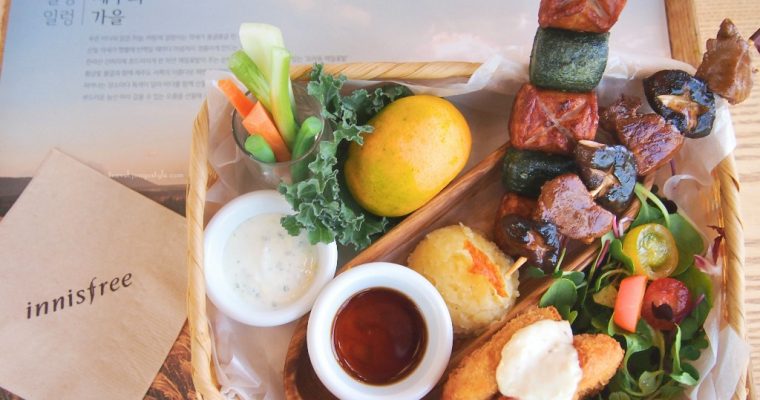
Innisfree Jeju House and O’Sulloc Tea Museum are in the same compound and are generally recommended by young people in their twenties. I reckoned it is because everything from the interior design to the food are instagrammable. Perhaps I had high expectations for them that I was kind of disappointed by them. Its saving grace was the drinks, food and desserts. They were quite appetizing. More about them in “What to Eat in Jeju“.

Innisfree Jeju House

Innisfree Jeju House’s wooden and minimalist interior design exudes warmth, cosiness and calmness. The beautiful set up of its products brings another added layer of style and charm. I can see why young people flock to this place, as they have a keen appreciation for beauty. However, this appreciation might be thwarted by the crowd jostling with you.

Perhaps we would enjoy this place more if we didn’t have a toddler with us. We could have joined in their natural soap making classes, make-your-own-mask activity, or self-interactive activity of designing the postcards provided.

O’sulloc Tea Museum

O’sulloc Tea Museum was the first tea museum in Korea when it opened in 2001. It aims to introduce and promote Korean tea culture and history. Instead of a tour around the tea museum, we went up to an observatory for a bird’s eye view of the tea plantations. Before that, we had their yummy dessert and drinks and shopped in their crowded retail shop. At regular intervals, free tea tasting is available.

We bought a few boxes of tea, with wedding tea recommended to us by my sister in law. The tea is generally good with my preference of some flavour over others. However, if you can’t get what you want, you can still check out their retail shops in Seoul. They also sell green tea milk spread, cookies and chocolates. Gift sets are available too.

O’Sulloc Tea Plantations

Udo Island (우도)


Udo, Cow Island, got its name because its shape looked like a cow. is a beautiful place, at least that’s what I imagined to be. The small island is a short 15 minutes’ ferry ride from Jeju’s Seongsan Port.

I researched quite a bit on the place and planned a half day trip for it. Sadly, we had to shelf the plan at the last minute because we simply ran out of time, and we didn’t want to rush through. A trip to Udo Island can usually be paired off with a trip to nearby Seongsan Ilchulbong. I would recommend checking it out if you have three or more full days on Jeju Island.

If you are leaving Jeju city to catch an early morning ferry and looking for some breakfast, you might want to stop by the en-route A Factory Bakery/Cafe for croissants and coffee.

Seongsan Iichulbong Entrance

Ferry Information

At Seongsan Port (+82 64-782-5671), you can park your car in the nearby multi-storey carpark and then cycle or walk around Udo island. Otherwise, board the ferry with your car and drive around Udo.

The round trip charges are:

  • Ferry with Car: ₩21,600 (S$26.50) for the car, in addition to admission to the island for ₩8,500 ($10.50) per adult.
  • Ferry without car: Ferry and admission will be ₩5,500 (S$6.80) per adult. For reference, renting electric bikes or scooters for 2 is around ₩10,000 (S$12.20) to ₩20,000 (S$24.40). Prepare poncho for wet weather!

For ferry schedule and fares, this article proves to be useful: takingflights.com/passenger-and-car-ferry-schedule-and-fares-to-udo-island.

On Udo Island

We had wanted Hallasan fried rice for brunch on Udo before heading to Seo-Bin-Baek-Sa (Sanho Beach) for the island’s famed peanut ice cream as dessert. Some blogger suggested black pork burgers for lunch.

After Sanho beach, there’s Geommeolle the black (728-3394). A small black-sand beach surrounded by rocky cliffs. Hire speedboats for scenic views around the bay and through the Dongangyeonggul Cave (cliff with a cave) during low tide.

As you trek up Udobong Peak (728-2742), wild grass and lalangs along the way will create a dreamy feel. But don’t be deceived as it gets difficult for those with inactive lifestyle. If you have limited energy, skip this for the climb up for Seongsan Ilchulbong, that is if you are going on the same day. There are a few paths to choose from and one will lead you to the lighthouse and another to an underwhelming view.

Other recommendations I found online:

  • Hu-Hae-Seok-Byeok: Vertical cliff with well aligned faults, like neatly stacked rock pieces.
  • Biyang Island: Black pebble island, with yellow-and-black lighthouse, connected to Udo by a narrow road.
  • Ju-Gan-Myeong-Wol: Unique cave where the morning sun reflects water unto the wall of the cliff, forming the shape of the moon.

Aewol Coastal Road (애월해안도로)


Located in the northwestern coast of Jeju, Aewol Coastal Road is a winding road that stretches from Hagwi-ri to Aewol-ri. We drove in the general direction of Aewol-ri and turned into what seemed to be an area of bustling activity. We inched our way in to find ourselves in a cluster of restaurants and cafes.

As we squeezed through the heavy traffic in narrow roads, we came face to face with the magnificent sunset that illuminated the sky in a bright orange hue. Couldn’t stop to marvel for long as our car had to move on and not block the way. Carpark was full. By the time we found an empty spot by the road to park and catch the sunset, we passed the golden hour. And so after a few snaps, we drove off.

If I can turn back time, I would have probably cut our time at Innisfree and spend more time in this cosy area.

That’s all folks! Let me know if you have other fun places in Jeju to recommend. :) For more Korea travel tips, refer to our itinerary of our South Korea trip (Jeju and Seoul).

Bookmark this page or pin this to your Pinterest:

What to Eat in Jeju, South Korea? | 21 Food Choices

What to Eat in Jeju, South Korea? | 21 Food Choices

You will have no lack of food options in Jeju. In any case, there’s McDonald’s to fall back on. Here’s a list of those food that we have tried, plus others that were on our list but our stomachs have no more space for them. 

Guide to Driving in Jeju: Lotte Rent-A-Car and GPS phone numbers

Guide to Driving in Jeju: Lotte Rent-A-Car and GPS phone numbers

Update: 22 Dec 22 Jeju’s intercity bus system has improved since I was there ten years ago. Still, taking a bus is inconvenient — waiting time is long and bus stops are sparsely located around the island. Hence, driving in Jeju is a popular option