Month: August 2016

First Timer: Skiing at Niseko

First Timer: Skiing at Niseko

Whether you are skiing at Niseko (Hokkaido) or elsewhere, here are some useful pointers based on our skiing experience at Niseko. Simply skip the first part about ski rental if you’re not skiing at Niseko. It was our first time skiing and it was tiring but so fun! Moreover, 

First Timer’s Guide: 8 Ski Terms and Lingo

First Timer’s Guide: 8 Ski Terms and Lingo

Is it your first time skiing? Have you come across ski terms you don’t understand? Here’s a quick rundown that’s useful for first timers. I came across the last term often while researching for my FIRST ski trip. p.s. You can always drop by another post if you want to know 

First Time Skiers: What to Wear for Skiing?

First Time Skiers: What to Wear for Skiing?

I’ve written two informative posts on how to layer your clothing for the different temperatures in winter: How To Layer Clothes for Winter? (Part 1) and Layering Clothes for Winter (Part 2). I’m sensitive to the cold, so what works for me should would for you too! But what to wear for skiing, especially if it’s your first time? There are a few other things to take note. Read on if you’re planning to do winter sports like skiing and snowboarding!

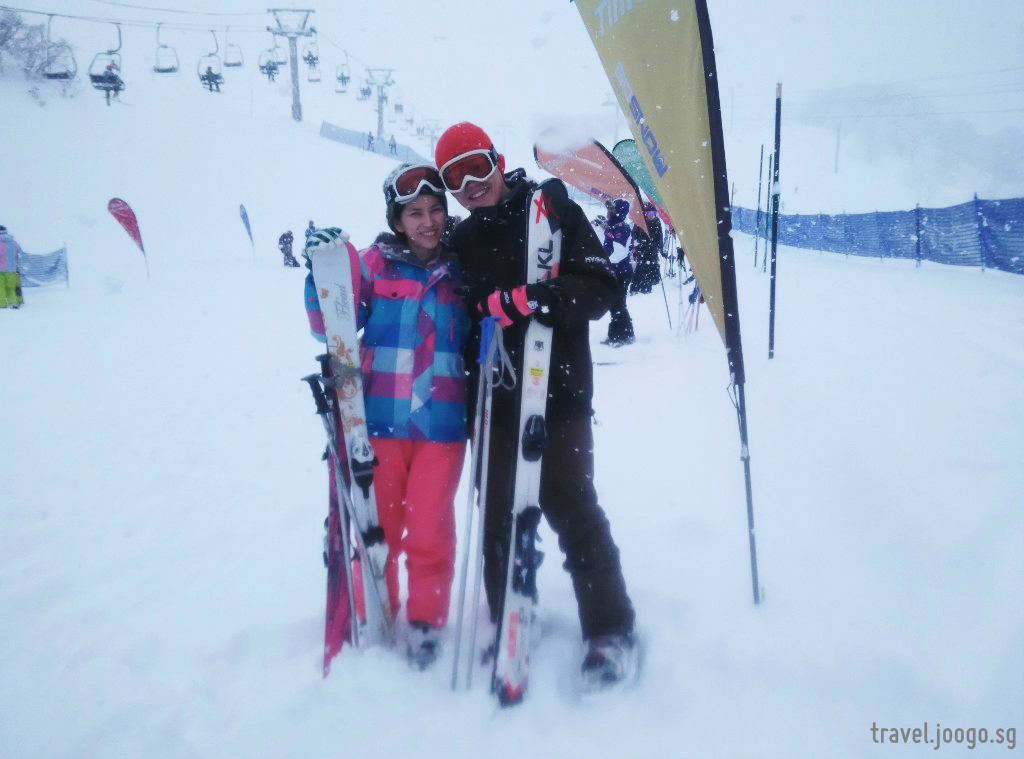
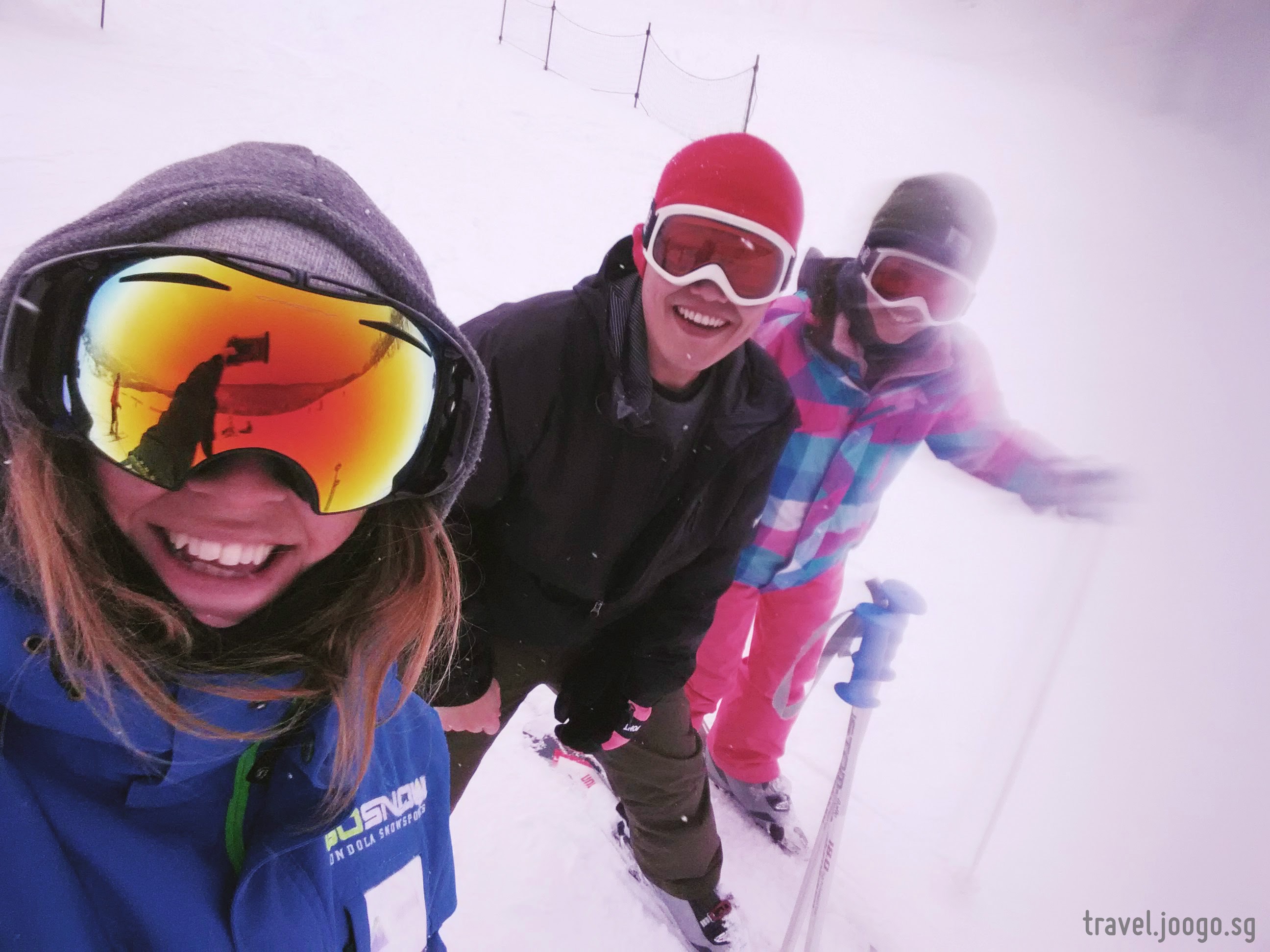
Our virgin skiing trip was at Niseko, an awesome place for skiing because of its powder snow. Everyone I met, from the leisure skiers who skied in Italy and Korea to the ski instructor who had skied everywhere she could, they all agreed that Niseko was the best place to ski! What a blessing we had. :) The weather was about -7 to 2°C with sun while we were there.

Niseko Ski Trip 11 - travel.joogo.sg

If you’re beginners like us, don’t under-dress! I know you’ll be exercising under the sun and might think it’s fine to wear any clothing under the ski suit. But truth is, we beginners use more energy than experienced skiers with all the falling and getting up. This translates to novice skiers getting all wet and sweaty on the inside, and then feeling the cold from the sweat when queuing in lift lines and sitting on the chairlift.

Other than sweat, there’s the snow! Whether you are doing snow sports or playing with snow, you will find snow sticking to your clothing. And as your body heat or the sun melts the snow, you will get wet and then cold!

General rule of thumb, get wet and you’ll be cold, so be dry! Let’s get into the details on how to best layer your clothes from the inside out.


Top


Head

Wear a beanie and cover your head. If you’re still cold, use your hoodie from your outerwear to cover over it. (More about head and beanie during winter.)

Face

Even though it’s winter, the sun’s UV rays reflecting off the snow is double the strength and certainly more dangerous than when you’re on the beach. Moreover, ski slopes are on high altitudes and that means you are closer to the sun!

If you are walking around the ski town, put on your sunglasses. And wear your goggles before you hit the slopes! If you don’t but instead wear the goggles on your head or hold it in your hands, it will easily fog up on the inside.

What Did We Wear? 

  • Wife and Hubby:
    • Rented ski goggles from the rental shop (Grand Hirafu Rentals Gondola Shop).
    • Rented beanies. A normal beanie will do, but it was in our full rental set, so we wore theirs. (Full rental set: Skis/snowboard, boots, skiwear, beanie, goggle, gloves)

Other than ski wear, don’t forget to apply your sunblock/sunscreen. Apply a broad-spectrum sunscreen of SPF 30 or higher* to all exposed skin. Apply it at least 30 minutes before hitting the slopes and reapply every two hours. To get the full SPF of a sunscreen, you need to apply 1 oz, which is about a shot glass.

*More information on sunscreen: A broad-spectrum sunscreen protects against both UVA and UVB rays –UVA rays penetrate the skin more deeply, associated with wrinkling, leathering, sagging, etc, while UVB is the chief culprit behind sunburn. SPF 15 filters out ~93% of incoming UVB rays, SPF 30 keeps out 97% and SPF 50 keeps out 98%. Studies show that most people apply only half to a quarter of 1oz, which means the actual SPF they have on their body is lower than advertised. (Source of Sunscreen Information)

Base Layer (Top and Bottom)

ExpertAdvice_Layering

Credit: www.mountainwarehouse.com

Start with a tight base layer in merino wool or polyester. The close fitting layer will trap a thin layer of warm air against your skin and such material wicks away any moisture from perspiration or snow. Avoid regular cotton T-shirt. Cotton doesn’t wick and you will stay wet and thus cold (more info).

What Did We Wear? 

  • The Wife: 
    • I wore a sports attire which I usually wear in Singapore — running sleeve top and 3/4 sports leggings. This outfit usually wicked away sweat when I exercised in Singapore.
    • Thereafter, I wore a merino wool hoodie and leggings (Icebreaker brand). Merino wool is a premium wear made from a special breed of sheep with finer fibers that make it softer and thus not itchy as compared to regular woolen long johns. It is also warmer than synthetic material, dries quickly, does not absorb odors and has antibacterial qualities.
  • The Hubby: 
    • 1 set of Uniqlo Heattech thermal wear (normal series)
    • 1 sports top (Man U shirt)

Do I really need to wear long johns (thermal underwear)? Also, more on merino wool and Uniqlo Heattech.

Middle Layer

Over your base top, wear a looser layer such as a sweater, fleece jacket or a turtleneck. You may want to consider one with zip, so that you can unzip if you are sweating too much from the exercise on the slopes.

What Did We Wear? 

  • The Wife: Uniqlo’s Fleece Jacket – Long Sleeve and Full-Zip (100% Polyester)
  • The Hubby: Uniqlo’s Lounge Wear (72% Polyester, 28% Cotton); it’s meant for sleeping but it was perfect for him as mid layer!)

Outerwear and Hands

As mentioned, keep dry, so make sure your outerwear is waterproof. And because you will be on higher altitudes at the ski slopes, make sure the outermost layer is windproof as well.

What Did We Wear? 

  • Wife and Hubby:
    • Rented ski jacket
    • Rented ski gloves

How To Layer Clothes for Winter and Skiing - travel.joogo.sg


Bottom


Legs

As mentioned above, wear a base layer of merino wool or polyester, than wear an insulating pants under your waterproof ski pants. Heed the cotton warning for pants as well. Don’t wear jeans! It’s a material that’s hard to dry and that means once it’s wet, you will constantly be cold.

Feet

Rent a pair of boots that fit your feet but not so tight. Your toes must be able to wriggle for a bit.

A quick tip in dressing up. Don’t tuck your pants into the ski boots. You need the boots to be as close fitting to your legs as possible, so to get better control when skiing. We learned that from experience!

What Did We Wear? 

  • The Wife: 
    • Base Layer:  3/4 sports leggings (sweat wicking)*
    • 2nd Base Layer: Merino Wool Leggings
    • Mid-Layer: Uniqlo’s Pile Lined Sweatpants (a fluffy fleece lining; 68% Polyester, 32% Cotton)
    • Outerwear: Rented Ski Pants
    • Feet: 1 pair of heattech socks and rented ski boots
  • The Hubby: 
    • Base Layer: Uniqlo Heattech thermal wear (normal series)
    • Mid-Layer: Uniqlo’s Lounge Wear pants
    • Outerwear: Rented Ski Pants
    • Feet: 1 pair of heattech socks and rented ski boots

One last tip before I end, ‘Is heat pack necessary?’ The heat was in my pocket the whole time, but I didn’t really use it until we stopped moving. Like when we videoed ourselves skiing and while sitting on the chairlift. Like I said in Part 1, good to have but not necessary. :) Have fun skiing or snowboarding!

If you have other questions or suggestions, comment below or on our Facebook Page or Instagram. Bookmark this page: Overview Itinerary: Hokkaido and Tokyo (Winter/Spring 2016)


All Rights Reserved: All photos (unless credited) on travel.joogo.sg. Disclaimer: All data and information provided on this site is for informational purposes only. Travel.joogo.sg and/or the author shall not be held responsible for any injury, loss, expense or damage of any kind whatsoever suffered or incurred by any person who accesses or uses the information and external websites stated above.
Layering Clothes for Winter (Part 2)

Layering Clothes for Winter (Part 2)

If you’ve not been to cold countries and you’re thinking of how to start layering clothes for winter, you’ve come to the right place! And you must definitely read Part 1 and this post if you’re a Singaporean and a female. In Part 1, I shared important tips to fight the 

How To Layer Clothes for Winter? (Part 1)

How To Layer Clothes for Winter? (Part 1)

If you’ve not been to cold countries and you’re thinking of how to layer clothes for winter, you’ve come to the right place! And you must definitely read on if you’re a Singaporean and a female. Being from tropical Singapore, I am like most Singaporeans 

Where to eat in Niseko? (Grand Hirafu)

Where to eat in Niseko? (Grand Hirafu)

Are you staying in Grand Hirafu? Find out where to eat in Niseko below:


1) An Dining


We stayed at Ki Niseko, where An Dining and An Café & Bar are located on the ground floor. They offer both fine and casual dining. The Head Chef, Shinichi Maeda, uses only the freshest Hokkaido produce in his dishes. Yes, we did see cartloads of fresh seafood arriving one afternoon when we were leaving the hotel.

Ki Niseko 6 - travel.joogo.sg

Our daily buffet breakfast was served at An Dining. The food was a fusion of east and west, with a leaning towards an English breakfast. It was not too bad but nothing to shout about.

Ki Niseko 4 - travel.joogo.sg

But the food tasted better during lunch. For one of our two ski break lunches at Niseko, I tried the chicken and avocado sandwich at An Dining. With their menu on the pricier end, this simple fare costs ¥650 (~S$8). We ordered the cheapest on the menu because we didn’t want to spend too much on lunch. Moreover, we didn’t want to be too full as we had to ski for another few hours after lunch.


2) Yokasu Yakitori


Niseko 9 - travel.joogo.sg

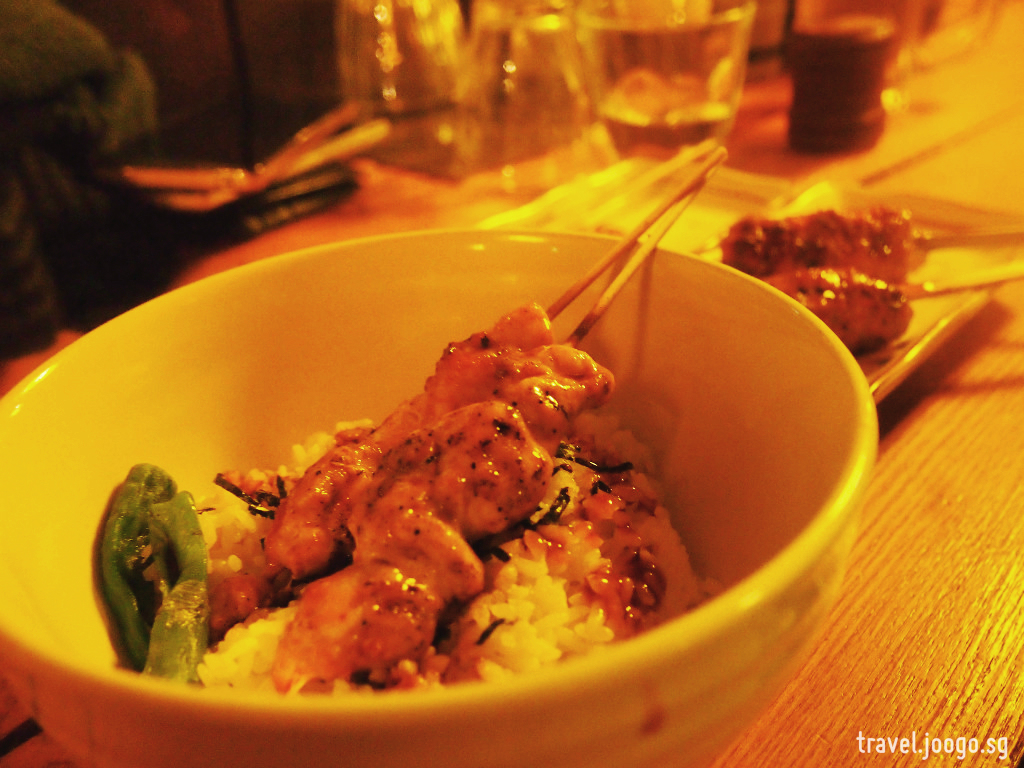
This was where we had our dinner for the first night. Yokasu Yakitori serves yakitori cooked on traditional bincho charcoal grills, other izakaya-style dishes and a wide selection of alcohol. Hidden in a small alley near the Seicomart, it’s camouflaged in the dark with its black walled entrance. Then, walk down a flight of stairs and enter into the BBQ smoky restaurant and bar.

Where to eat in Niseko? - travel.joogo.sg

There’s a bar counter at the front and tables at the back. We had to squeeze at the bar counter because the place was super crowded when we were there. We ordered the Yakitori donburi and a few other sticks. One of the skewers had this fatty pork meat which melted in our mouths. It was juicy and so so so good! All the skewers were fresh off the grill and delicious, but overpriced in our opinion. We spent ¥2,717 (S$34) on probably 2-3 sticks plus one donburi.

Open till late and a good place to enjoy your après-ski alcohol and yakitori snacks.

Niseko 7 - travel.joogo.sg

Open daily (Winter only): 18:00 – 24:00
170-138 Yamada, Abuta-gun, Kutchan-cho 044-0081


3) Other Restaurants for Dinner


Niseko 1 - travel.joogo.sg

With the various shuttle buses* available, get around Niseko or Kutchan to hunt for the dining place you so desire to try. Or you can try walking in the snow like us (Ki Niseko shuttle stopped due to the poor road conditions from heavy snow).

*Shuttle Buses: Niseko United Shuttle, free Hirafu Village Grand Shuttle Bus, Hanazono Bus, Hilton Shuttle Bus, Kutchan Night Go Bus.

Additional Tip: For 500 yen per ride, Yumeguri Onsen Shuttle Bus (Spa Bus) takes you to all the onsens in Niseko from early evening till night. Inquire at your accommodation or tourist information centres.

Niseko 4 - travel.joogo.sg

We walked towards the Seicomart at Middle Hirafu, and the Yokasu Yakitori was near there. Along the way we saw a food truck that was not too crowded, but we skipped it to go for one of our shortlisted dining places. But there were many places we didn’t manage to go. So here’s the list of places we missed:

For dinner…

  • Kongo (Yakiniku and Genghis Khan), 11:30am-1:30pm, 5:00pm-10:30pm
    • 1, Kita 1 Nishi 1, Kutchan Town
  • Torimatsu Yakitori (Yakitori), 6:00pm-10:30pm
    • 1 Kita 3-jo Nishi, Abuta-gun, Kutchan-cho Hokkaido 044-0053
  • Usagiya (Traditional soba), closes at 7:30pm
    • 1 Chome-1-1 Kita 2 Jonishi (North 2, West 1, Miyako St), Kutchan, Abuta District, Hokkaido 044-0052
  • A-Bu-Cha 2nd (Dinner: Hot Pot, Yakitori), 11:30am-3:00pm, 6:00pm-1:00am
    • Suiboku Bldg, 1st Floor 191-29 Aza-Yamada Kuchan-cho Hokkaido 044-0081

Niseko 2 - travel.joogo.sg

  • Asahikawa Ramen Tozanken (Ramen), 11:00am-4:00pm, 6:00pm-11:00pm (LO): Genuine Asahikawa Ramen made from 100% Hokkaido wheat noodles. ‘Donburi’ rice bowls available too.
    • 191-31 Yamada, Kutchan, Abuta District, Hokkaido 044-0081
  • Sobadokoro Rakuichi (Duck soba and soba kaiseki dinner), 11:00am-3:00pm, 5:00pm-: We didn’t have time to travel out to Annupuri, but if you have, it’s definitely a must try. Anthony Bourdain featured this restaurant on his ‘No Reservations’ show with a more than favourable verdict. At this small homely wooden hut that seats only 10-12 people, the chef will make the soba and tempura in front of you. Their soba kaiseki dinner changes based on their produce. You need to make reservations for dinner, but they don’t take reservations for lunch and will usually sell out by 1:30pm.
    • Annupuri, 〒048-1511 431, Niseko, Niseko-cho, Abuta-gun, Hokkaido, TEL:0136-58-3170

Niseko 8 - travel.joogo.sg

For those with sweet tooth…

  • CAFÉ IF (Dessert & Tea), Winter 10:00am -9:00pm | Summer 10:00am – Dusk: This highly raved cafe nestled in Grand Hirafu is run by a pair of elderly siblings – brother and sister. Be sure to try their apple cake with fresh mascarpone cheese. Since they make everything from scratch, order everything at one go. Then, prepare to wait for ~30-40 minutes.
    • 167-22 Yamada, Kutchan-chō, Abuta-gun, Hokkaidō 044-0081, Japan
  • Fujii Sweets Shop (sweets, snacks and souvenirs), 8:30am -7:00pm (closed Tues)
    • 4 Kita-1, Nishi-3, Kutchan, Abuta-gun, 044-0051 Hokkaido (1 Minute Walk From JR Kutchan Station Train)
  • Grand Hirafu Milk Kobo Café and desserts (Desserts), 10:00am-5:00pm (LO), Winter only. Milk Kobo’s specialty cream puff shell coated with chocolate is a limited-edition special snack that is sold only at the Hotel Niseko Alpen. Not even sold at the central store!
    • 1F Hotel Niseko Alpen, 204 Yamada, Kutchan Town

4) Convenience Store


Ki Niseko 7 - travel.joogo.sg

We didn’t order much from Yokasu Yakitori because of the overpriced menu. It was delicious, but it made us feel that Niseko is generally an expensive place. Hence we were still hungry and hoping to find some cheaper food at the conveience store, Seicomart.

When we reached Seicomart, we noticed something interesting. At Yokasu Yakitori, the Caucasians dominated the place, at Seicomart, the Asians dominated it. We heard people from Hong Kong, Taiwan and Singapore! The Asians really know how to pinch their pennies and find affordable food.

The takeaway bento set and finger food at Seicomart looked and tasted good. We bought 2 donburi rice bowl sets and kept them for our lunch the next day. We simply microwaved them in our serviced apartment kitchen at Ki Niseko before eating. It was super value for money! So if you are on budget, head to Seicomart. It’s huge and carries a wide variety of food – from bentos to cup noodles to fresh fruits. Yummmy!


5) Ski Lunch


map

photo credit:www.grand-hirafu.jp/winter/en/restaurant/ace-hill.html

As mentioned, we had donburi from the convenience store for the lunch break of our first ski lesson day. For our second day, we wanted to try the food at .Base Cafe. That’s the easiest and nearest place from the base of the ski lifts to get lunch. As first timers, we were around the base and it was cumbersome for us to walk far in our boots. Moreover, we weren’t confident in taking the ski chair lifts by ourselves – we were both noobs.

But the .Base Cafe was closed for a private event!! Wuuuuuutttt? It was a busy ski slope that day and they closed it for a few guys wearing their suits!? Argh, so we had no choice but to walk to the next nearest place, An Dining (see above).

If you don’t mind a little more walk, you can head towards Niseko Alpen for Slalom restaurant (¥1,000 to ¥1,500), Shokusai Hirafu, or Sweets and Cafe by Grand Hirafu and Milk Kobo. Or go even further in another direction to Tanta an (¥1,400 to 2,000).

Niseko - travel.joogo.sg

Otherwise, for restaurants near the ski lifts at Niseko Grand Hirafu, such as the 1000m hut at the top of Ace pair lift #3, find out more at the Grand Hirafu website.

A place worth mentioning but not found in the Grand Hirafu website is Boyoso. It’s at the top of Holiday Pair Lift #1. Ski down or take the ski lift up and hike a distance to this restaurant. It is in a warm log cabin halfway up the slope under the Hirafu Gondola. The place serves katsu curry, don and soba and is one of the cheapest places to eat lunch while skiing on these slopes. However the place is too small to handle the lunch crowd at 12:00pm. So be sure to get there earlier if you can.

Or if your lunch time is not strict, you can venture further to Shokukobo Shunsai for venison steak and local food. The set lunch is value for money, and its wine selection cheaper than most places in the area. It’s a minute walk from JR Kutchan Station.

Do you have other suggestions of where to eat in Niseko? Tell us below or on our Facebook Page or Instagram. Bookmark this page > Overview Itinerary: Hokkaido and Tokyo (Winter/Spring 2016)

All Rights Reserved: All photos (unless credited) on travel.joogo.sg. Disclaimer: All data and information provided on this site is for informational purposes only. Travel.joogo.sg and/or the author shall not be held responsible for any injury, loss, expense or damage of any kind whatsoever suffered or incurred by any person who accesses or uses the information and external websites stated above.