Tag: Travel with Children

VAT Tax Refund in Bangkok, Thailand

VAT Tax Refund in Bangkok, Thailand

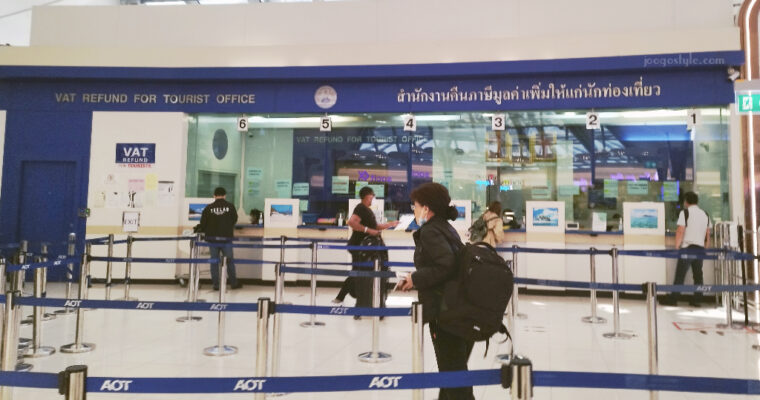
Are you heading to Bangkok to shop? Or shopping elsewhere in Thailand? Regardless, most goods and services in Thailand have a 7% Value Added Tax (VAT). I will share how you can save some money by getting a VAT tax refund in Bangkok or Thailand 

Why do I travel with my young children?

Why do I travel with my young children?

“It’s too troublesome and stressful,” many parents would say, “It’s work and not a holiday.” They shook their heads thinking of the children’s demands, schedules, crankiness and truckload of items. I agree. Without children in the tow, the luggage is lighter, the peace is more, 

Travelogue of Europe (Part 1): First Long Voyage, May/Jun 2019

Travelogue of Europe (Part 1): First Long Voyage, May/Jun 2019

Our Family Photoshoot in Amsterdam

“Your flight to Amsterdam Schiphol airport has been changed to Terminal 1,” said the airline staff as she typed on her keyboard intently. She returned our passports and pointed towards a general direction, “Go pass the immigration and take the SkyTrain inside to transfer.”

As we were approaching the SkyTrain’s doors, my hubby let out an exasperated “OH NO!”. We were supposed to collect our pre-ordered Vodafone SIM cards at the counter in the public area. The hassle of finding and getting new cards when we arrived and the waste of paying extra made us cringed. We had to get our hands on those cards!

Time was running short. So the game plan was for me to continue my way with the toddler and hand luggage, while hubby rushed back to see what could be done. Turned out, Changi Airport’s information counter staff was more of a help than the one from Changi Recommends.

She pressurised arranged for the runner from Changi Recommends to enter the transit area and pass hubby the SIM cards. With a runner on standby, it seems like forgetting to collect is a common scenario. It’s easy to buy and collect the items from Changi Recommends, just make sure you remember to collect and avoid the mad rush!

If you want to avoid such a scenario, you can have your SIM card mailed to you or picked up before the trip with these Klook merchants: 4G Europe Data SIM Card (6GB) ; 4G Europe Data and Call SIM Card (20/3GB).


Clicked. Booked. We were flying to Amsterdam Schiphol airport in 5 weeks’ time for a 3-week holiday. With Baby EX turning two soon, paying 10% for a long flight was value for money. Yet, I was immediately shoved into a pressure cooker after the ticket purchase. How to tie up loose ends at home/work, plan a detailed itinerary, and pack luggage in less than five weeks? What’s more, it’s a long trip with a toddler.

Time to let go and not over plan. Be spontaneous. And that’s what happened. My itinerary this time round was the least prepared of all I did in recent years.

Then, there was another pressure point. I was nervous about the long flight, especially after a tumultuous experience with Korean Air. Would we survive the long hours, the 14 hours?

We were hoping to have an empty seat beside us so that we could plant Baby EX in it. Sadly, because of code sharing, it was almost a full flight! Our back up plan was for hubby to find an empty middle seat elsewhere in the plane to move to. In this way, baby EX could have her own seat beside me — this made things much easier. My legs and hands were also spared from numbness.

“Could we change the aisle seat with you?” I thought aisle seat was coveted when we asked the gentleman sitting by the window. Later we realised the aisle seat of our first row was not good at all. The seat was in an awkward position where the aisle lights was always on and we were always exposed to passengers walking up and down the aisle.

We wanted to inflate Plane Pal, an inflatable cushion, in the legroom space for baby EX to lie flat across the seat and cushion. She would be in the middle seat, and we didn’t want him to stretch his legs across her when he needed to head out to the toilet. Hence we asked to change seat.

Judging from his tall, lanky frame, Dutch men revealed as world’s tallest, we supposed he returning home to Netherlands. “No,” came his curt answer. His quiet stoic shell shielded him from any more conversation we wanted to make. The ice around him melted only towards the end of our flight. What amazed us was that he didn’t head to the toilet or got up once at all during the flight. And in divine arrangement, we were on the same flight back to Singapore after three weeks.

Baby EX kept falling off from the cushion because the bulk seat area was too wide for the the cushion to be steadied. All night, I had to keep her from falling off and thus didn’t get any sleep! But at least Baby EX got to sleep and was thus not cranky as much. Good thing, my hubby came to take over my shift later on so I could catch up on some sleep.

This turned out to be a better flight. Even Baby EX was praised by our tall neighbour to be a good traveller! Of course we kept her busy with toys and crafts prepared by me, food and music by Singapore Air, and sleeping time by her body clock. Moreover, Baby EX’s got a few sneak peeps of the shows (air safety, etc) playing on the seat screen — her first screen time moments.

Speaking of which, she had many milestones during this trip. In the beginning of the trip, she climbed up and down the two steps in our Delft Airbnb, unassisted. She spoke a lot more and started to speak in three syllabus! So excited to be in a big house, she kept babbling and running around. And towards the end of the trip, she started to count 1,2 and 3 on her own.

Our milestones: our first trip to Europe, and survived a long flight with a toddler. We made it to Netherlands happy!

P.s. Tips for Parents at Schiphol Airport: Baby rooms are located adjacent to most public toilets. For greater comfort, visit Baby Care Lounge on Holland Boulevard (after security), between Lounge 2 and 3.


A Few Quick Tips


  • Enjoy popular attractions around Netherlands at a discount with Holland Pass.
  • Always have coins ready. Coins are usually needed to buy metro tickets, for lockers, for entry into toilets, etc.
  • Speaking of which, for greater convenience, purchase anonymous OV-chipkaart for travel in Netherlands.
    • It’s like Singapore’s Ez-Link, Taiwan’s EasyCard, Hong Kong’s Octopus Card, and Bangkok’s Rabbit Card.
    • To travel by train (not metro/subway), you must have at least €20 (S$30.30) worth of credit in your card. Card is valid for 5 years and you can apply for online refund credit.
  • In Netherlands and Belgium, you have to pay to use public toilets. There is usually diaper changing table that you can open out in the toilets, if not the handicap toilet. Toilets that are free to use are only available at attractions (e.g. Louwman Museum), cafes, or restaurants.
  • In a flip manner from Asia, I observed that Europeans like to order their drinks first and enjoy them for quite a while before ordering food. That’s why the servers in Europe would always ask what we want to drink first, leaving us alone thereafter, before coming back again to get our food orders. But for us hungry Asians, there’s no time to waste, give us our food quick!
  • “Please wait to be seated.” This is a common sign outside restaurants in Singapore. Thus we were programmed to wait for the servers to show us to our table. However, in Europe, get on in and find your own table.
  • Bring your own shopping bag to the supermarket, otherwise pay quite a token sum for plastic bags.
A short video of EX eating in Netherlands. It’s the time we were introducing her to adult food. Was such a joy to see her eating heartily when she was younger. I still remember we were so amazed by her taking the bread on her own accord and dipping it into the soup to eat. We didn’t teach nor show her. Eating like a food connoisseur, see last segment of the video. 

More of my travelogue of Europe (Netherlands and Belgium) will come in Part 2, 3 and 4. Let me know what you like me to include in those articles. Leave a comment below. :)


Disclosure: Some of the links in this post are affiliate links. Affiliate link means I’ll get a small commission if you make a purchase. There’s NO extra cost to you. I appreciate your support to maintain this website, so that I can share more tips with you. Thank you!

Travelogue: Seoul and Jeju (South Korea), Oct 2018

Travelogue: Seoul and Jeju (South Korea), Oct 2018

I was having my nails painted one week before the Korea trip. “Jeju 好像会有海啸,” the manicurist told me that Jeju might have Tsunami. She had checked the weather forecast and was planning to change her travel plans. That was one of the many things that 

14 Places to visit in Seoul (Autumn)

14 Places to visit in Seoul (Autumn)

Thankfully, our flight from Jeju to Gimpo airport was uneventful, unlike our flight from Singapore to Jeju. It was almost evening by the time we settled in our accommodation at Ever8 Residence (serviced apartments). So we had Nene Chicken for dinner and slept early for 

Gyeongbokgung Palace, Bukchon Village and Tongin Market in a Day

Gyeongbokgung Palace, Bukchon Village and Tongin Market in a Day

Out of the ample choices of palaces, hanbok villages, and traditional markets in Seoul, we shortlisted one of each “type” to visit. We covered them all in one day.

Jump to your preferred attractions:


Of Palaces in Seoul


Fans of Korean historical dramas have four palaces in Seoul to immerse themselves in. To explore all of them, including Jongmyo Shrine, get an adult combination ticket for ₩10,000 (S$12.20). With this ticket, you can visit each of these five places once within three months: Gyeongbokgung Palace, Changdeokgung Palace (Secret Garden included), Changgyeonggung Palace, Deoksugung Palace and Jongmyo Shrine.

A tip for those visiting Changdeokgung Palace. Reserve time slots online as early as possible to visit at your desired timing: Secret Garden course, and General course.

With a toddler, it would be tiring and time consuming to go to all four palaces. Also, we reckoned palaces would look the same after a while. So we shortlisted Gyeongbokgung Palace (“Gyeongbokgung”), and Changdeokgung Palace and planned to visit them on the same day.

However, we underestimated the time to travel around the sprawling big Gyeongbokgung and to walk to and fro Tongin Market for lunch. Hence, we forfeited our reserved time slot to visit Changdeokgung Palace and its Secret Garden.


Gyeongbokgung Palace


Gyeongbokgung Palace

About

Gyeongbokgung was our first choice because there were free parades and it was also the first and largest royal palace built during the Joseon Dynasty. Built in 1395, it was used as the main palace. Greatly damaged by fire during the Japanese occupation in 1592, it was thereafter rebuilt and restored.

In December 2018, the palace’s western gate was opened to public. Hence, public can now enter the palace in all four directions.

National Palace Museum of Korea and the National Folk Museum of Korea are located on palace grounds. And these are where you can find diaper changing stations. There’s also a hidden playground behind National Folk of Museum.

BABY DIAPER TIP: Before you roam the palace, get your child’s diapers changed at National Palace Museum. It’s not that easy to come across another diaper changing room. For more, baby.joogostyle.com/nursing-rooms-in-south-korea.

First Parade

Royal Guards Parades / Ceremonies

Everyday except Tuesday, the public get to enjoy free parades or ceremonies by the royal guards*.

  • Gatekeeper Military Training: 9:30AM, 1:30PM
  • Changing of the Royal Guard Ceremony: 10:00AM, 2:00PM 
  • Gwanghwamun Gate Guard on Duty Ceremony: 11:00AM, 1:00PM 

*Number of guards may be reduced during winter and summer due to extreme temperatures. Ceremonies may be cancelled in bad weather.

Changing of the Royal Guard Ceremony

We reached before 9:30AM and watched the first two parades, Gatekeeper Military Training and Changing of the Royal Guard Ceremony. Due to time, we skipped Gwanghwamun Gate Guard on Duty Ceremony.

All the parades are held around or near Gwanghwamun Gate. From Gyeongbokgung Station (Line 3, Exit 4), it’s a straight path to Gwanghwamun Gate, the main gate. Google map shows that the station’s Exit 5 brings you inside of the palace, near to Gwanghwamun Gate too.

Where to find the first parade? As you enter Gwanghwamun Gate, you will see the ticketing booth on your right. As you faced the ticketing booth, look out for a smaller gate on its left. Walk through the gate and the first parade will be there. Basically, the small gate is on your right after you enter Gwanghwamun gate.

After the first parade, head out to the main square, where the ticketing office is. Here, find a good spot and enjoy the second parade (changing of guards). Staff will be putting up barriers so you will know where to get first row spots.

Duration of both parades are relatively short, perhaps about 15minutes.

Hanboks in Palace

Many people wore hanboks and walked on palace grounds. It’s free admission for those wearing hanboks! So it’s killing two birds with one stone – be pretty and get free admission. ;)

You can rent from one of the many rental shops around the palace. Otherwise, you can rent hanbok in advance via klook: Seohwa Hanbok Rental or Hanboknam Hanbok Rental with Hairstyling.

To sweeten the experience, engage a photographer to capture you in the beautiful hanbok and your travel memories in Korea. Rent your hanbok and have your Gyeongbokgung hanbok photoshoot with HAB KOREA or Hanbok That Day.

Library in Palace

The only building we entered in Gyeongbokgung is the library at the northern part of the palace. It has beautiful architecture and interior, with a modern touch as books lined the shelves in the building. We came across this library as we re-entered the palace through the North gate after our lunch at Tongin Market.

Known as Jibokjae Hall, it was built in 1891 and used to be King Gojong’s study room and meeting hall. Now it has become a public library that contains books about Joseon and the dynasty’s royal documents, proclamations and publications. Beside Jibokjae hall, the Palwoojeong Pavilion that used to be King Gojong’s resting space is also now converted into a cafe, serving coffee, tea and desserts.

Jibokjae Hall

In and Around the Palace

We were not very impressed by the palace. Many constructions or restorations were taking place at our time of visit. Also, the place was so big that it takes quite a bit of walking from point to point. So the place felt sparsely attractive. The saving grace was that certain parts of the palace bloomed beautifully during autumn. Also, the yellowish green trees that lined the palace made our walk a scenic and romantic one.

For those with older toddlers, you might want to check out the entertaining Children’s Folk museum.

Food in Cafe M

To rest your legs after the palace tour, head to Anguk-dong. This neighbourhood near Gyeongbokgung is full of trendy cafes to choose from. Here, you will also get to see juxtaposition of the old and new, traditional Korean houses beside modern shops.

Not knowing which cafe was good, we went to the one that looked crowded. So it was that we ended up in Radio M to rest and chill. Sitting under the whimsical decorations of cherry blossoms, hubby sipped a cup of coffee while I dug into their desserts to satisfy my sweet tooth. Interesting fact, a romantic scene of Korean Drama, What’s Wrong With Secretary Kim, was shot in front of this cafe.

RADIO M

  • Address: 128-4 Sogyeok-dong, Jongno-gu, Seoul, South Korea
  • Hours: Daily, 11:00AM – 10:00PM
  • Nearest Stations: Anguk (Line 3, Exit 1) or Gyeongbokgung (Line 3, Exit 2)

Details

  • Hours: Closed on Tuesday. 9:00AM to 5:00PM – 6:30PM (varies according to month, last admission 4:00PM – 5:30PM)
  • Website: www.royalpalace.go.kr:8080/html/eng_gbg/main/main.jsp
  • Nearest Station: 3 minutes’ walk from Gyeongbokgung Station (Line 3, Exit 5). 7 minutes’ walk from Gwanghwamun Station (Line 5, Exit 2).
  • Fees:
    • Free: 6 years old and under, 65 years old and above
    • Individual Ticket: 19 – 64 years old, ₩3,000 (S$3.70); 7 – 18 years old, ₩1,500 (S$1.90). Group discount available.
    • Combination Ticket: Adults ₩10,000 (S$12.20); Youth ₩5,000 (S$6.10). Admission to four palaces and one shrine within three months.

Tongin Market


About 15-20 minutes from the palace, you will arrive at Tongin Market. If you just finished parades, exit through the gate near National Palace museum for a shorter route.

Dating back to 1941, Tongin market is famous for Yeopjeon Dosirak (Yeopjeon Lunchbox). What’s interesting about this market is the use of Yeopjeon (brass coins) currency to purchase food.

  1. Exchange cash for Yeopjeon, ₩500 (S$6.10) each. You have to buy a string of 10 brass coins each time at ₩5,000 (S$6.10). 10 coins is usually sufficient for one person. In the middle of the market, there will be someone seated at a table with black trays. Exchange currency with him.
  2. Look for stalls with membership mark on them by Yeopjeon. Usually you can buy each type of food with 1 or 2 Yeopjeon. We didn’t spot the signs but follow the crowd or simply ask the stall owners if they accept the Yeopjeon.

Against my hubby’s wishes, I insisted we try Tongin Market’s famous stir fried rice cakes, Gireum Tteokbokki (기름 떡볶이). In the end, he liked the dish more than me. There was an online recommendation: Jeong Halmony Hyojadong Tteokbokki (정할머니 효자동 옛날 떡볶이) with a yellow signboard. They sell two flavours and is priced at two Yeopjeon per serving.

With so many spicy food ordered, I was so looking forward to eating them with rice. However, the lunchbox cafe on the 2F and 3F was under renovation. Hence we went to a temporary eating space where no rice, soup and drinks were served. By right, the lunchbox cafe sells boiled rice and soup for ₩1,000 (S$1.20), where you can either pay with Yeopjeon or cash. Drinks or coffee is at ₩500 ($0.60).

The food was generally nice and experience novel. However, there were not as many food stalls as expected and the food are also more or less the same.

Details

  • Address: 18, Jahamun-ro, 15-gil, Jongno-gu, Seoul
  • Hours: 11:00AM – 5:00PM (Coin exchange ends at 4:00PM). Closed every 3rd Saturday and Monday
  • Nearest Station: Gyeongbokgung Station (Line 3, Exit 2)
  • Website: tonginmarket.co.kr

Bukchon Hanok Village


Korean traditional house is called hanok and dates back to the Joseon Dynasty. So as the name suggests Buckhon Hanok Village is home to hundreds of such traditional houses. Perched on the top of a hill that is between Gyeongbokgung, Changdeokgung and Jongmyo Royal Shrine, it is a tiring climb to reach the 600-year-old traditional village.

Surprisingly, there are people who actually still live in these houses. Since it’s a residential area, visitors are advised to be respectful and speak in low volume at all times.

On the way to Bukchon Hanok Village

“Security guards” or volunteers could be seen walking around with a board or directly asking visitors to lower their voices. Nevertheless, we still saw rowdy tourists who didn’t care. And with so many people around, it’s hard to keep the bustling quiet too. For the introvert me, this is definitely not a conducive environment to stay in.

During the late afternoon that we were there, the crowd was insane. Most people would crowd around two or three alleys of the village. Not sure if it’s because of the scenery or it’s the “official spot” of the village. In any case, your photos taken with the hanoks will turn out nice if there is no one to photobomb you. But this feat was near to impossible for us.

It was not easy for us to locate Bukchon Hanok Village and we almost missed the turn towards it. The turn was near to the tourist information office at Samcheongdong. Just pop in and ask for directions. They pointed us back in the right direction and gave us a map. That made finding our way easier.

Oh we enjoyed the nice scenery on our way to the village, and posed with interesting wall murals too. I spotted the couple mural that was made famous by Running Man‘s Ji Hyo and Kang Gary! :)

Details

On the Way to Village

Alternative: Seochon Village

If you are not a fan of crowds and cliche tourist spots, you might want to just hang around Seochon Village. This is where Tongin Market is located in. Compared to the more famous Bukchon, Seochon Village is less clustered while having bigger hanoks (traditional Korean houses).

Seochon Village (or Sejong Village) is west of Gyeongbokgung Palace, and thus its name ‘West Village’. Once known as the center of Korean literature, the village now sees many boutique shops, cafes and art galleries emerging over the years. Thankfully the village still retains its old Seoul charm with its hanoks and the many alleys.

Check out the shops and cafes along the main streets of Jahamun-ro 1-gil & Jahamun-ro 7-gil. Look out for Dae-o Bookstore, the oldest bookstore in Seoul.

Or dig into delicious and affordable food at Sejong Village Food Street (Jahamun-ro 1-gil), famous ginseng chicken soup at Tosokchon Samgyetang (Jahamun-ro 5-gil), and the food at Tongin Market (see above section).

​As you continue to explore Seochon village, look out for King Sejong Stone Plaque (just after Jahamun-ro 9-gil) as this is his birthplace. King Sejong, the face of Korean 10,000 bank notes, is the fourth king of the Joseon dynasty and the creator of Korean Hangul. ​

Details

  • Nearest Station: Gyeongbokgung Station (Line 3, Exit 2). Walk along the main road, Jahamun-ro. Most attractions are on the left of it.

Samcheongdong


Samcheongdong is famous for its Bukchon Hanok Village. Like I mentioned earlier on, we had to make a turn somewhere along these streets and climb a tiring climb up to the hanok village. Ask the tourist information office when in doubt!

Although we were not impressed by Bukchon Hanok Village, the streets of Samcheongdong has an enchanting allure that left a good impression on us. Perhaps it’s the mix of distinctive-styled cafes, trendy shops with beautiful displays and chic galleries that created a nice overall atmosphere. Spend some time here to stroll, eat and shop.

Details

  • Address: Samcheongdong, Jongno-gu, Seoul
  • Nearest Station: Anguk Station (Line 3, Exit 1). 10 mins walk.

Let me know if you know of other interesting places or good food around this vicinity. Would love to recommend them here. For more Korea travel tips, refer to our itinerary for our South Korea trip (Jeju and Seoul).

If you find this post useful, be sure to bookmark this page or pin this to your Pinterest:

Disclosure: Some of the links in this post are affiliate links. Affiliate link means I’ll get a small commission if you make a purchase. There’s NO extra cost to you. I appreciate your support to maintain this website, so that I can share more tips with you. Thank you!

Travelogue: Guide to Jeju (South Korea), Oct 2018

Travelogue: Guide to Jeju (South Korea), Oct 2018

Ten years later, I was back at the beautiful island of Jeju. Yet, travelling with a girlfriend is vastly different from travelling with a husband and a 16-month-old toddler. I breath in the crisp air. It was turning autumn this time too. The autumn weather 

What to Do in Jeju, South Korea? | 11 Places to Go

What to Do in Jeju, South Korea? | 11 Places to Go

In beautiful Jeju, there are many trails to hike and climb, sea breeze to feel against your face, and mountain top experience to revel in. The focus of our trip was nature and the pace was to go slow. Turns out, my itinerary was still