Month: March 2016

What to Do in Phuket? | One Day Guide: Patong Beach, Phuket Town

What to Do in Phuket? | One Day Guide: Patong Beach, Phuket Town

What to do in Phuket if you have only one day? We travelled to Phuket with Mariner of the Seas and took their tender boat to start our one day tour in Phuket. If you want to maximise your day at Phuket, be sure to queue for 

Famous Food in Penang, George Town

Famous Food in Penang, George Town

A guide to the best food in Penang, George Town Coffee and Bread If you are finding food in Penang for breakfast or afternoon tea, Eng Loh Kopi Tiam (translated as Eng Loh Coffee Shop) might be a good option. Along with traditional Chinese coffee 

Interesting Things to do in Penang (George Town)

Interesting Things to do in Penang (George Town)

A guide to the best attractions and things to do in Penang, George Town

Things to do in Penang - travel.joogostyle.com

Looking for things to do in Penang? With a well-preserved cultural and historical heritage, George Town, Penang’s capital city, was listed as a World Heritage Site by UNESCO. Get lost in the maze of narrow lanes as you admire the town’s eclectic mix of architecture–colonial shophouses, mosques, shrines, temples and shopping complexes. Famous for its wall arts, the town’s burgeoning artistic vibes can also be seen in its shops, modern cafes and bars.

Penang is also famous for it’s delicious cuisine, to name one, the Penang Laksa. And here at George Town, you can get a lot of good food, with people willing to wait in snaking long lines. (Stay tune for the food guide.)


Monuments


Queen Victoria Memorial Clock Tower

Queen Victoria Memorial Clock Tower is near the pier where we alighted from the Mariner of the Seas for our one-day tour in Penang. This 60ft-high tower was commissioned in 1897 by a local millionaire, Cheah Chen Eok, to commemorate Queen Victoria’s Diamond Jubilee. Each foot represents a year of the Queen’s 60-year reign.

Things to do in Penang - travel.joogostyle.com

St. George’s Church

St. George’s Church Penang, is the oldest Anglican Church in South East Asia, built between 1817 and 1818. During World War II, the church was badly damaged by one of the many Japanese air raids and then looted of nearly all its contents. The only original artefacts left are the Bishop’s Chair and the Baptism Font.

Things to do in Penang - travel.joogostyle.com

Clan Temples

Penang Clan Temples are built by the various clan associations during the mid-19th to early 20th century, for worshipping deities and revering ancestors. Clan associations are set up to assist fellowmen to settle into the new environment and find employment in Penang.

  • Cheah Kongsi is the first of Penang’s five great Hokkien clan houses (Khoo, Tan, Lim, Cheah and Yeoh). It now doubles as a museum, exhibiting the temple’s 183-year history, several pieces of original furniture and artefacts. Completed during the 1870s.
  • Leong San Tong Khoo Kongsi (RM5) is the most famous clan house in Penang and impressive in SE Asia. It was built by the Khoo, the wealthiest of the Hokkien clans. The clan house shows the opulence, prosperity and success of the Khoo clan. A short distance away is the quieter Boon San Tong Khoo Kongsi, a subset of the main Khoo clan.

Museums


 Pinang Peranakan Museum

The Peranakan Chinese (Babas and Nyonyas) were a prominent community in the Straits Settlements (Penang, Malacca and Singapore). Adopting ways of the local Malays and British, the Peranakan Chinese developed a unique culture, cuisine and language.

Things to do in Penang - travel.joogostyle.com

Pinang Peranakan Museum is a two-storey mansion, typical of a rich Baba a century ago, recreated to offer a glimpse of their opulent lifestyle, customs and traditions. The beautifully preserved architecture is made of Chinese carved-wood panels, English floor tiles and Scottish ironworks. There are over 1,000 pieces of antiques and collectables displayed here.

On one side of the mansion is an ancestral temple, and on the other side, a mock-up kitchen. There are also air-conditioned jewellery galleries for you to gawk at the bling.

Things to do in Penang - travel.joogostyle.com

If you only have time for one attraction in Penang, I would recommend this. It’s the #1 of 87 things to do in George Town on TripAdvisor anyway. Tour the replica of a luxurious house for old Peranakan families. Details were put into the whole museum, so much so that the famous Channel 8 show, Little Nonya, by Jeanette Aw, was also filmed here.

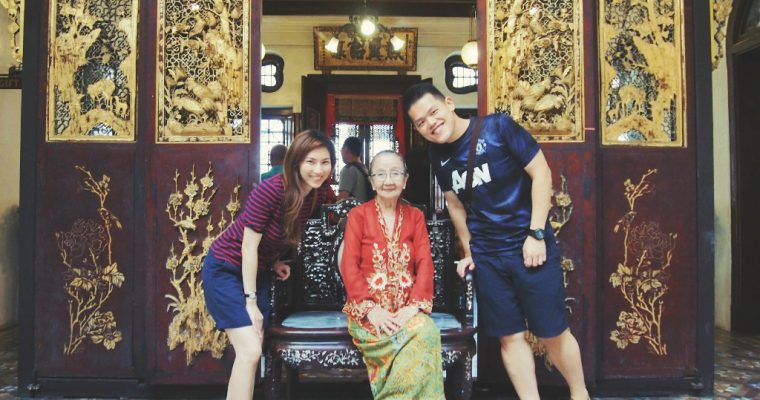
There are guided tours in English or Mandarin. If you are lucky, you will be guided by a true Peranakan, the old lady seen in the picture below. She only speaks English.

www.pinangperanakanmansion.com.my
Daily (incl Public Holidays), 9:30 am to 5:00 pm
Adult: RM20; Child: RM10

Things to do in Penang - travel.joogostyle.com

Penang State Museum and Art Gallery

This museum houses a plethora of Penang historic artefacts. However, after a tour at the Peranakan museum, the information about the Peranakan in this museum seemed lacking. But you get to learn about Penang’s history and other main cultures, such as the Malays, over here. There was quite a bit of information and exhibits for you to read and explore. The air-conditioned first level was a cool respite in the sweltering heat. Do note that the whole place is a bit run-down.

www.penangmuseum.gov.my
Daily 9:00 am to 5:00 pm, except Friday and Public Holidays
Admission: RM1


Local Attractions


Markets

Things to do in Penang - travel.joogostyle.com

There are various markets to look around — a wet market, shops selling clothes, etc. Chowrasta Market is a place to go if you want to get local titbits such as preserved nutmeg and Tau Sar Piah 豆沙饼.

Things to do in Penang - travel.joogostyle.com

The Clan Jetties / Chew Jetty

Things to do in Penang - travel.joogostyle.com

Located along the Weld Quay are Penang’s historical clan jetties, home to families of the various clans. Each of these century-old jetties is named after a Chinese clan. There were originally seven clan jetties, with one destroyed by fire. The Chew Jetty, straight down from Lebuh Chulia, is the most welcoming to tourists and has the most stilt-houses and the longest walkway.

Things to do in Penang - travel.joogostyle.com

Street Art

Penang Cat Mural - travel.joogostyle.com

I have heard a lot about Penang’s wall art. So it’s exciting to spot them all around the town! In 2012, Ernest Zacharevic was commissioned to paint murals, including the famous ‘Kids on a bicycle’. Since then, other artists have contributed. You can look at the map below to guide you in finding the different murals.

 width=

Penang Murals - travel.joogostyle.com

Other than murals, we spotted another form of art–wall sculptures. Started as a competition by the Penang State Government, 52 unique and humorous illustrations in the form of iron rod sculptures were installed on the city’s building walls. They pop up at random buildings–sometimes they are right in your face, other times, you have to look up the building to spot one.

Things to do in Penang - travel.joogostyle.com

What other attractions are you visiting in Penang? Share your suggestions below in the comments section. Travelled in December 2015, and the trip was fully paid by us and in no way sponsored.

Be sure to bookmark the Comprehensive Guide to Mariner of the Seas (Royal Caribbean).

You might also want to check out my other posts on Malaysia. Leave your comments or questions below. Love to hear from you. :)

Looking for more tips on travel, home, and baby? Subscribe to my mailing list and follow me on Instagram, Facebook, and YouTube! If you like what you read here, keep it going with small support. :)


Latest @ Instagram.


Disclaimer: JoogoStyle and Christina accept no liability (whether in tort or contract or otherwise) for any loss or damage arising from any use, misuse, inaccuracy or omission of the information or other contents published on this website.

Disclosure: Some of the links in this post are affiliate links. An affiliate link means I’ll get a small commission if you make a purchase. There’s NO extra cost to you. I appreciate your support in maintaining this website, so that I can share more tips with you. Thank you!

Airbnb In Tokyo Shinjuku: Our Experience

Airbnb In Tokyo Shinjuku: Our Experience

With sky high accommodation prices in Tokyo, Airbnb was a great alternative for us. And… I won a $250 Airbnb voucher while looking for accommodation! Thank God for this blessing. :) We started searching for the accommodation only 5 to 6 weeks prior to our 

Review of Yokoso SIM Card in Japan (Tokyo and Hokkaido)

Review of Yokoso SIM Card in Japan (Tokyo and Hokkaido)

My husband and I decided to each get a Yokoso SIM Card to travel around Hokkaido and Tokyo. My husband got the 15-day SIM card for the whole Japan trip, while I got a 8-day card for our 8.5 days stay in Hokkaido. And for the rest 

Pocket Wifi or Prepaid SIM Card in Japan?

Pocket Wifi or Prepaid SIM Card in Japan?

It’s becoming a great desire for people to stay connected with internet as they travel. The posting of photos on Facebook, Instagram, etc. While it may not always be a need, an internet connection is more of a necessity than a want if you are travelling around Japan and don’t speak Japanese. You will find it useful to google map your directions, online translate any chicken-and-duck communication, and find the shops you want to go–because you just can’t figure out the Japanese signboards.

There are a few internet options to choose from, you can even rent an iPhone or Android device. But the huge debate for most short term visitors would be whether to get a Pocket WiFi or Prepaid SIM Card in Japan. Read through to the end to find out which option I chose.

But before that…


Free WiFi Hotspots


If you are really tight on budget and/or are okay to wander around without a continuous internet connection, make sure you keep a list of free WiFi hotspots by your side. Free WiFi is usually available at train stations, major shops (e.g. BIC Camera and drugstores) and convenience stores. Note that free WiFi Hotspots will be more readily available in major cities like Tokyo and Sapporo. Check the individual website for a detailed listing.


Pocket WiFi


Pocket Wifi or Prepaid SIM Card in Japan

Image: www.jinlovestoeat.com

Pocket WiFi is a lightweight and battery powered device that “creates” a mobile WiFi hotspot for you to connect multiple mobile devices on the go. It’s similar to a WiFi router at home, except you can easily carry this pocket WiFi around with you as you travel.

✓ Pros

  • Simple to connect. Without any extra setup, your WiFi-capable device can connect to the pocket WiFi once you receive it. There is no concern about settings or mobile compatibility as you do with SIM cards.
  • Fast connection and wide coverage across Japan. They connect to Japan’s LTE network, with speed up to 150MBPS. This usually has a stronger WiFi signal than SIM card for rural and remote areas.

Cons

  • Limited battery life. Pocket WiFi runs on battery and hence you have to remember to charge it whenever you are back at your accommodation. Or you have to switch off whenever you are not using it to save battery life. If not, WiFi will not be available once it runs out of battery.
  • Juggling multiple devices. To prevent WiFi from disappearing, you may want to carry a portable battery to recharge your pocket WiFi when its battery level runs low. But this means you have many devices to carry– mobile device, pocket WiFi and a portable battery. Not a good plan to travel light.

Prepaid SIM Card


Prepaid SIM Card is like your current SIM card, inserted directly into your mobile devices. Do note that most of the prepaid SIM cards from Japan’s local carriers do not allow voice calls to non-residents but only data usage (though you can still find this calling function with PAYG SIM by b-mobile.) But with a data SIM card, you can easily do calls with WhatsApp, LINE and Skype.

✓ Pros

  • Fast connection and wide coverage across Japan (populated/popular areas). Provides fast LTE data access. For most city centres and usual travel routes, there’s wide coverage with strong signal like a pocket WiFi.
  • Affordable. A more affordable option if you are travelling solo or in a small travel party.
  • Convenience. Unlike pocket WiFi, there’s no need to switch it off to save battery life when you are not using it. Hence saving you the hassle to turn the device off and on each time you want to use it.
  • Stay connected always. There’s a lower chance that internet connection will unexpectedly be lost– like when a pocket WiFi runs out of battery; or in situations when you are separated from your travel group. You can still communicate via WhatsApp, Line, etc.

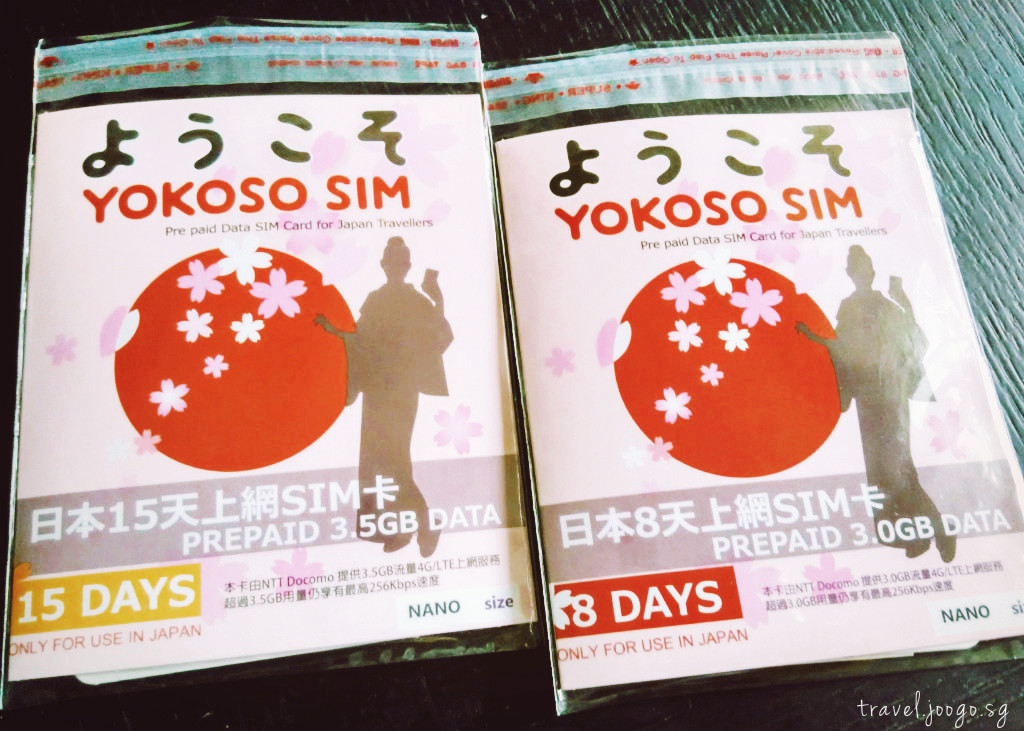
Yosoko Sim - travel.joogo.sg

Cons

  • Prepaid SIM cards in Japan only work with compatible devices. Your device must be compatible with the local network specifications—either 3G or 4G (LTE). Older models may not be compatible. Check your mobile device’s compatibility with the service provider before your purchase – they usually have a list on their website.
  • Make sure your phone is SIM-free or isn’t SIM-locked.
  • Setup Access Point Name (APN) settings. You need to configure the APN setting before you can access a network. APN is the name for the settings your phone reads to set up a connection between the carrier’s cellular network and the public Internet.)

Pocket Wifi or Prepaid SIM Card in Japan?


One thing I like to highlight, pocket wiFi and most of Japan’s “tourist” SIM cards do not have voice call function, but only data. But you can connect Whatsapp/Skype calls with the data.

A reader did email me a good question, “If there is an earthquake, will I have difficulty in using my mobile with only data sim & no voice call function?”

I was reminded of the history of “Line” app. From Wikipedia, “Line began as a response to disaster. Japan’s devastating Tōhoku earthquake in March 2011 damaged telecommunications infrastructure nationwide, obliging employees at NHN Japan to rely on Internet-based resources to communicate.”

So sometimes, data might work better than voice during earthquakes.

Which option is better for you?

Pocket WiFi is good if…

  • you have many devices you want to connect.
  • you have a sizeable travel group (and thus many devices you want to connect).

Prepaid SIM Card is good if…

  • you are travelling solo or in a small party group of 2 to 3. It’s more convenient and value for money. Then again, there might be discounts for group buy (find out more in my next post).
  • your travel duration coincides with the SIM card length of use. For e.g., Yokoso SIM has SIM cards with fixed duration of usage validity — 8, 15 or more days. Hence if you are in Japan for 7 to 8 days, a 8-day SIM card would be good for you. But if you are there for 11 days, a “pocket WiFi” or “SIM cards with fixed data limit for a period of time” might work out cheaper as it allows more flexibility in the days of usage – do your sums. ;) See next post for more information.

In any case,

There are many providers that provide both pocket WiFi and SIM Card options. I will list down my shortlisted choices (though not the cheapest in the market):

Yosoko Sim1 - travel.joogo.sg

You can usually buy your SIM card or pocket WiFi at the destination airport or designated stores in your home country. Otherwise, you can order online and have it sent to your hotel, accommodation or home.

It would be good to buy or reserve pocket WiFi in advance during the peak season because supply can be limited. You can then collect it at the airport or your accommodation.

What did we use in the end? 

We were initially looking at Global Communications pocket WiFi, but it was stated on its website that we should get the premium version for travel in Hokkaido. Premium version = more expensive. Then, I emailed Changi Recommends about their pocket WiFi for Japan and was told that the router will experience slow connectivity in mountainous, underground and coastal areas, otherwise okay.

That didn’t sound too good, and we were not ready to fork out the money for the premium pocket WiFi. SIM card might have the same connectivity problems, but at least it is not as expensive. But..but I was quite unsure about the changing of APN settings for the SIM card. Seems like a hassle and the settings might not work for my phone.

In the end, my husband and I decided to each get a Yokoso SIM to travel around Hokkaido and Tokyo. I got a 8-day card for our 8.5 days stay in Hokkaido. And for the rest of the trip in Tokyo, I tried out the pocket WiFi provided by our Tokyo airbnb host. My husband got the 15-day SIM card for the whole Japan trip.

One major factor we chose SIM card in the end was the price. Since we only have two people with two devices in total, it was more value for money to get two SIM cards (or one SIM card and tether) than one pocket WiFi.

Read about our review and experience of Yokoso SIM and pocket wifi, and find out where to get a cheap Yokoso SIM.

Have you used a data SIM card or pocket WiFi in Japan before? Share with us your experience below or on our Facebook Page and Instagram.


Bookmark this page >> Overview Japan Itinerary: Hokkaido and Tokyo (Winter/Spring 2016) as I update it with links of useful tips and navigation around Japan.

Travelled during February & March 2016.

Overview Japan Itinerary: Hokkaido and Tokyo (Winter/Spring 2016)

Overview Japan Itinerary: Hokkaido and Tokyo (Winter/Spring 2016)

Japan Itinerary Be sure to bookmark this page as I update this page of my Japan Itinerary with useful tips and navigation around Hokkaido and Tokyo. Find out interesting attractions to visit, accommodation to stay and food to eat. Useful Travel Information Important Tips for Winter 

Entertainment on Mariner of the Seas

Entertainment on Mariner of the Seas

What to do on Mariner of the Seas? There’s a variety of sports, recreational, and chillax activities for you to choose from and do. Otherwise, enjoy the entertainment on Mariner of the Seas that I have listed down in this post. 1) Dreamworks If you or