Tag: East Asia

Meiji Jingu, Yoyogi Park and Ota Museum | Harajuku Tokyo (Part 1)

Meiji Jingu, Yoyogi Park and Ota Museum | Harajuku Tokyo (Part 1)

Harajuku Tokyo (原宿) lies between Shinjuku and Shibuya on the Yamanote Line. At Harajuku, you get to witness Japan’s teenage scene and eccentric fashion at Takeshita Dori (Takeshita Street). And you get to shop at stylish Omotesando Hills or the nearby hipster district, Cat Street. There’s more shopping at LaForet 

What to Eat in Harajuku and Shibuya Tokyo?

What to Eat in Harajuku and Shibuya Tokyo?

For food lovers hunting for good food around Tokyo, I’m writing a series of the food we tried (or almost tried) around Ginza, Harajuku, Shibuya and Shinjuku. Look out for our honest reviews. :P First it was “What to Eat in Ginza Tokyo?“. Now, it will be what 

Walking Around Glitzy Ginza, Japan

Walking Around Glitzy Ginza, Japan

Ginza (銀座) is Tokyo’s famous upmarket shopping, dining and entertainment district on one of Japan’s most expensive real estate. In this district, you will be surrounded with high-end boutiques, department stores, art galleries, restaurants, night clubs and cafes.

Ginza used to be the site for silver coin mint from 1612 to 1800. Hence, the district got its name Ginza, which means “silver mint” in Japanese. However, it was only after the 1923 Great Kanto Earthquake that Ginza was reconstructed to become the luxury district as it is today.

Ginza, Japan - travel.joogo.sg


Local life and Culture


We made our first Ginza stop at the not-so-glitzy but full-of-character Tsukiji Fish Market. Find out more about this place with this post: Visiting Tsukiji Fish Market. Thereafter, we walked in the direction of Yurakucho Station and headed to the main Ginza area.

Tsukiji Fish Market 1 - travel.joogo.sg

Along the way, you can make a stop to Kabuki-za (website), the world’s only theater dedicated for kabuki performances. The original Kabuki-za building was a wooden structure built in 1889. Due to destruction and age, it was subsequently re-built 3 times in the architectural details of pre-Edo period’s castles and temples.

Kabuki is an art of showmanship which involves elaborate costumes, thick make-up, outlandish wigs, and actors’ exaggerated actions. A kabuki program is made up of several acts. Tickets are sold for individual acts and also for the entire play. For non-Japanese speaking visitors, English guides in audio or subtitles are available too.

Tokyo Subway Wall ART- travel.joogo.sg

Spotted this mural in the subway station


Shopping at Ginza, Japan


About 500m away from Kabuki-za, you will find a neo-renaissance style building that has a clock tower at the rooftop. Built in 1932, this is a landmark of Ginza and and one of the few buildings that remained standing in the area after World War II.

This is now the main building of Ginza Wako, a department store that sells luxury goods such as watches, clocks, jewellery, men’s and women’s goods, interior decor and food products.

Ginza 2 - travel.joogo.sg

In addition, Ginza Wako has other outlets peppered across Ginza, of which there’s an annex beside this clock building where you can find tea salon, cake and chocolate shop and gourmet salon. Sounds like a place to enjoy a tai-tai life! ;P

  • www.wako.co.jp/en
  • Main Building: 4-5-11 Ginza, Chuo-ku, Tokyo 104-8105
  • 10:30 am – 7:00 pm, Daily except year-end and New Year

Ginza 7 - travel.joogo.sg

Other than Ginza Wako, you can also check out other department stores such as Matsuya where you can find international high-end brands and popular high street fashion.

As you walk around Ginza, you will also notice flagship stores of many international luxury brands such as Chanel. However, most of them have begun or will start to refurbish their stores in anticipation of the flood of tourists for the 2020 Olympics.

Ginza 1a - travel.joogo.sg

But even before the Olympics, Tokyo is already way too crowded for me! >.< With that in mind, do visit Ginza on a weekend afternoon when the pedestrian zone is widened. The main street Chuo Dori (Chuo Street) will be closed off to road traffic and opened for pedestrians. The road closure is on every Saturday and Sunday from 12:00 pm to 5:00 pm (until 6:00 pm, from Apr – Sep).

In addition, if you are a short-term tourist planning to spend a lot in Ginza, do remember to bring your passport! Because you can can enjoy TAX-FREE SHOPPING at most major stores. :)

Ginza 6 - travel.joogo.sg


Food


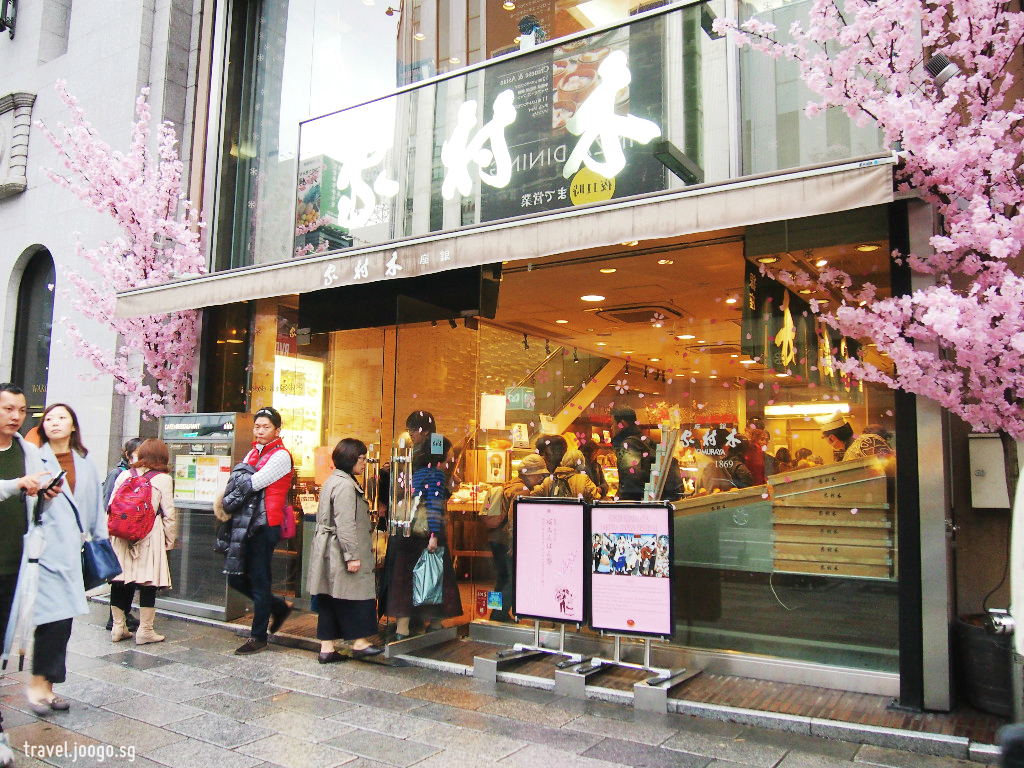
Want to take a break and have a snack? You should head to Kimuraya’s head store in Ginza for anpan or other types of bread. Anpan is a freshly baked bread (“pan”) with a sweet filling of red bean paste (“an”). However, if bread is not filling enough, the Ginza outlet has a café, grill and restaurant above their bakery.

Ginza 4 - travel.joogo.sg

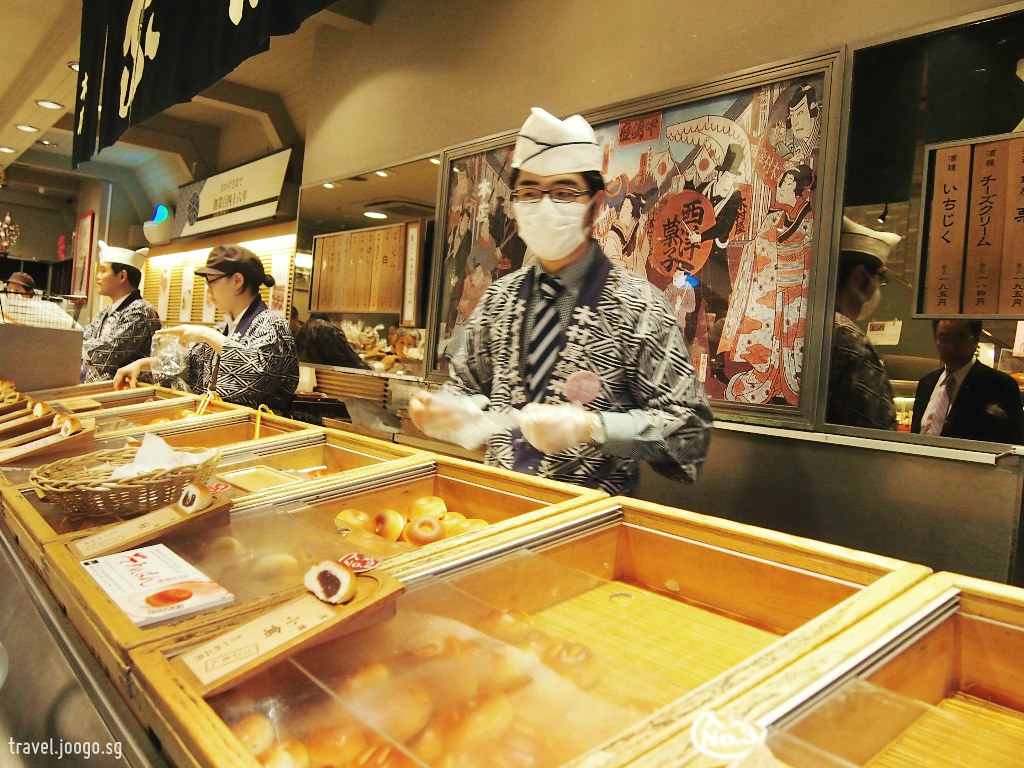
Their No.1 bestseller is Sakura Anpan with sakura topping but it was sold out when we were there. Hence we tried their No. 2 bestseller (¥162 yen, S$2), Ogura Anpan, the “original” anpan of purely bread and red bean. Kimuraya also has seasonal specials for the different seasons such as Ichigo (strawberry) and kurikabocha (chestnut and pumpkins).

Ginza 4a - travel.joogo.sg

Other than this Kimuraya outlet in Ginza, you can also find Kimuraya’s anpan at its outlets in Shinjuku and other parts of Tokyo and also at Tokyo’s major department stores.

For more about anpan’s history, bestsellers and our review on it, refer to What to Eat in Ginza Tokyo?.

  • www.kimuraya-sohonten.co.jp (in Japanese only)
  • Opened Daily except New Years Holidays
  • Hours 1F Bakery, 2F Cafe: 10:00 am – 9:00 pm (LO 8:30 pm) | 3F Grill: 10:30 am – 9:00 am (LO 8:30 pm) | 4F Restaurant: Lunch 11:00 am – 3:00pm (LO 2:30 pm), Dinner 5:00 pm – 9:00 pm (LO 8:00 pm)
  • Address 4-5-7 Ginza, Chuo-ku, Tokyo (1-minute walk from Ginza Station A9 Exit)

Ginza 5 - travel.joogo.sg

If Kimuraya’s food is not to your liking, you can also easily enjoy delectable food at one of the high-class restaurants around Ginza. Ginza offers the finest cuisine of any category, pick from Japanese, French, Italian and Chinese cuisines.

However, if you want a more affordable option, head towards Yurakucho JR station. Because over there, you will have a Japanese salary-man experience at one of Tokyo’s interesting dining districts, Yurakucho Gado-shita (“below the girder” / “underneath the railroads”).

Yurakucho Gado-shita 1 - travel.joogo.sg

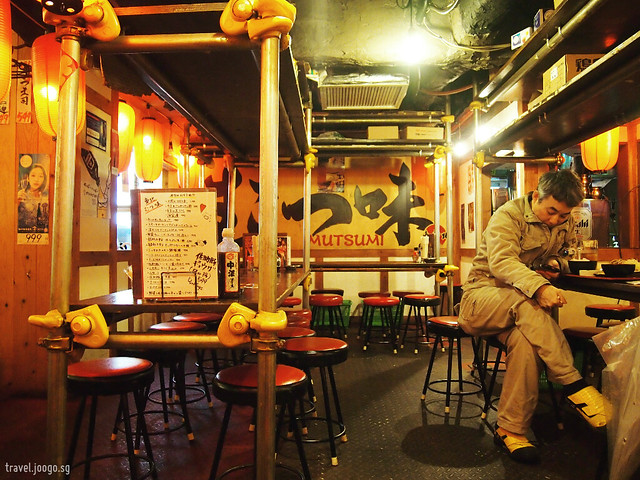
Under the elevated tracks of Yurakucho JR station (between Yurakucho and Shinbashi; and Yurakucho and Tokyo), you’ll find dozens of hidden restaurants packed in small alleyways. These restaurants ranged from small Yakitori joints and Izakayas to beer halls and French wine bars.

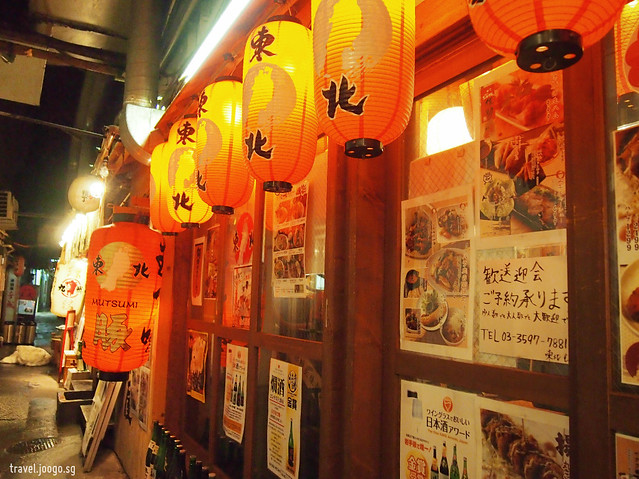
It will be good to research which Izakaya to go to before you go. Different Izakayas have different specialties such as fish, seafood and pork. In the end, we went to Mutsumi because based on photos pasted on its glass door, its specialty is most likely pork. At Mutsumi, it costs about ¥1,645 (S$21) for a two Yakitori sticks and a Donburi set (Japanese rice bowl dish) with salad and miso soup.

For dining rules of Izakaya and our review on its food, refer to What to Eat in Ginza Tokyo?.

Yurakucho Gado-shita - travel.joogo.sg

p.s. Before we arrived at Gado-Shita, we went to the nearby JCB Plaza to redeem complimentary airport limousine tickets because we hit a certain spending on our JCB cards.


Shopping: LOFT and MUJI


If you are eating along the stretch of Gado-shita that’s between Yurakucho and Tokyo JR stations, you’re only a few minutes walk away to MUJI Flagship Store at Yurakucho.

However, when we entered the store, there’s no sign of MUJI’s familiar minimalist style — the uniform packaging and the neat display. It was only we ventured further that we saw a big red wall with the word MUJI at a staircase leading to the 2nd floor.

So it turns out that Muji is sharing the space at level 1 with a popular lifestyle chain in Japan called LOFT.  The store carries many different brands of a wide array of items – from your beauty products to bags to stationery. We snagged a sleek backpack here. Still a proud purchase so far. :P

Muji and Shop 1 - travel.joogo.sg

  • www.loft.co.jp/shop_list_en
  • 10:30 am – 9:30 pm, daily except for Sunday & PH: 10:30 am – 9:00 pm
  • Yurakucho LOFT : 1F Infos Yurakucho, 3-8-3 Marunouchi, Chiyoda-ku (next to Yurakucho Station, Exit D9)

Muji 1- travel.joogo.sg

After shopping at the first floor, we walked up to the 2nd and 3rd floor for the rest of MUJI Yurakucho. The first thing that welcomed us on the 2nd floor was Café & Meal MUJI which sells healthy food at reasonable prices.

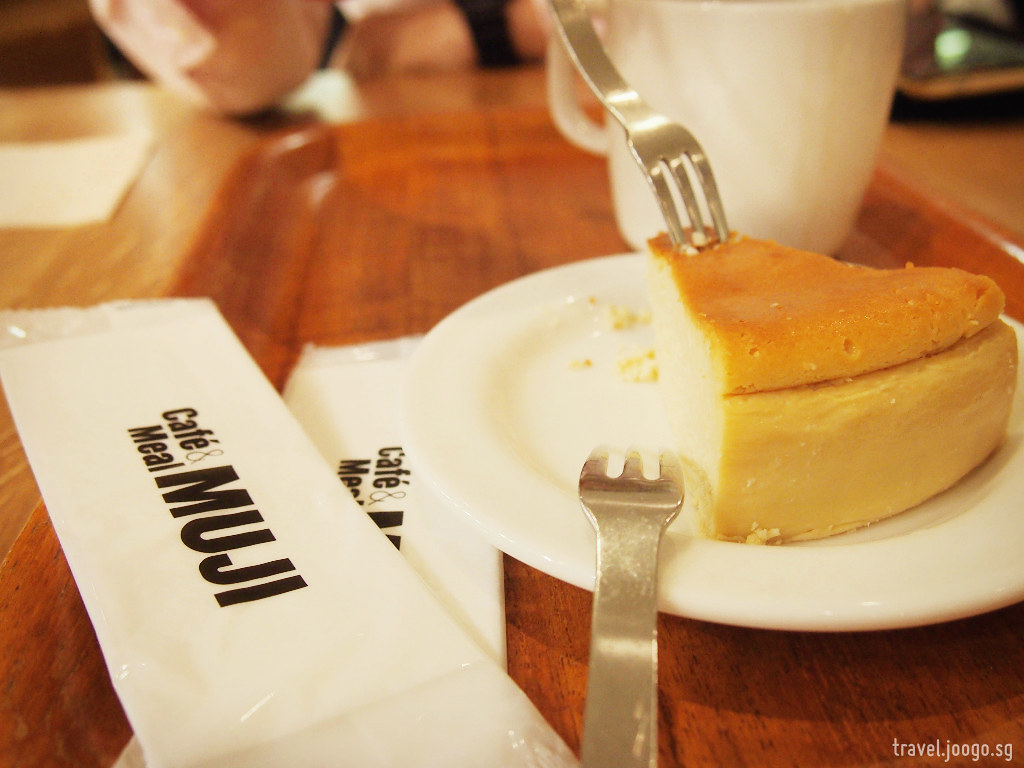
The Cafe has a mixed rice concept (杂菜饭) where dishes were displayed like that of a ‘create your own salad’ counter. From there, choose the 2-3 dishes you want the staff to plate for your meal. Since we were still full from our lunch at Gado-shita, we had MUJI’s afternoon tea set of coffee and cake instead. The cheesecake served was surprisingly nice! :)

Muji Cafe - travel.joogo.sg

I’m sure most of you know the brand MUJI. Born in the early 1980s, it is now one of the most recognised Japanese brand worldwide. Not surprising, because as of 2015, there are 500 MUJI stores and outlets with 50% of them outside of Japan. Of which, this MUJI Flagship Store at Yurakucho is apparently the largest in the world. It carries a wide range of products from apparel, food to furniture.

Muji 4 - travel.joogo.sg

A notable section to check out is MUJI BOOKS, where 20,000 book titles are displayed on natural solid wood shelves. Sit and browse through the books in this section’s cosy corner of tables and chairs.

Muji 2 - travel.joogo.sg

Another section that amazed us was MUJI’s living space zone. There are living spaces such as the dining room in a full set up. One that’s similar to those showroom displays you usually see in Ikea.

There’s also a wide variety of household goods for you to purchase — furniture, bedding, kitchen items, bath items, curtains, rugs, storage containers, etc. And surprisingly, customer can also engage MUJI’s renovation services of interior designers and renovation specialists.

Muji 3 - travel.joogo.sg

Once again, remember to bring your passport out with you if you are a short term visitor to Japan. Because when you show your passport, you get to enjoy discount + tax free rebate on your shopping at LOFT and MUJI! :)

So, that’s about all I can say about our short visit to Ginza! Where else would you recommend us to visit or eat in Ginza? Share with us below or on our Facebook Page or Instagram. Also, bookmark this page > Overview Itinerary: Hokkaido and Tokyo (Winter/Spring 2016)

What to Eat in Ginza Tokyo?

What to Eat in Ginza Tokyo?

For food lovers hunting for good food around Tokyo, I’m writing a series of the food we tried (or almost tried) around Ginza, Harajuku, Shibuya and Shinjuku. Look out for our honest reviews. :P First up, what to Eat in Ginza Tokyo? Tsukiji Fish Market Before starting your 

Tokyo Metropolitan Government Office, Tokyo Skytree or Tokyo Tower?

Tokyo Metropolitan Government Office, Tokyo Skytree or Tokyo Tower?

There are many places in Tokyo where you can admire the incredible panoramic views of the city. People usually head to Tokyo Metropolitan Government Office, Tokyo Skytree or Tokyo Tower. Otherwise, you can go to other sites which include Roppongi Hills, Tokyo World Trade Center, Bunkyo Civic Center and 

Visiting Tsukiji Fish Market | Ginza, Tokyo

Visiting Tsukiji Fish Market | Ginza, Tokyo

Is Tsukiji Fish Market moving? If not, what are the hours? Any good sushi here? Find out more. :)


About Tsukiji Fish Market

Tsukiji Fish Market 1 - travel.joogo.sg

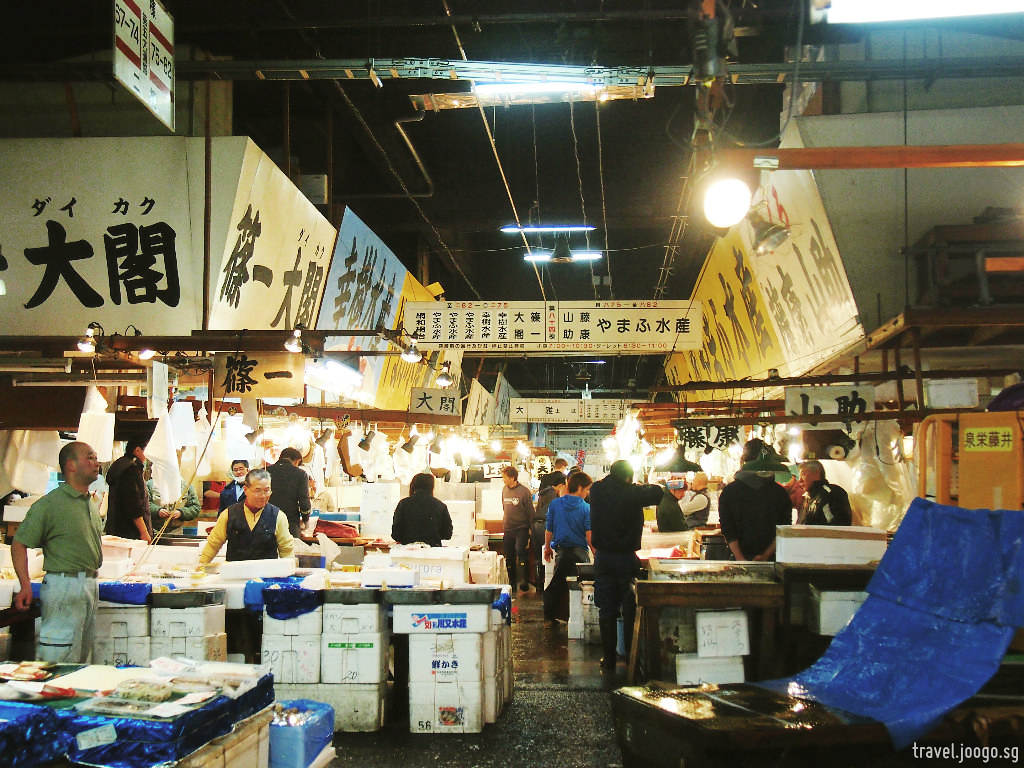
Tsukiji Market (築地市場) is a wholesale market for fish, fruits and vegetables in Tokyo. This market is the largest of its kind in the world and handles about approximately 2,000,000 kg of marine products each day! Imagine the sheer number of shops and restaurants it distributes across Japan, Asia and beyond. It is definitely one busy market in the morning.
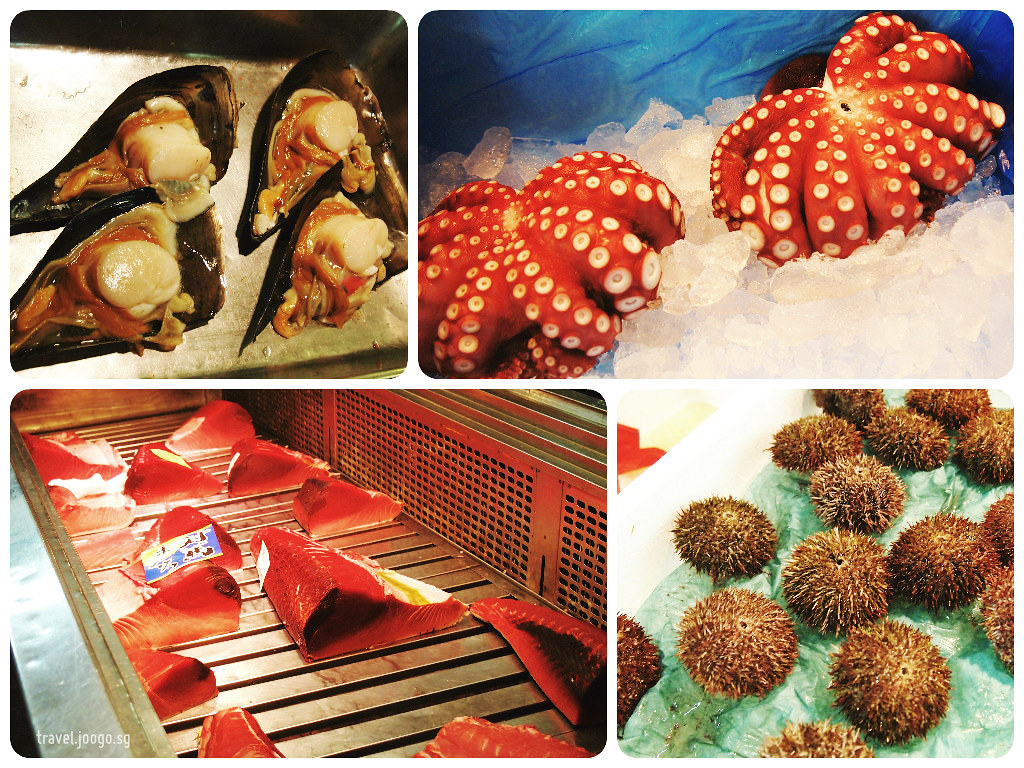
Tsukiji Fish Market 4 - travel.joogo.sg

Is Tsukiji Fish Market Moving?

If you heard the news, Tsukiji Fish Market was originally scheduled to move in November 2016. However due to ballooned cost and environmental issues at the new site, Tokyo Governor Yuriko Koike has delayed the market’s move to Toyosu indefinitely. So visit this tourist hot spot while you still can! Currently, the market is still at its 81-year-old site in Tsukiji, Central Tokyo and near to upmarket Ginza.


Tuna Auction


Start your day very early at Tsukiji Fish market and witness an exciting tuna auction! Buyers bid for fresh tuna early in the morning. The auction typically starts at 5:20 am and ends around 10 am.

What time should you reach?

Registration begins at 5 am at a first-come, first-serve basis. It will be closed when the maximum capacity of 120 visitors is reached before 5 am. Usually there are many “kiasu” tourists who will arrive way before 5 am, so try to reach Tsukiji Fish Market around 3 am – 4 am to guarantee a spot.

What time will you start the tour?

People who have registered will be split into two sessions of 60 people each: 5:25 am to 5:50 am, and 5:50 am to 6:15 am. So be prepared to wait 2 hours for a 25 minute session.
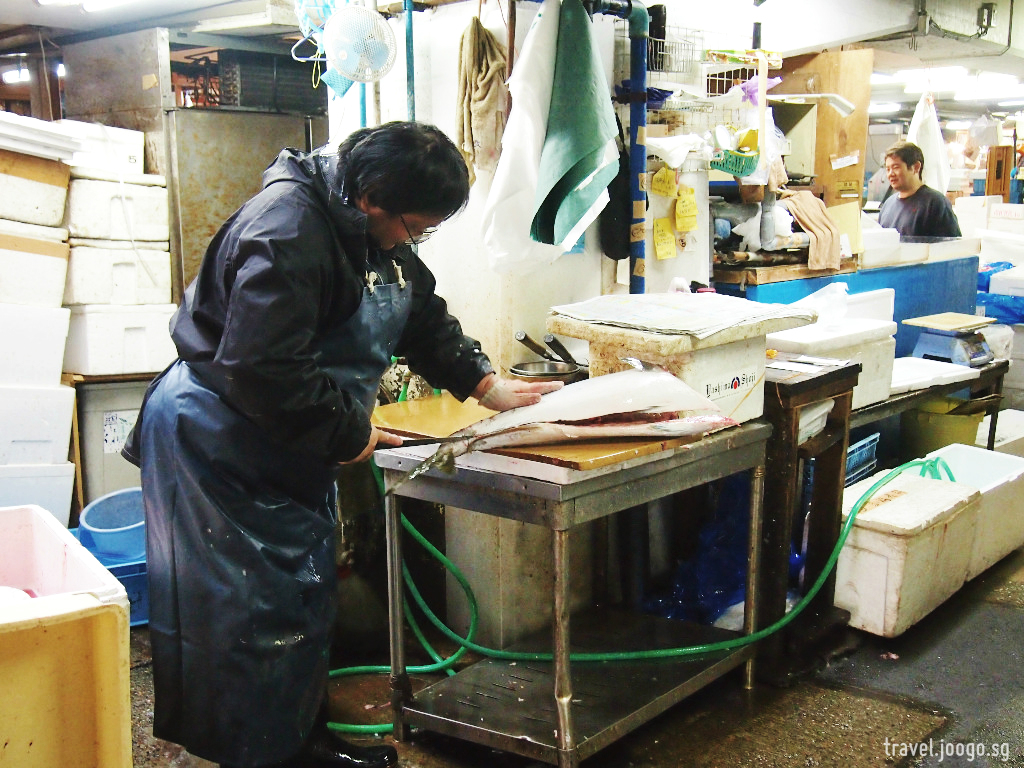
Tsukiji Fish Market 5 - travel.joogo.sg

During the Auction

Before auction, buyers will check the tuna’s quality using their tools and fingers. Then the auctioneer rings the bell to start the auction. Buyers signal to show their offered price, and seller mirrors back the hand sign to show the current highest bid. Catch the fast-speaking auctioneer sprouting industry jargon that even native speakers having difficulty understanding. Auctions move from the smallest to the largest fish, with some sessions ending merely in seconds.

Getting There

As far as I know, you can only get there during the wee hours by taxi or private car. Ask the driver to bring you to Osakana Fukyū Center おさかな普及センター (Fish Information Center, GPS Coordinates: 35.663602, 139.773467). It’s located at Tsukiji Fish Market’s Kachidoki Gate 勝どき門 (Kachidoki Mon), refer to market map below.

p.s. We didn’t go to the auction considering the early hours, long wait and cost to get there. >.<


Getting around Tsukiji Fish Market
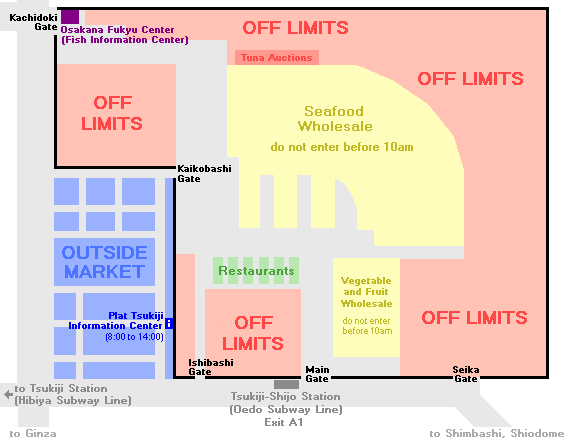

tsukiji-fish-market-map

Photo Credit: www.japan-guide.com/e/e3021.html

If you are looking at the above map along with google map, rotate this map 180 degrees.

The market reminded me of our own Pasir Panjang wholesale market, except it was seafood galore at Tsukiji Fish Market. Although the map said not to enter certain areas before 10 am, we were at the market about 8:30am. Even then, many tourists were already at Tsukiji Fish Market.

A Day in Tsukiji Fish Market

Technically the market “starts work” at 5 pm, receiving fresh shipments from all over the world until wee hours. Then from 3 am to 6+ am, it’s the buzz around tuna auction. After the auction, around 7 am, the middlemen bring their purchases from the auction to their stalls and sell them to purchasers from retail shops, restaurants, etc.

At 8 am, these retail purchasers would have loaded and be on their way back to their shops in town. That explained why the activity seemed tapered down and some shops closed when we reached around 8:30am. Nevertheless, it’s still crowded and busy between 8 am and 10 am. From 11 am to 1 pm, the middlemen starts to clean their stalls and closed for the day.
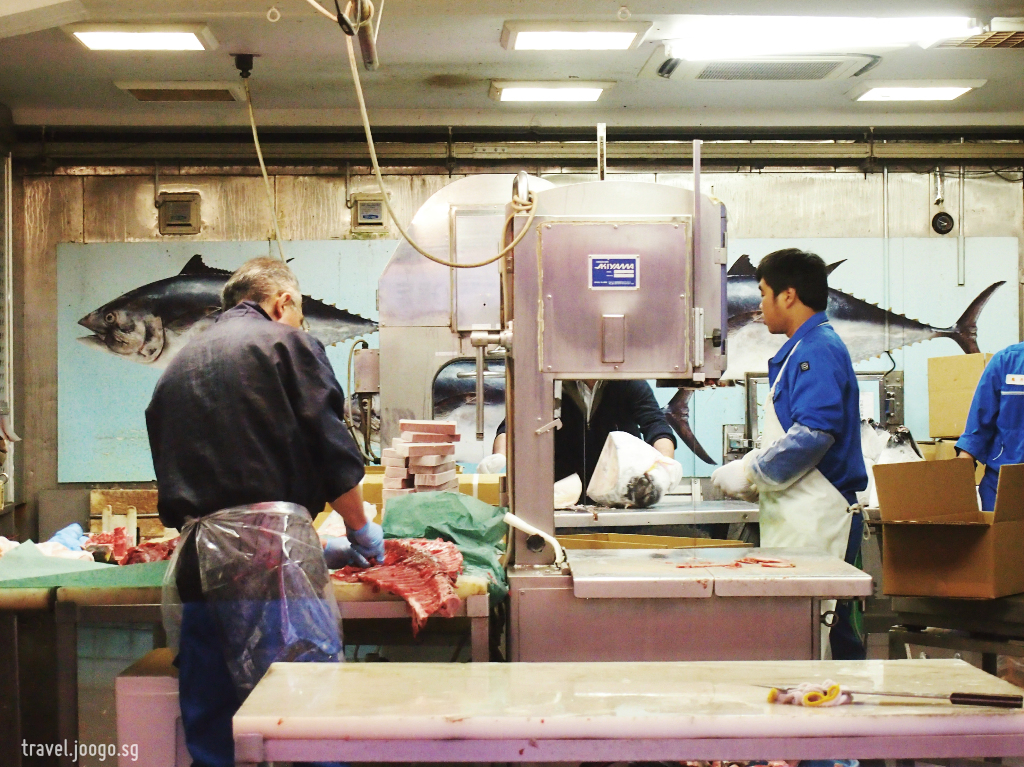
Tsukiji Fish Market 2 - travel.joogo.sg

Visiting Tsukiji Fish Market

To be honest, the place is so big and confusing, that the best thing to do is to just walk around and explore. I don’t think we entered the wholesale area because tourist are not allowed before 10 am. We were so lost that we didn’t know where we were!

However, I am quite sure we entered via the off limits area that’s very near to Tsukiji-Shijo Exit A1. We and some other tourists walked across a huge loading bay meant for their goods vehicles. Oops! Even though we were vigilant to get out of traffic’s way, it was still dangerous. Please don’t make the same mistake.

Tsukiji Fish Market 3 - travel.joogo.sg

Since the market is primarily still a place for business, try not to interfere with business. Be alert to your surroundings and avoid blocking the traffic. Look out for the mini truck (photo above) meandering in the small alleys of the market. Also, avoid bringing any luggage to the market.

Outer Market and Restaurants
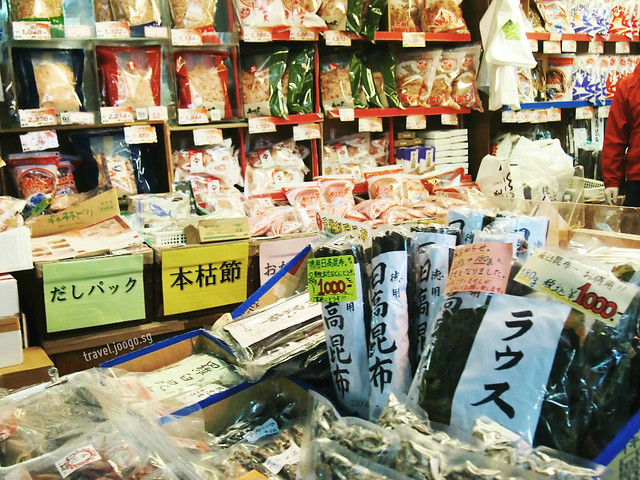
Tsukiji Fish Market 6 - travel.joogo.sg

If you like to buy knives, merchandise or fresh produce in portions smaller than wholesale quantity, you can head to the outer market. This area, comprising of small retail shops and restaurants, typically opens from 5 am to 2 pm.
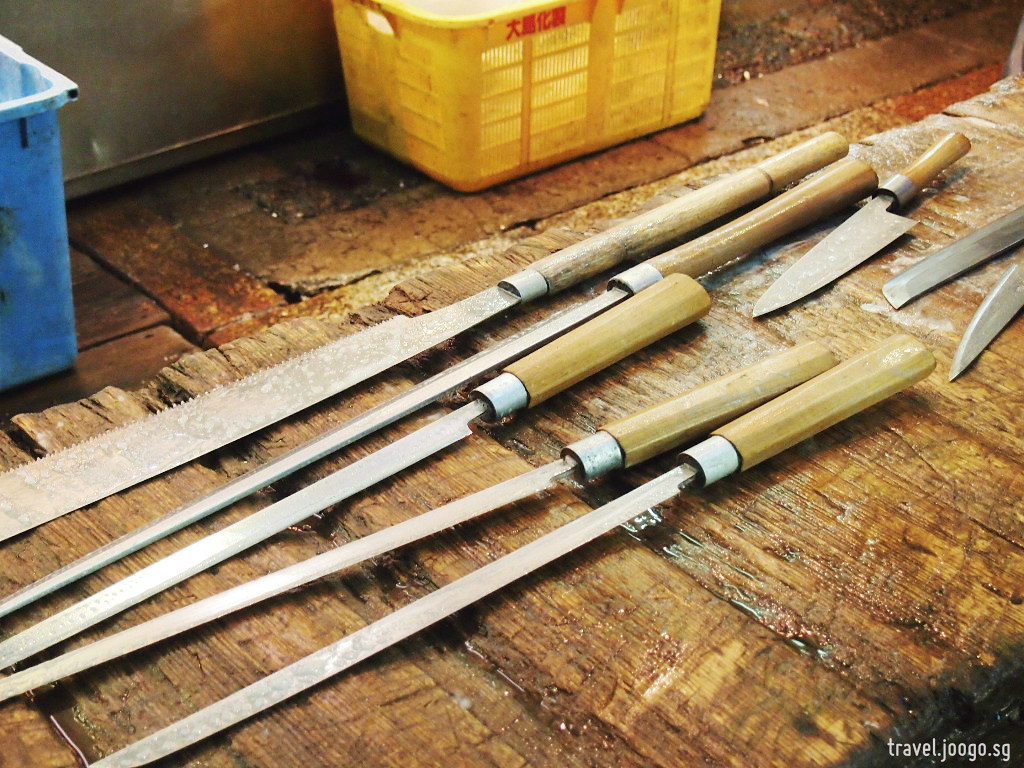
Tsukiji Fish Market 6 - travel.joogo.sg
One of the recommended things to do at Tsukiji Fish Market is to have a fresh sushi breakfast or lunch at one of its restaurants. Find these restaurants in the inner and outer markets. They’re usually opened from 5:00 am to noon or early afternoon.

We didn’t eat at Tsukiji Fish Market because we had our fresh seafood at Sankaku Fish Market, Hokkaido. Compared to Sankaku, Tsukiji is way more crowded and expensive.
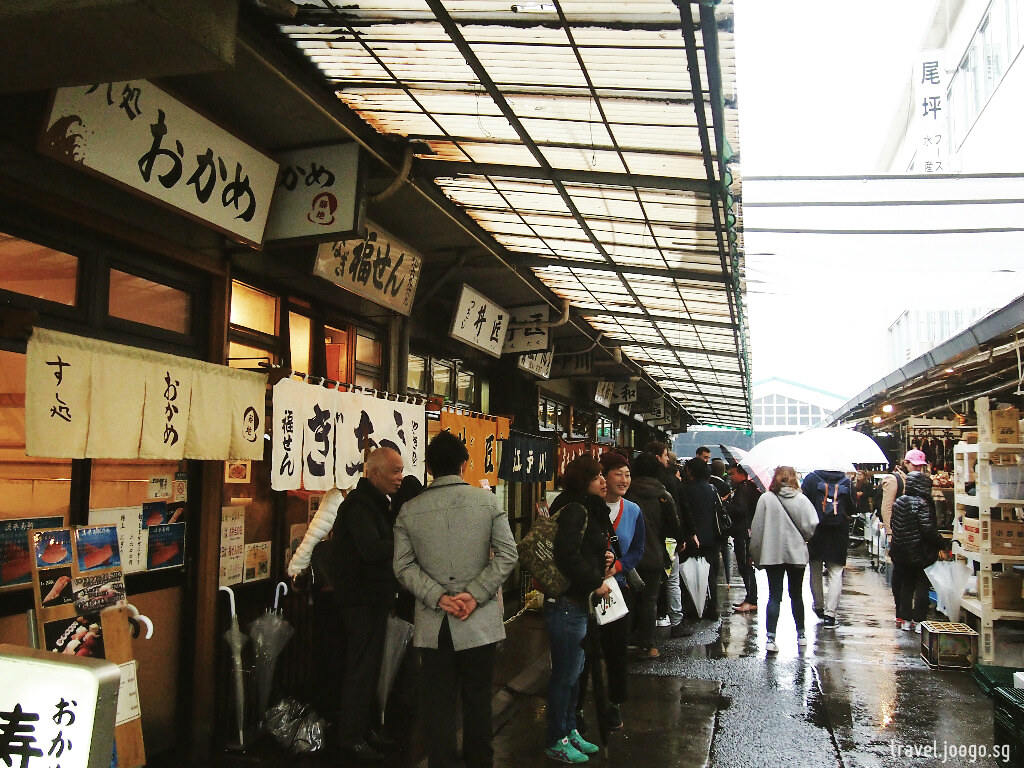
Tsukiji Fish Market 8 - travel.joogo.sg

Nevertheless, if Tokyo is your only stop, you should try and taste the oozing freshness at Tsukiji Fish Market. The more popular sashimi restaurants are in the inner alleys near to the main entrance. In particular, Sushi Dai (寿司大) is the most popular one and you might need to wait for 2 to 3 hours. A set of 10 sushi pieces and one roll should cost you about ¥3,900 (S$49). You can also go for Daiwa Sushi (大和寿司) if the queue at Sushi Dai is too long.

Enjoy your food and have fun at Tsukiji Fish Market!
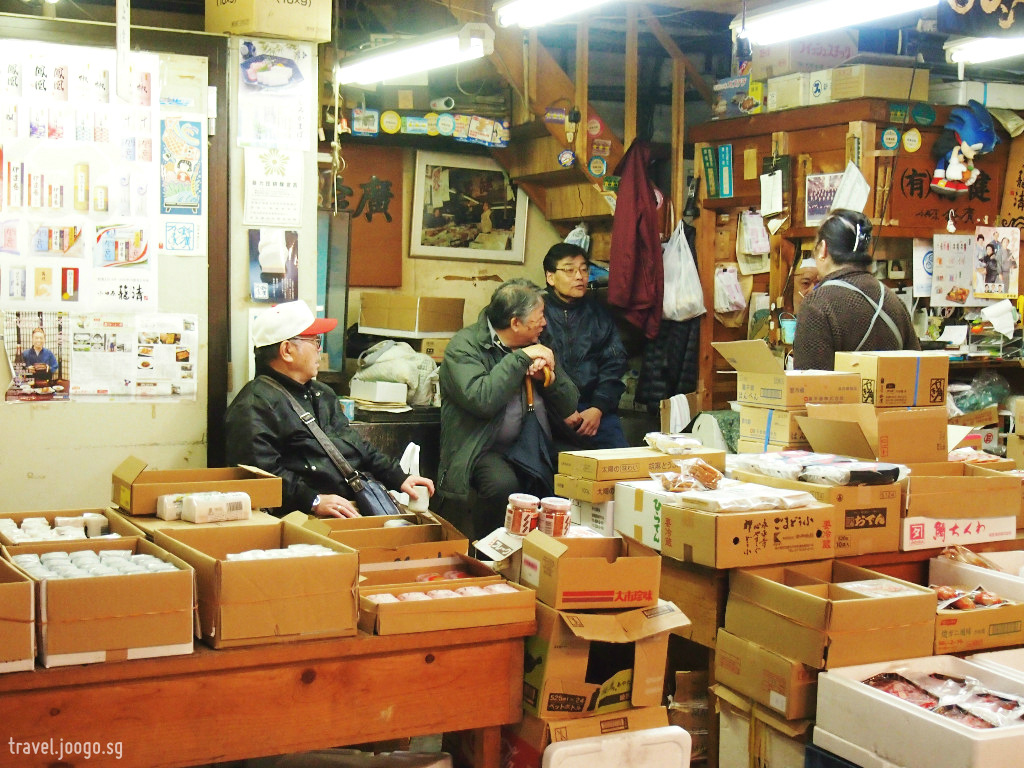
Tsukiji Fish Market 7 - travel.joogo.sg

Information

  • www.tsukiji-market.or.jp/tukiji_e.htm
  • Opening Hours: Generally 5:00 am to 2:00 pm. Opened all mornings except for Sunday, PH and some Wednesdays.
  • Getting here:
    • Tsukiji-Shijo Station (Oedo Subway Line): We exited from Exit A1 and turn right. In a few steps, we saw a gate for vehicles to drive in and out of the market. However, you might want to walk a bit further to right into the market. It’s much safer!
    • Tsukiji Station (Hibiya Subway Line): 5 minutes walk.
    • Shimbashi JR station: 15 minutes walk.

Do you have other questions or tips about Tsukiji Fish Market? Ask or tell us below or on our Facebook Page or Instagram. Bookmark this page >> Overview Itinerary: Hokkaido and Tokyo (Winter/Spring 2016)

Doraemon Museum (Fujiko F. Fujio), Tokyo

Doraemon Museum (Fujiko F. Fujio), Tokyo

Doraemon has been around for decades and still remains popular till this date. So the museum appeals to both children and adults who grew up with the series. I am one of those who grew up watching Doraemon cartoon series! And I love it~ What better way to reminisce 

One Day Guide: Things to do in Otaru (Japan, Hokkaido)

One Day Guide: Things to do in Otaru (Japan, Hokkaido)

Otaru (小樽) is a port town steeped in rich history and home to many beautiful architecture along the picturesque canal and the busy Sakaimachi street. These rows of stone buildings were mainly former warehouses and office buildings of shipping and trade companies. They were left behind from the