Tag: East Asia

Drugstores in Japan (Part 1)

Drugstores in Japan (Part 1)

You should never skip a visit to the drugstores in Japan. It’s where you can find a vast collection of Japanese beauty products at a “bargain”– your cosmetics, facial care, body care, etc. Not only that, you can also find effective over-the-counter (“OTC”) medicine, household products, 

Shimokitazawa | Tokyo, Japan

Shimokitazawa | Tokyo, Japan

On our way back to Shinjuku from Doraemon Museum, we passed by Shimokitazawa, commonly known as Shimokita. It’s only a few stops away from Shinjuku station. Located at the western part of Tokyo, Shimokita is a small hipster town that’s popular among the young crowd. It’s comparably smaller 

Shinjuku Gyoen National Garden in Spring Sakura

Shinjuku Gyoen National Garden in Spring Sakura

After all the shopping and eating in Shinjuku (What to Do at Shinjuku Tokyo, Japan?“,What to Eat in Shinjuku Tokyo? (Part 1)” and (Part 2)“), I needed to find some respite in the nature. So glad there’s a huge garden, Shinjuku Gyoen National Garden, walkable from our Shinjuku airbnb and Shinjuku train station. Depending on the flowers you like and the time of the year you are going, it’s not necessarily a must go on your first trip to Tokyo (read on to find out which season to visit).
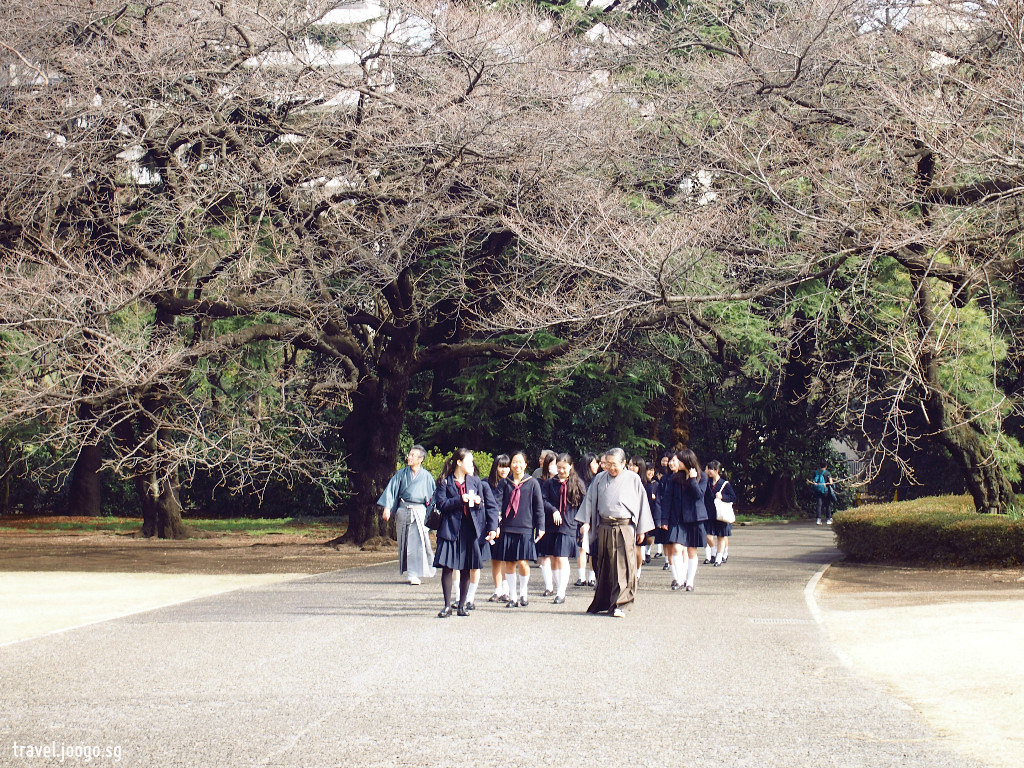
Shinjuku Gyoen National Garden - travel.joogo.sg


History


Shinjuku Gyoen was first built during the Edo period on the private residence of Naito Kiyonari, a trusted vassal of Ieyasu Tokugawa, Japan’s first shogun (military dictator/de facto ruler). During Meiji era, the government converted the site for agricultural experiments and research. It later became an imperial estate, named “Shinjuku Imperial Botanical Garden” and then opened to the public after World War II as “Shinjuku Gyoen National Garden”.
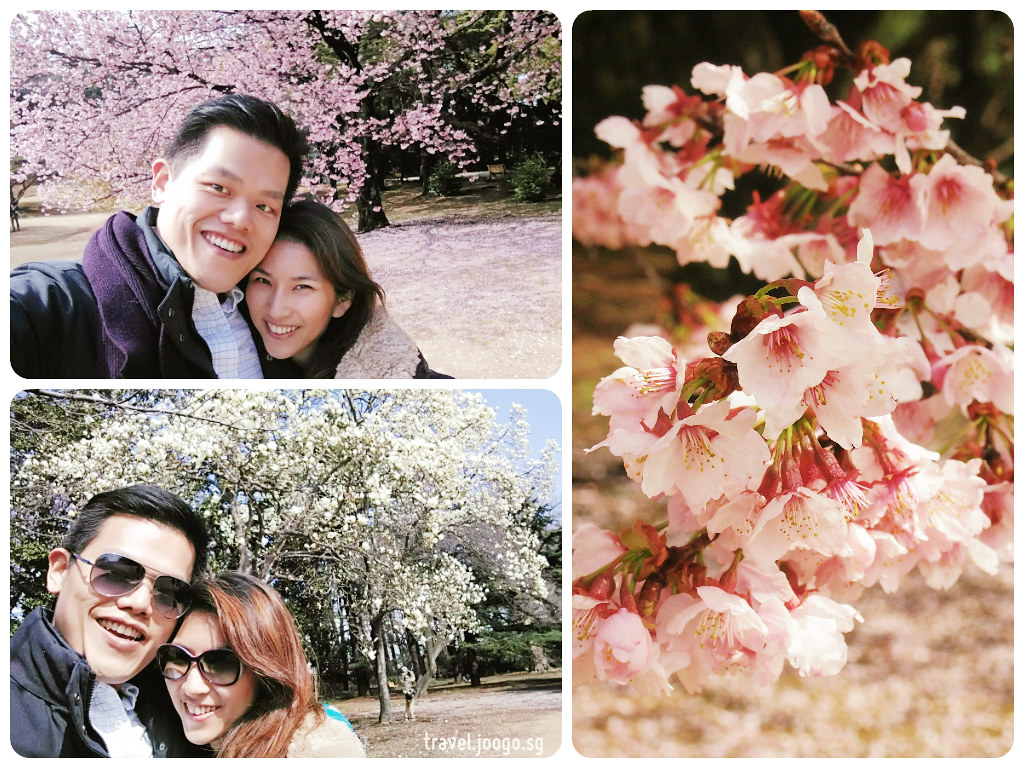
Shinjuku Gyoen Spring Sakura 1 - travel.joogo.sg


General Visitor Information


If you are coming from Shinjuku train station, you will walk about 10-15 mins walk before reaching the Shinjuku Gate. Then, proceed to purchase your ticket at the information center for ¥200 (S$2.50) / adult.

It will probably take you 1 to 2 hours to walk around Shinjuku Gyoen  and appreciate its beauty and of course, take photos. :) Best to go early to avoid the crowd!
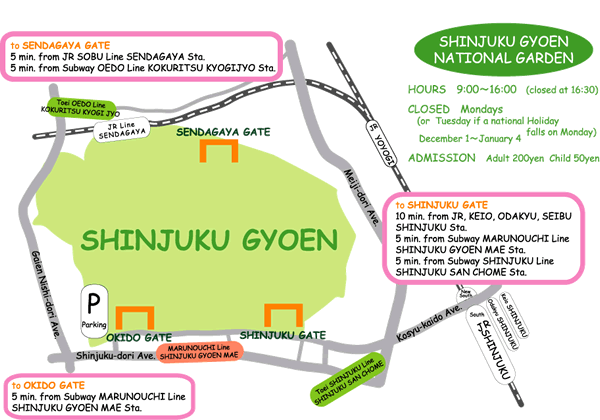
accessmap


Different Parts of the Garden 


With an area of 58.3 hectare, the garden is subdivided into a few major gardens: French Formal Garden, English Landscape Garden, Japanese Traditional Garden, and Mother & Child’s forest (Hahato-Kono-Mori). Other than these themed gardens, there are other areas in Shinjuku Gyeon to visit as well.
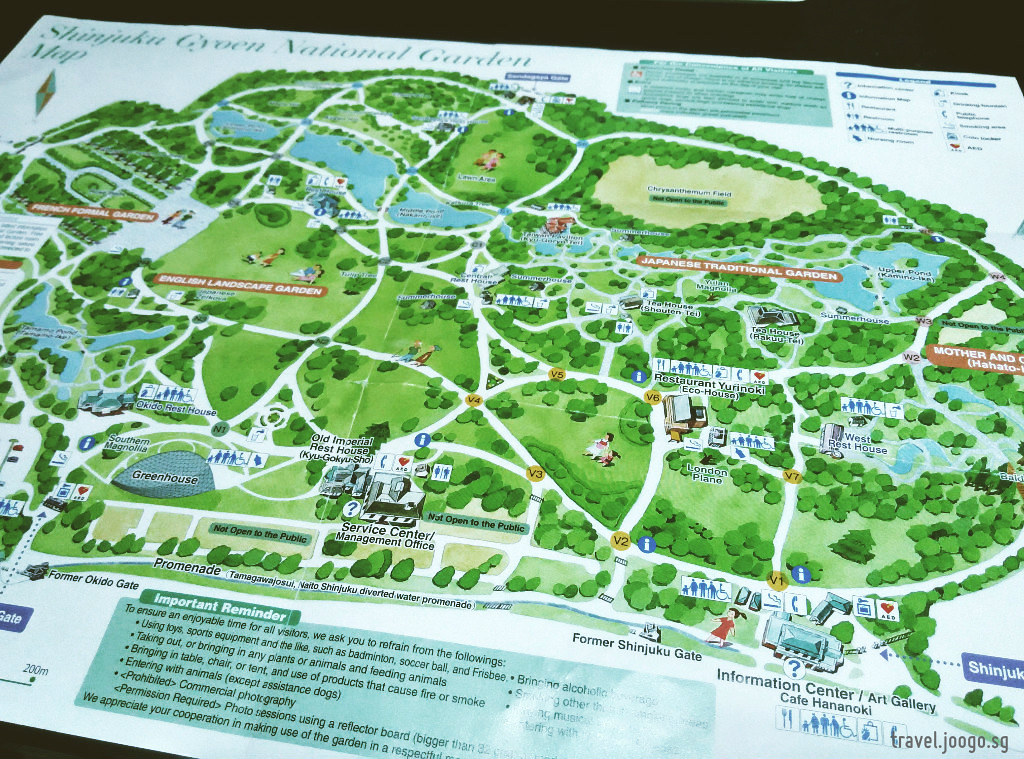
Shinjuku Gyoen Map - travel.joogo.sg

These other points of interest in the Shinjuku Gyeon include:

  • Old Imperial Rest House: Built for the imperial family, it used to be a clubhouse during the latter half of Taisho era.
  • The Greenhouse: Visit to enjoy the tropical and subtropical plants, orchids and endangered plants.
  • Taiwan Pavilion: It’s built in 1928 using the architectural style of southern Fujian province of China to commemorate the wedding of Emperor Showa. Enter the Pavilion and look out the windows on 2nd floor.
  • Restaurant Yurinoki: The building is built using solar panels and environmental friendly materials. You can find an exhibition hall and restaurant here.
  • Tea House (in the Japanese traditional garden): Enjoy powdered green tea served with Japanese sweet in this traditional tea house. Beside it, you can find Yulan Magnolia and snowy blossoms during spring.
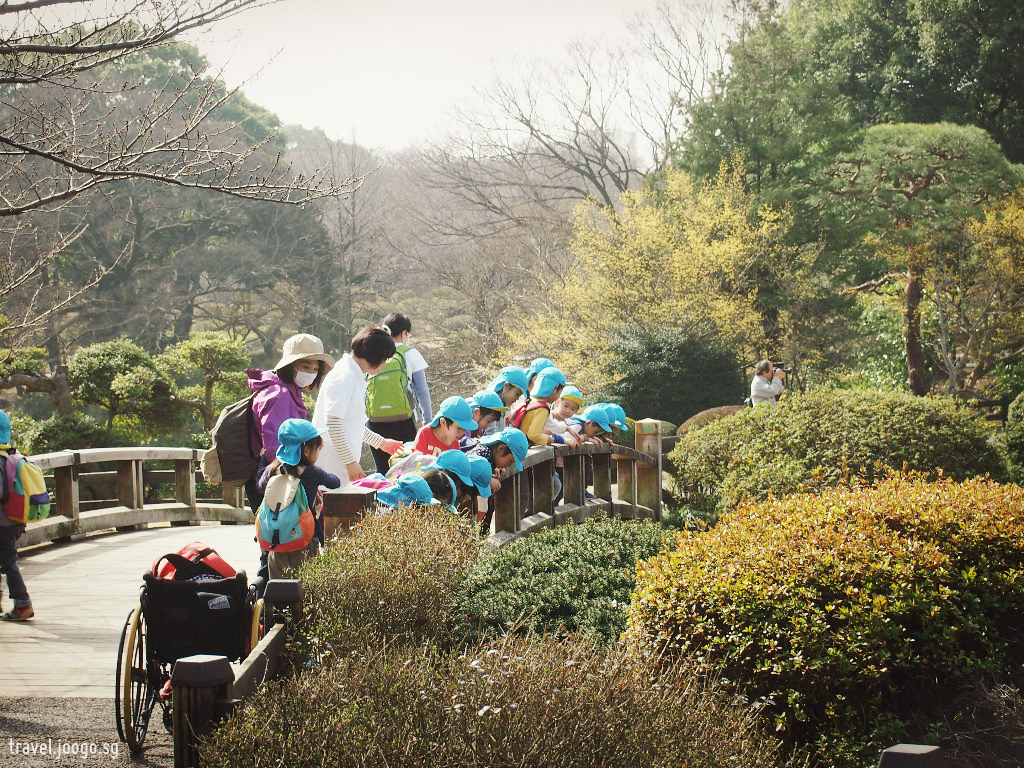
Shinjuku Gyoen National Garden in Spring - travel.joogo.sg


Different Season, Different Flowers


The garden is worth a visit, but like I said, it also depends on the type of flowers you like.

Winter

This is when fewer blooms are seen, except sightings of fragrant paperwhite flowers and red berries on certain types of trees. Or you can also enjoy orchid flowers reaching their full bloom in the greenhouse. However, if you are a bird lover, then winter is the best for bird watching in Shinjuku Gyeon–spot thrush (birds) from Siberia and also mandarins and mallard ducks swimming in the ponds of Japanese Traditional Garden.

Autumn
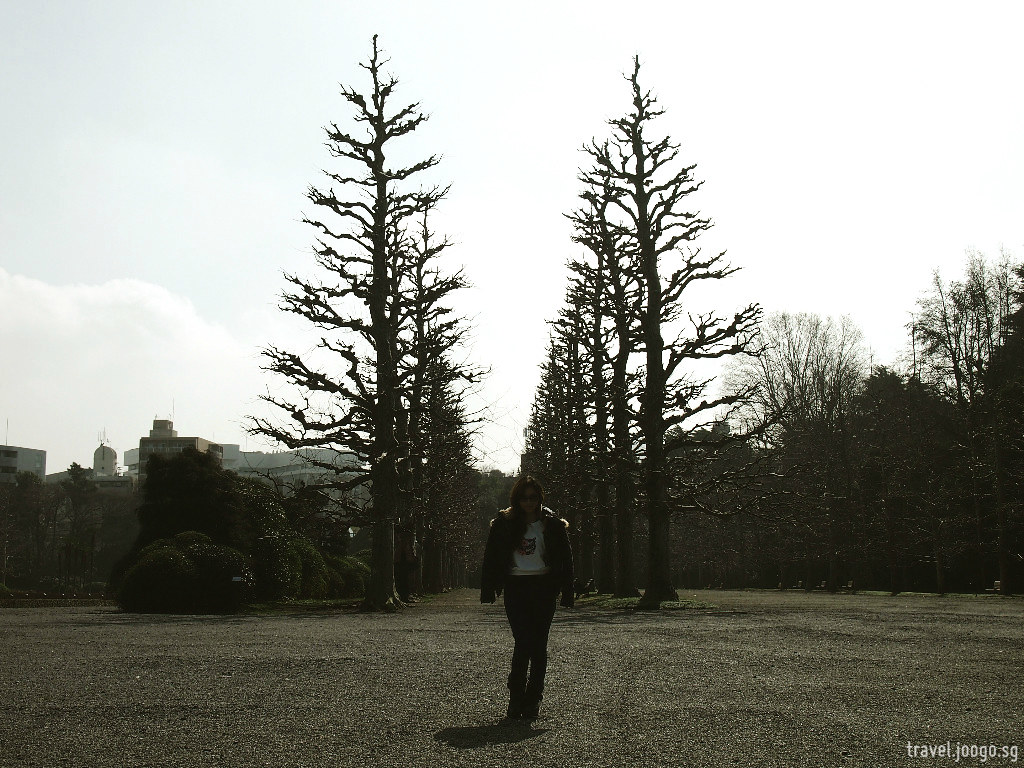
Shinjuku Gyoen 2 - travel.joogo.sg

Immersed in autumn colours as the leaves on the tulip trees, sycamores, ginko trees and maples begin to change colours. Enjoy the autumn foliage at the Avenue of Sycamore trees that’s near to French Formal Garden. It wasn’t autumn when we were there, hence we only get to see bare trees. Even then, it was beautiful.

Also during this period (1-15 Nov), you can visit the annual Chrysanthemum exhibition, related to the Imperial household, held at the Japanese Traditional Garden.

Summer

During summer, the roses in the French Formal Garden and the tulip trees in the English Landscape Garden bloom. Cicaadas will be buzzing and dragonflies flying above the luscious lawn. But when we were there during early March, these gardens were almost barren.

p.s. these European gardens were designed by a French engineer. 
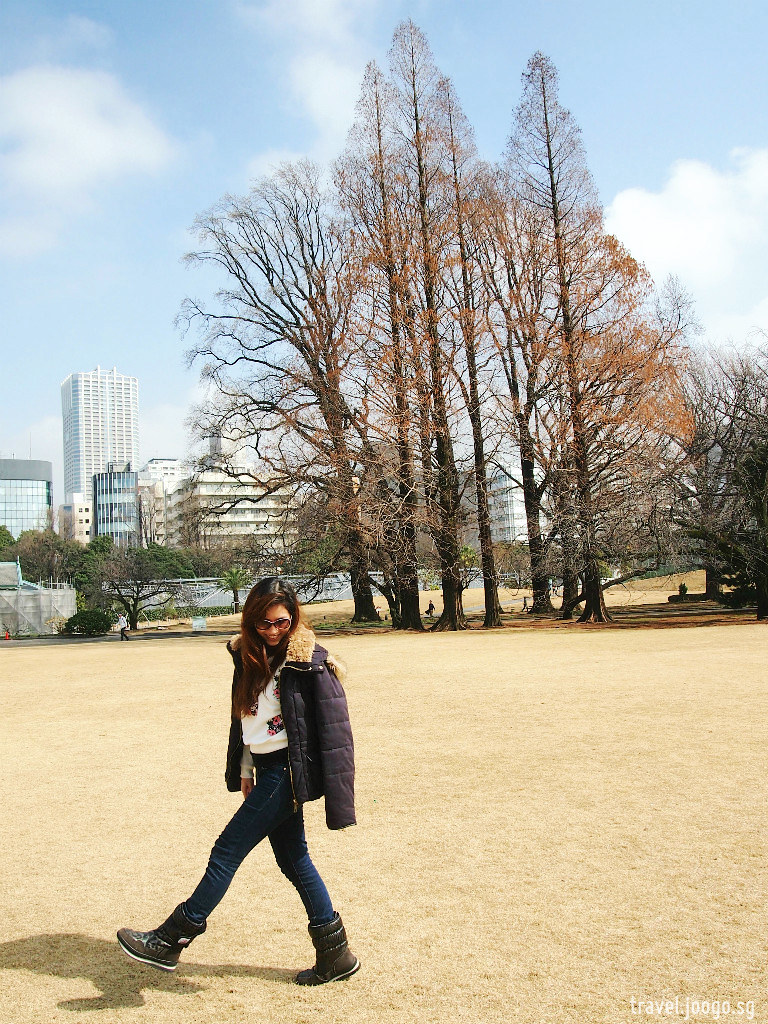
Shinjuku Gyoen 1 - travel.joogo.sg


Spring

I read that the cherry blossom season only starts from late March to early April. So I was disappointed that we were going to be in Tokyo but have to miss it by 2 weeks! >.< We were there in early March. However, I didn’t give up hope, I started scouring Instagram hashtags to see if any Sakura is spotted yet. Turned out, there were some early blooms in other parts of Tokyo but we wouldn’t be able to make it there. But it represents a slim hope for us in Shinjuku Gyeon.

We stepped into Shinjuku Gyeon, and quickly looked around for the early blooms of Sakura. I was so desperate to find it that we even mistook a tree for being a cherry blossom tree. We walked for about 15-20 minutes and still didn’t spot any. So I was getting a little disappointed.
Shinjuku Gyoen Spring Sakura 2 - travel.joogo.sg

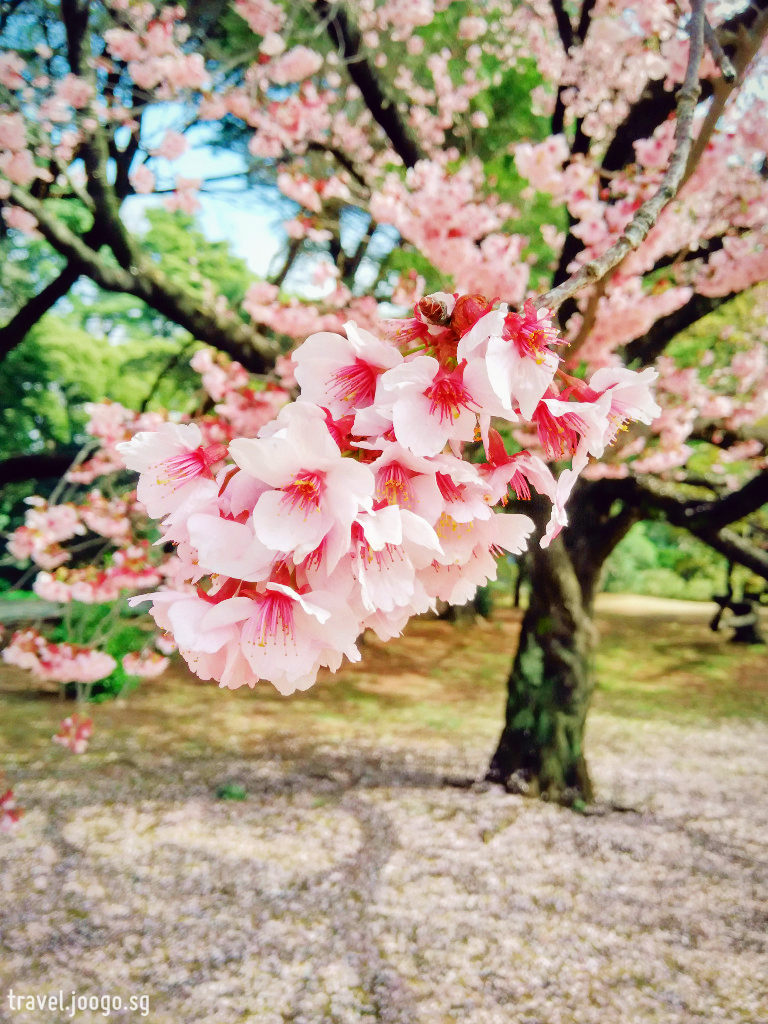
Hubby went to toilet near the Tea House (Shouten-Tei) and I continued to walk around, through a narrow path and out to an opening. Lo and behold, there stood a huge cherry blossom tree. I gasped out loud. It literally took my breath away. Too bad hubby wasn’t by my side to see Sakura for our first time!

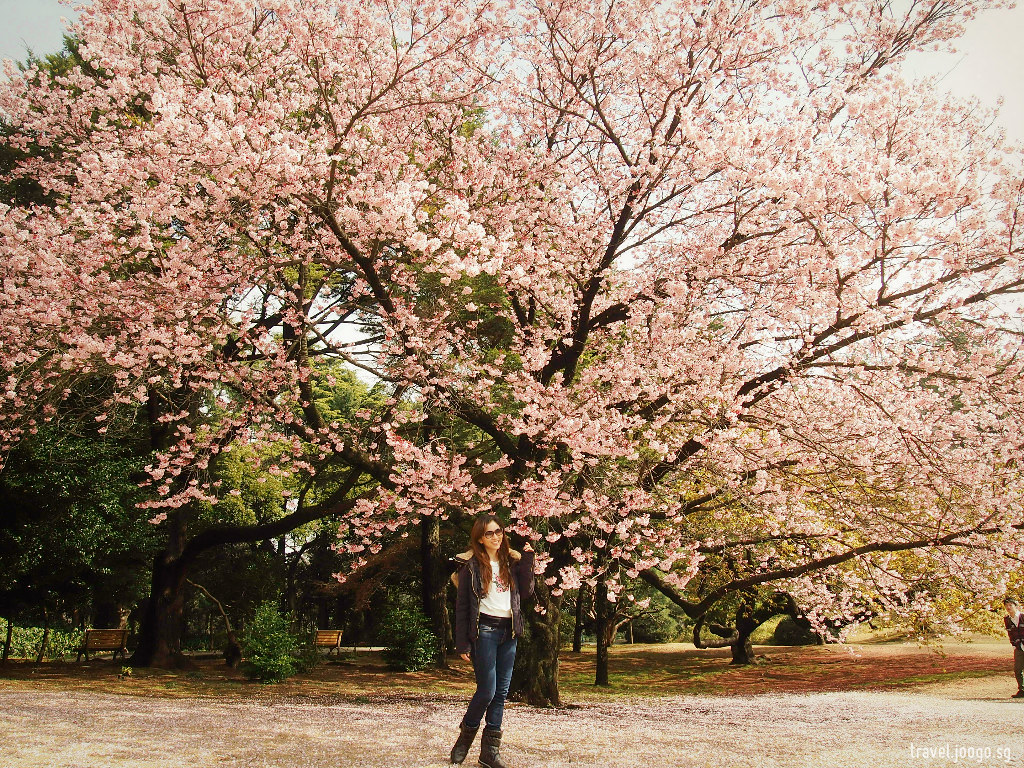
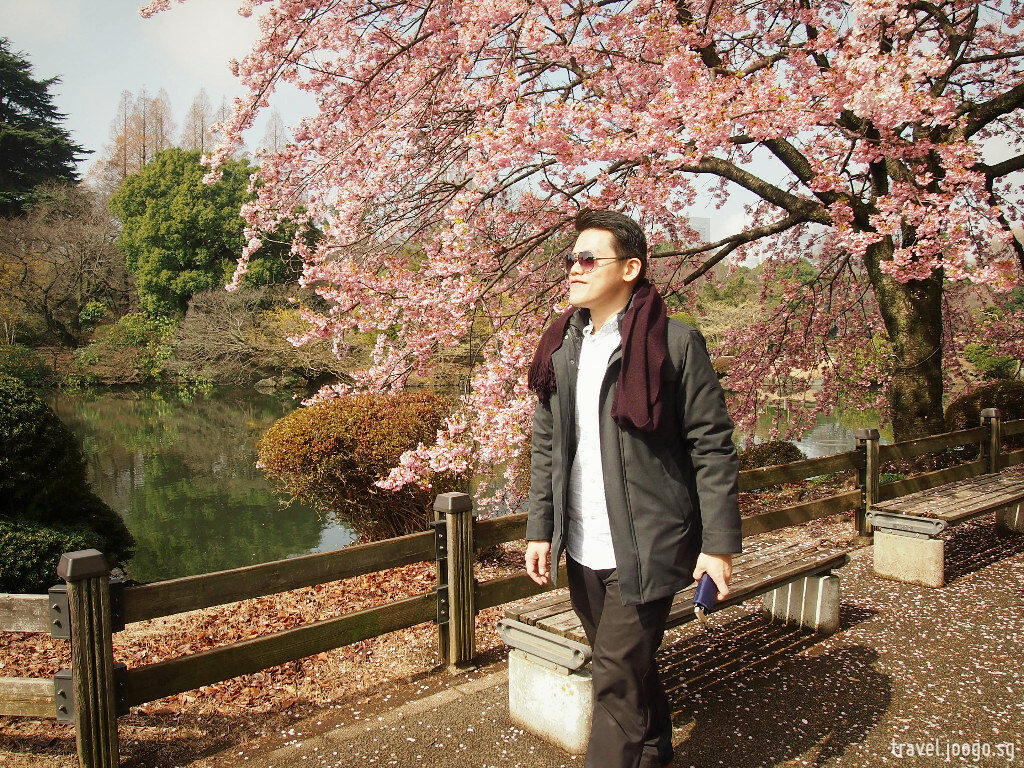
It was simply stunning. And since there weren’t many Sakura trees around, many tourists were crowding around this tree to take picture perfect photos! We took countless photos before leaving the grounds reluctantly, only to find another two to three Sakura trees along Middle Pond (Nakano-Ike). Nevertheless, we still had to take a couple more photos of the trees, now with different background. Hur hur.
Shinjuku Gyoen Sakura - travel.joogo.sg

The cherry blossom trees were simply stunning, especially as we see those pretty pink petals falling softly to the ground like gentle rain, covering the ground in pink. It was therapeutic for me.

Be sure to visit if you are there during the season! According to Shinjuku Gyeon’s brochure, there are about 65 varieties of cherry blossom and 1,100 trees blossoming successively in the garden. I cannot imagine the spectacular sight.

Oh ya, we also managed to see the Yulan Magnolia tree, which has large flower blooms, as we were about to exit the Shinjuku Gate. However, after seeing the beauty of sakura, it paled in comparison. (p.s. On the other side of the Tea House, not the Sakura tree side, you may also find the Yulan Magnolia bloom.)

Before the beauty fades away in a moment, let us enjoy the present.
Shinjuku Gyoen Spring Sakura 3 - travel.joogo.sg

For food and other things to do in Shinjuku, refer to “What to Do at Shinjuku Tokyo, Japan?“,What to Eat in Shinjuku Tokyo? (Part 1)” and (Part 2)“. 

Do you have other recommendations of where to go in Shinjuku? Tell us below or on our Facebook Page or Instagram. Moreover, bookmark this page > Overview Itinerary: Hokkaido and Tokyo (Winter/Spring 2016).

What to Do at Shinjuku Tokyo, Japan?

What to Do at Shinjuku Tokyo, Japan?

Other than Ginza, Shibuya and Harajuku (Nature or Shopping), Shinjuku is the other famous district of Tokyo. So, what to do at Shinjuku? Tonnes! Firstly, we stayed in Shinjuku We were contemplating where to base ourselves in Tokyo — Shibuya or Shinjuku? Many advice pointed us to stay in Shinjuku because 

What to Eat in Shinjuku Tokyo? (Part 2)

What to Eat in Shinjuku Tokyo? (Part 2)

For food lovers hunting for good food around Tokyo, I’m writing a series of the food we tried (or almost tried) around Ginza, Harajuku, Shibuya and Shinjuku. Look out for our honest reviews. :P First it was “What to Eat in Ginza“, then “What to Eat in Harajuku and 

What to Eat in Shinjuku Tokyo? (Part 1)

What to Eat in Shinjuku Tokyo? (Part 1)

For food lovers hunting for good food around Tokyo, I’m writing a series of the food we tried (or almost tried) around Ginza, Harajuku, Shibuya and Shinjuku. Look out for our honest reviews. :P First it was “What to Eat in Ginza“, then What to Eat in Harajuku and Shibuya?“, and now what to eat in Shinjuku? 


Fuunji, Ramen and Tsukemen


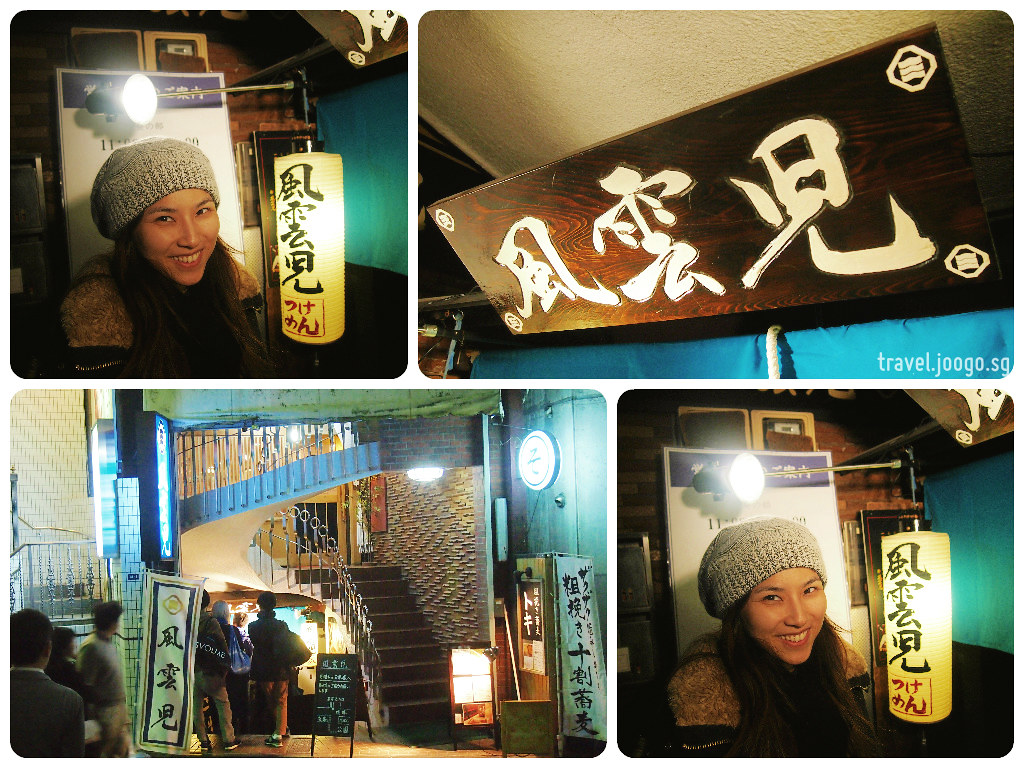
Fuunji (風雲児) is 2-mins walk from our airbnb at Shinjuku and approx 10-mins walk from Shinjuku station. The owner of the airbnb highly recommended us to try the Ramen or Tsukemen here. It’s not the usual tonkotsu (pork) broth I’m familiar with but chicken and fish broth. Anyway, the owner suggested we go for early lunch or early dinner to avoid the snaking long queue. However, by the time we reached our airbnb and walked over to Fuunji, it was their peak hour.

The Queue

We couldn’t believe our blessings when we finally found the shop hidden in a small road.There were probably only 5 to 7 people lining in front of the shop. Is that considered long for the owner? Hoho. As we were about to join the short queue, we whipped our heads to the other direction and saw another 7 to 9 people extending the queue on the other side of the road. We should have known better after our queuing experience at Garaku Curry (Sapporo). The short queue was too good to be true!

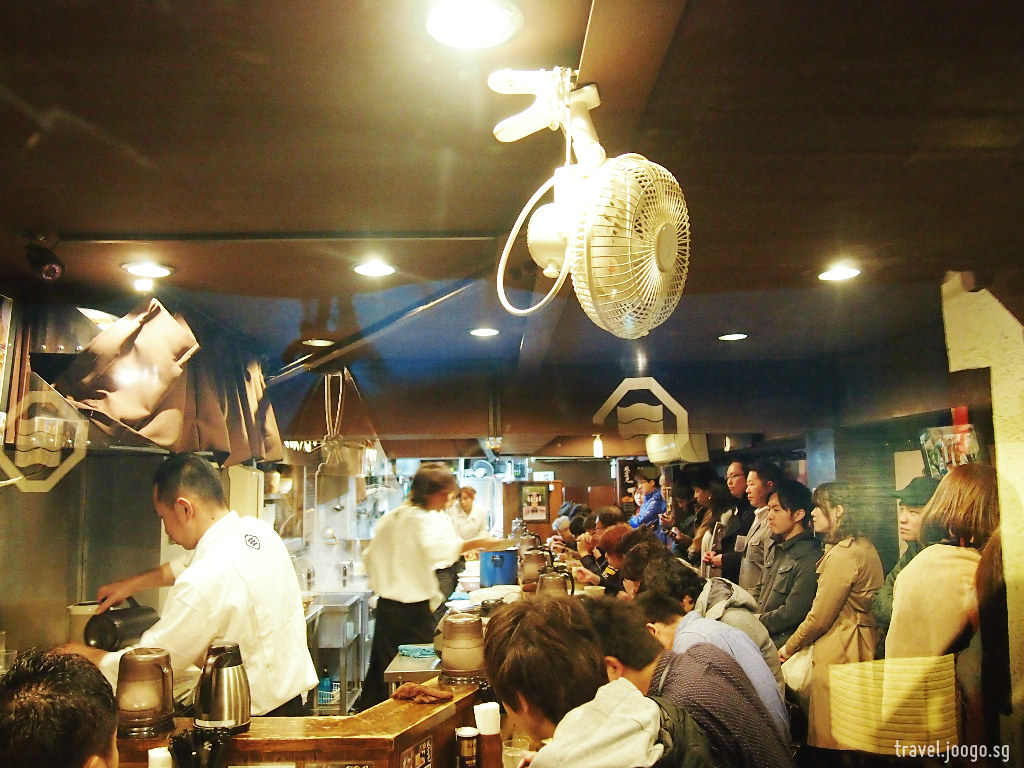
Anyway, we decided good food was worth the wait and thus we joined the queue in the cold. We were so excited when we were near the entrance, but lo and behold! When the door was opened for a few patrons to exit, we saw another long line inside the shop! See photo below.

Ordering Process: Ramen and Tsukemen 

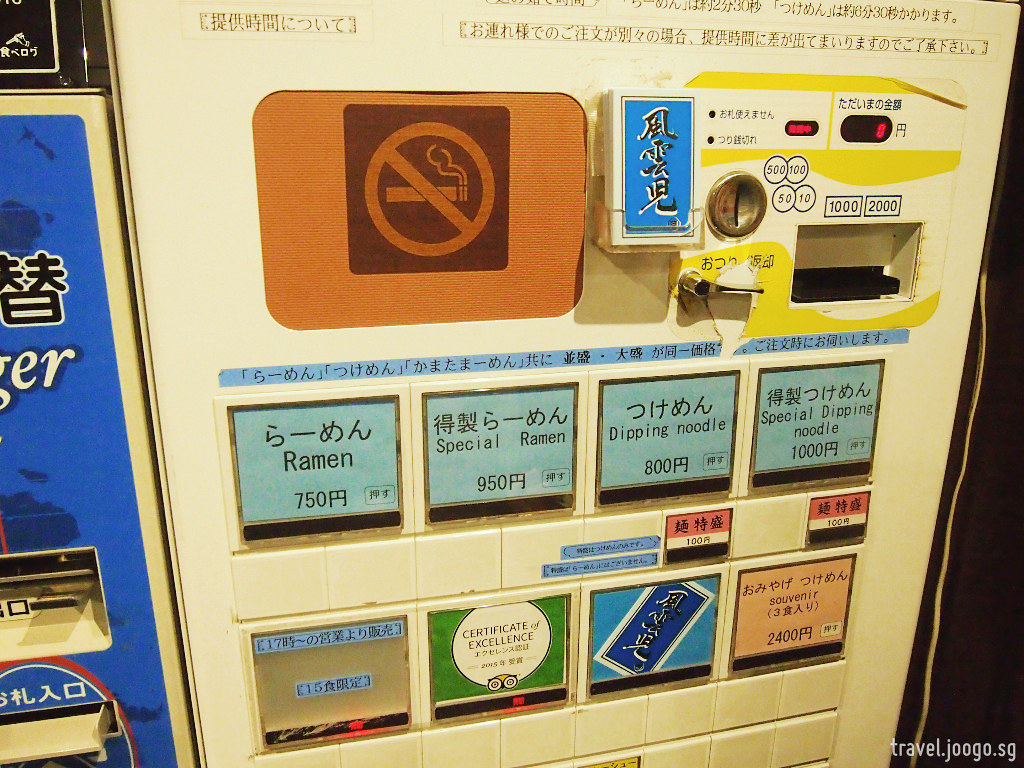
Once we were in the shop, there was a vending machine for us to choose our dishes and make payment. Talk about good hygiene and productivity! Anyway, there are a few options on the machine, as seen in the photo below. Dipping noodle refers to Tsukemen, while the ‘special’ edition means the dish comes with an egg and more meat.

Tsukemen is cold noodle served with its sauce on a separate dish. You then dip the noodle in the sauce before eating. Apparently Tsukemen is their signature, but we didn’t know then and so both of us ordered Ramen instead. :( You can’t blame us, because there also weren’t many people eating Tsukemen. It could be because it was winter/spring while we were there and Tsukemen is more for consumption during hot, summer days.

When they collect the vending machine ticket from you, tell them your desired noodle portion: Namimori is small (~200gm), chuumori is regular or medium (~300gm), omori is large (~400gm). The price is the same regardless of size, but order what you can eat—don’t waste food!

What to Eat in Shinjuku - travel.joogo.sg

Our Verdict

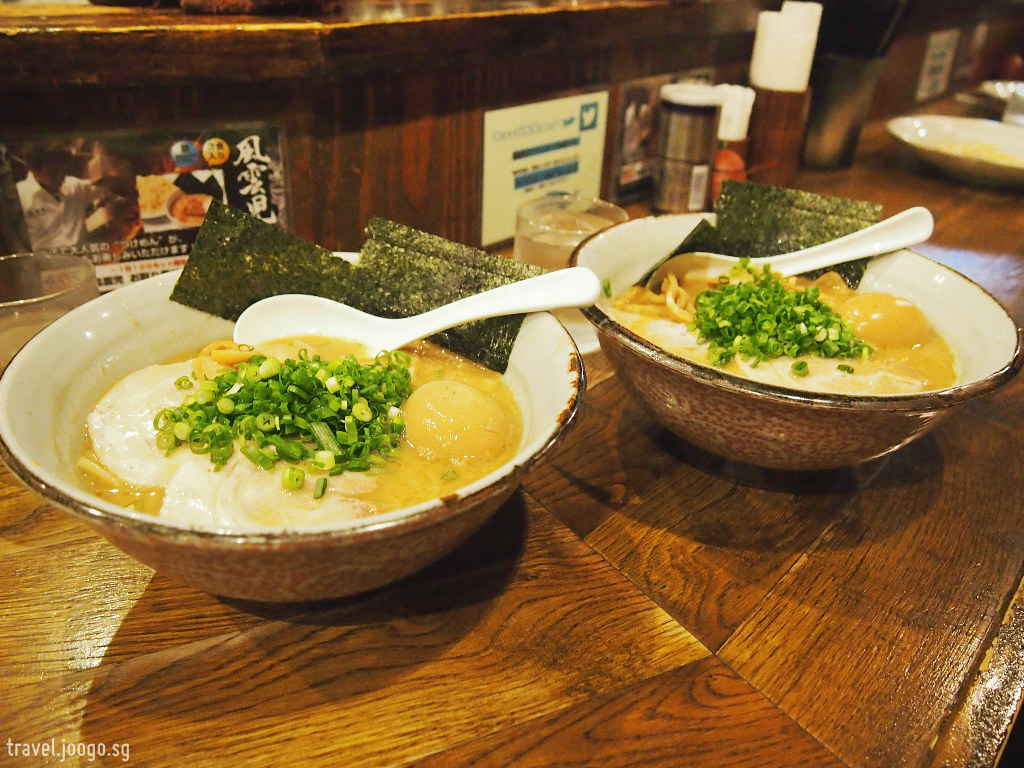
We ordered Special Ramen that cost ¥950 (S$12.00) each because we like ajitama (flavoured egg) and of course we had to try it from a Japan’s ramen shop! Even though I’m more used to tonkotsu based ramen, I found the broth surprisingly delicious. As mentioned, the broth is of chicken and fish.

My hubby and most people like the chewy noodles, but I prefer those softer noodles we have in Singapore. The chewy noodles felt like it was half-cook, like when I didn’t cook my instant noodles long enough.

Anyway, I couldn’t finish my bowl and my hubby had to help me with some. It was quite embarrassing to leave much leftover when the chef is just in front of you! It’s like saying the food is not nice, but I was simply too full.

Oh it’s really fascinating to observe the kitchen at work. They each have their own assigned role in a very organised work flow. Together, they function efficiently like a clockwork. The main chef seemed to be in a choreographed dance as he pulled the noodles high up, swirled it around and down into the bowl.

Tip: If you prefer a milder fishy aftertaste, opt for ramen instead of tsukumen. 

Shop Info

  • 11:00 am – 3:00 pm, 5:00pm – 9:00 pm (Mon-Sat) or while stocks last. Closed Sun & Public Holiday
  • 2-14-3, Yoyogi, Shibuya-ku, Tokyo, Japan
  • 10 min walk from JR Shinjuku Station, South / Southern Terrace Exit
  • Google Map

Shin Udon


If you are sick of ramen but still want some hot soup noodles for the cold weather, Shin Udon (慎) is the place to visit. About 10 minutes walk from Shinjuku station, it’s very near to the equally popular Fuunji ramen restaurant. This restaurant is thus also near to our airbnb at Shinjuku and highly recommended by the owner. To avoid the insane crowd, try to go during early lunch or early dinner.

The buckwheat udon is made to order and cooked into either a cold or a hot dish — cold zaru udon served dry, and warm kake udon served in a hot broth. The udon dish is topped with ingredients such as tempura, beef, egg and seaweed. Order from the mildly translated pictorial menu and catch the chefs in action while you sit at the cramp counter space. Budget about ¥1,300 (S$16.40) per person.

Happy chewing on the thick cut udon and enjoy the simple but umami dish!

Shop Info

  • 11:00 am – 11:00 pm (L.O 10:00 pm or while stocks last. Irregular closing days.)
  • 2 Chome-20-16 Yoyogi, Shibuya, Tokyo 151-0053, Japan
  • 10 mins walk from JR Shinjuku Station, South / Southern Terrace Exit
  • Google Map

I’ll be sharing more dining options around Shinjuku in Part 2! Also, more on the places to hang out in Shinjuku in my subsequent posts!

Do you have other recommendations of what to eat in Shinjuku? Tell us below or on our Facebook Page or Instagram. Moreover, bookmark this page > Overview Itinerary: Hokkaido and Tokyo (Winter/Spring 2016).
From Harajuku’s Cat Street to Shibuya

From Harajuku’s Cat Street to Shibuya

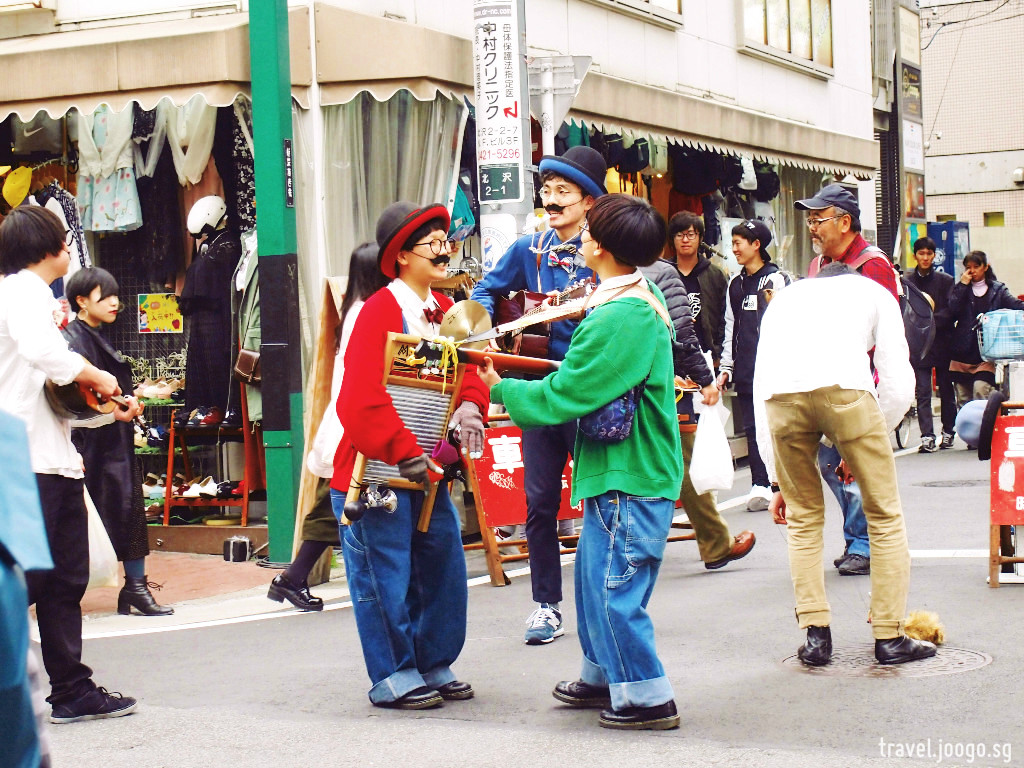
From Harajuku (part 1, part 2), we walked through Cat Street to Shibuya. It was a long and tiring walk! But after we reached the end of Cat Street, it just didn’t make sense for us to walk back the street to take the train. It 

Takeshita Dori and Shopping | Harajuku Tokyo (Part 2)

Takeshita Dori and Shopping | Harajuku Tokyo (Part 2)

Harajuku Tokyo (原宿) lies between Shinjuku and Shibuya on the Yamanote Line. If you’re all excited about the shopping in Harajuku, you’re at the right place! Other than joining the young crowd at Takeshita Dori and the mature one in Omotesando Hills, there are many other options for you: Cat Street, LaForet, Tokyu Plaza, and