Tag: Japan

What to Eat in Ginza Tokyo?

What to Eat in Ginza Tokyo?

For food lovers hunting for good food around Tokyo, I’m writing a series of the food we tried (or almost tried) around Ginza, Harajuku, Shibuya and Shinjuku. Look out for our honest reviews. :P First up, what to Eat in Ginza Tokyo? Tsukiji Fish Market Before starting your 

Tokyo Metropolitan Government Office, Tokyo Skytree or Tokyo Tower?

Tokyo Metropolitan Government Office, Tokyo Skytree or Tokyo Tower?

There are many places in Tokyo where you can admire the incredible panoramic views of the city. People usually head to Tokyo Metropolitan Government Office, Tokyo Skytree or Tokyo Tower. Otherwise, you can go to other sites which include Roppongi Hills, Tokyo World Trade Center, Bunkyo Civic Center and 

Visiting Tsukiji Fish Market | Ginza, Tokyo

Visiting Tsukiji Fish Market | Ginza, Tokyo

Is Tsukiji Fish Market moving? If not, what are the hours? Any good sushi here? Find out more. :)


About Tsukiji Fish Market
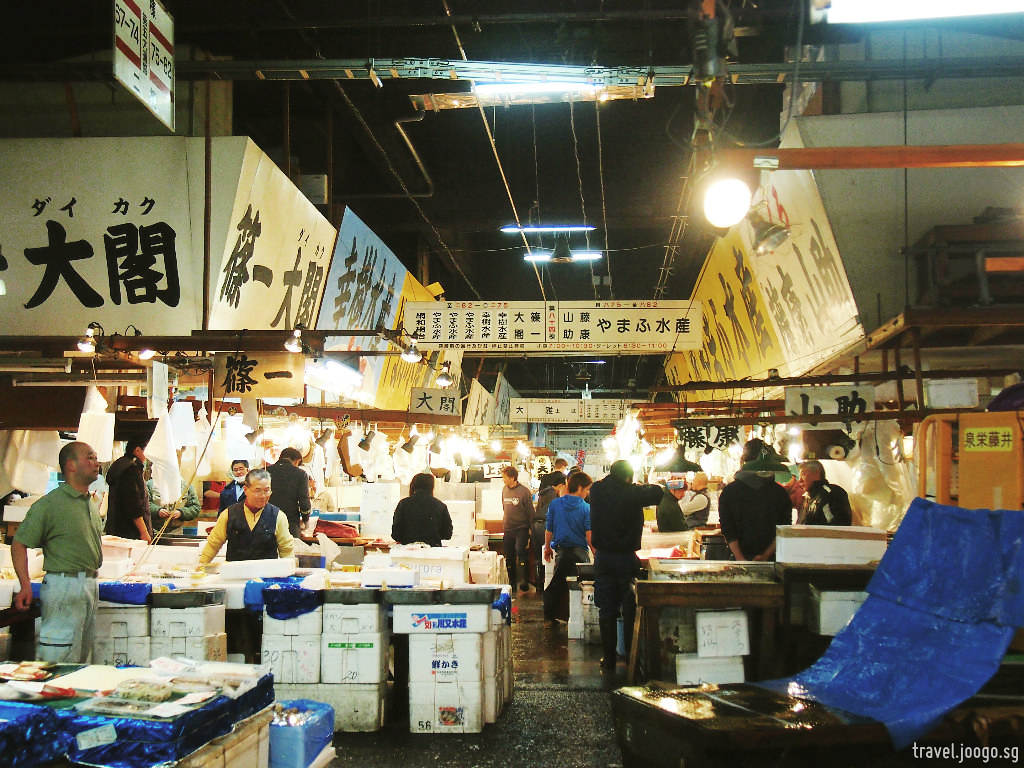

Tsukiji Fish Market 1 - travel.joogo.sg

Tsukiji Market (築地市場) is a wholesale market for fish, fruits and vegetables in Tokyo. This market is the largest of its kind in the world and handles about approximately 2,000,000 kg of marine products each day! Imagine the sheer number of shops and restaurants it distributes across Japan, Asia and beyond. It is definitely one busy market in the morning.
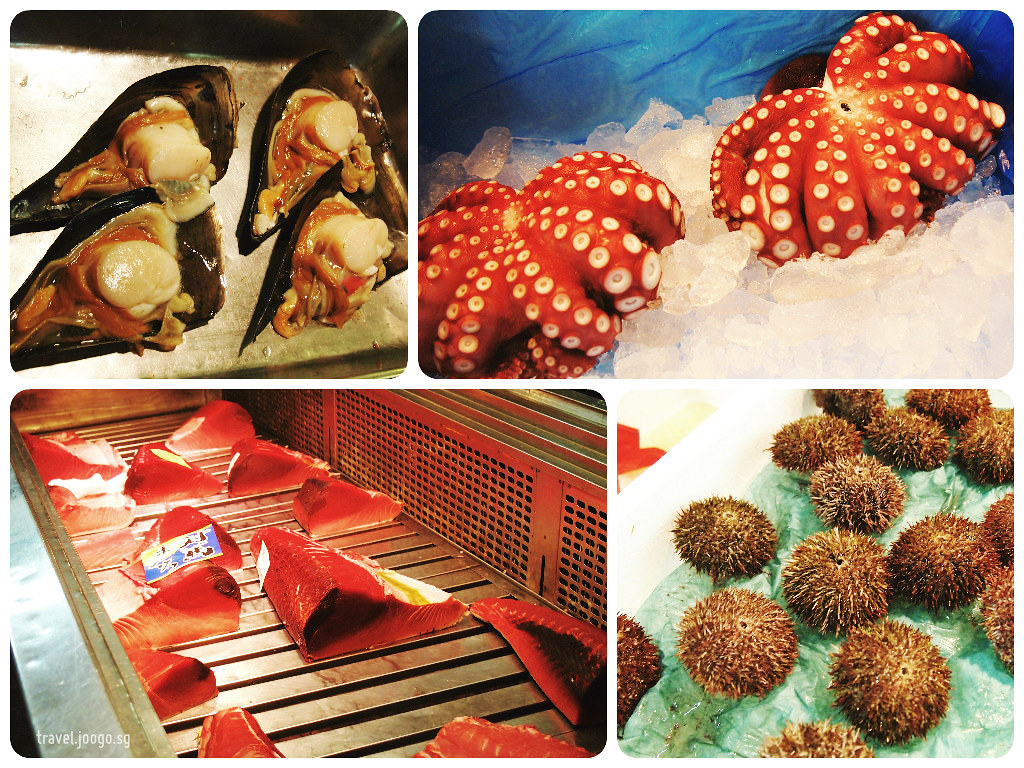
Tsukiji Fish Market 4 - travel.joogo.sg

Is Tsukiji Fish Market Moving?

If you heard the news, Tsukiji Fish Market was originally scheduled to move in November 2016. However due to ballooned cost and environmental issues at the new site, Tokyo Governor Yuriko Koike has delayed the market’s move to Toyosu indefinitely. So visit this tourist hot spot while you still can! Currently, the market is still at its 81-year-old site in Tsukiji, Central Tokyo and near to upmarket Ginza.


Tuna Auction


Start your day very early at Tsukiji Fish market and witness an exciting tuna auction! Buyers bid for fresh tuna early in the morning. The auction typically starts at 5:20 am and ends around 10 am.

What time should you reach?

Registration begins at 5 am at a first-come, first-serve basis. It will be closed when the maximum capacity of 120 visitors is reached before 5 am. Usually there are many “kiasu” tourists who will arrive way before 5 am, so try to reach Tsukiji Fish Market around 3 am – 4 am to guarantee a spot.

What time will you start the tour?

People who have registered will be split into two sessions of 60 people each: 5:25 am to 5:50 am, and 5:50 am to 6:15 am. So be prepared to wait 2 hours for a 25 minute session.
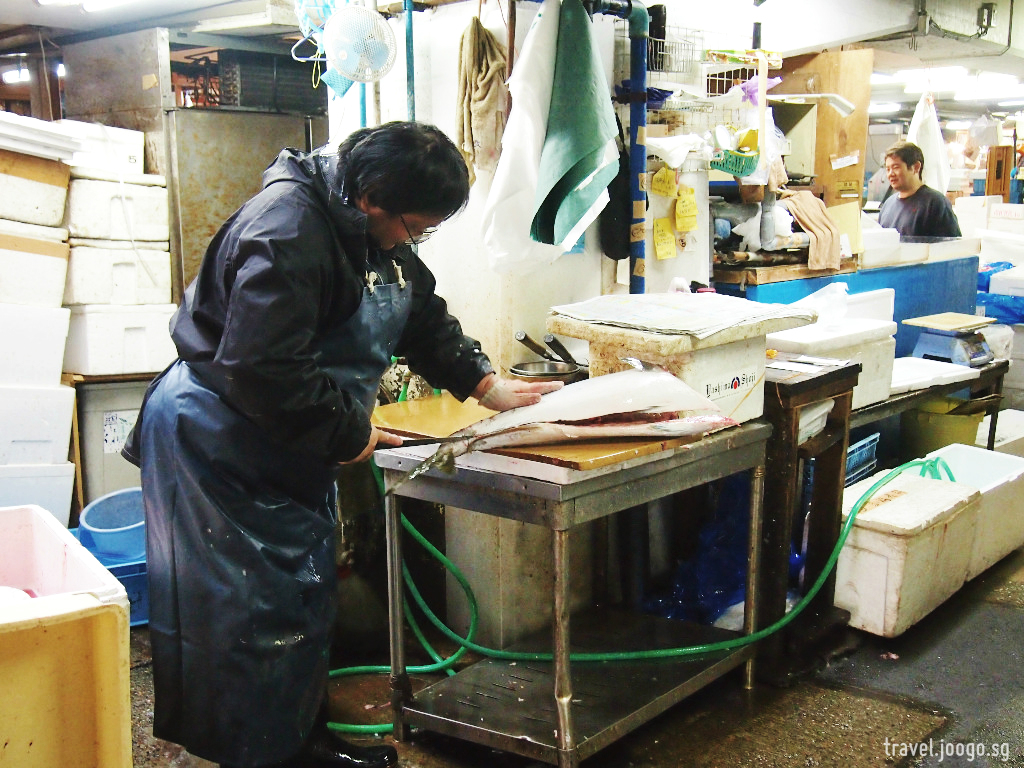
Tsukiji Fish Market 5 - travel.joogo.sg

During the Auction

Before auction, buyers will check the tuna’s quality using their tools and fingers. Then the auctioneer rings the bell to start the auction. Buyers signal to show their offered price, and seller mirrors back the hand sign to show the current highest bid. Catch the fast-speaking auctioneer sprouting industry jargon that even native speakers having difficulty understanding. Auctions move from the smallest to the largest fish, with some sessions ending merely in seconds.

Getting There

As far as I know, you can only get there during the wee hours by taxi or private car. Ask the driver to bring you to Osakana Fukyū Center おさかな普及センター (Fish Information Center, GPS Coordinates: 35.663602, 139.773467). It’s located at Tsukiji Fish Market’s Kachidoki Gate 勝どき門 (Kachidoki Mon), refer to market map below.

p.s. We didn’t go to the auction considering the early hours, long wait and cost to get there. >.<


Getting around Tsukiji Fish Market
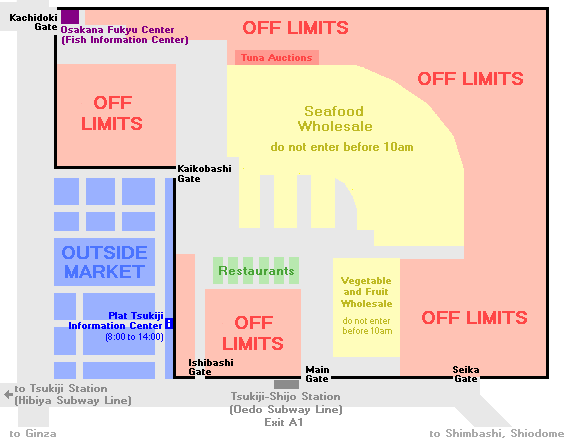

tsukiji-fish-market-map

Photo Credit: www.japan-guide.com/e/e3021.html

If you are looking at the above map along with google map, rotate this map 180 degrees.

The market reminded me of our own Pasir Panjang wholesale market, except it was seafood galore at Tsukiji Fish Market. Although the map said not to enter certain areas before 10 am, we were at the market about 8:30am. Even then, many tourists were already at Tsukiji Fish Market.

A Day in Tsukiji Fish Market

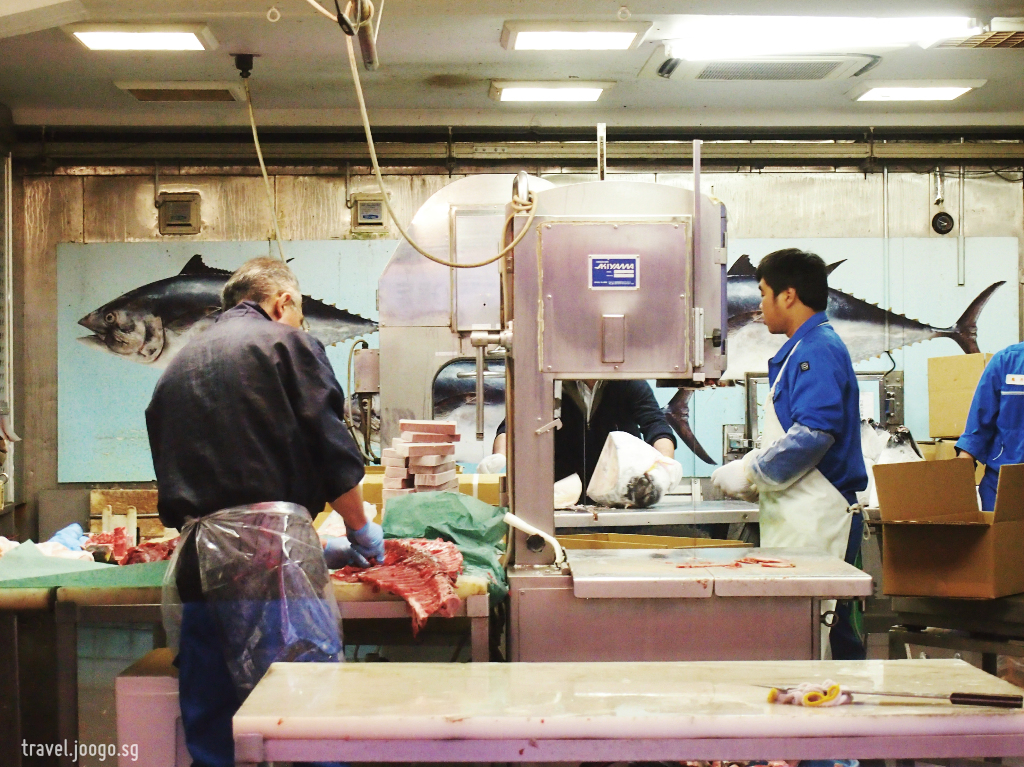
Technically the market “starts work” at 5 pm, receiving fresh shipments from all over the world until wee hours. Then from 3 am to 6+ am, it’s the buzz around tuna auction. After the auction, around 7 am, the middlemen bring their purchases from the auction to their stalls and sell them to purchasers from retail shops, restaurants, etc.

At 8 am, these retail purchasers would have loaded and be on their way back to their shops in town. That explained why the activity seemed tapered down and some shops closed when we reached around 8:30am. Nevertheless, it’s still crowded and busy between 8 am and 10 am. From 11 am to 1 pm, the middlemen starts to clean their stalls and closed for the day.
Tsukiji Fish Market 2 - travel.joogo.sg

Visiting Tsukiji Fish Market

To be honest, the place is so big and confusing, that the best thing to do is to just walk around and explore. I don’t think we entered the wholesale area because tourist are not allowed before 10 am. We were so lost that we didn’t know where we were!

However, I am quite sure we entered via the off limits area that’s very near to Tsukiji-Shijo Exit A1. We and some other tourists walked across a huge loading bay meant for their goods vehicles. Oops! Even though we were vigilant to get out of traffic’s way, it was still dangerous. Please don’t make the same mistake.

Tsukiji Fish Market 3 - travel.joogo.sg

Since the market is primarily still a place for business, try not to interfere with business. Be alert to your surroundings and avoid blocking the traffic. Look out for the mini truck (photo above) meandering in the small alleys of the market. Also, avoid bringing any luggage to the market.

Outer Market and Restaurants
Tsukiji Fish Market 6 - travel.joogo.sg

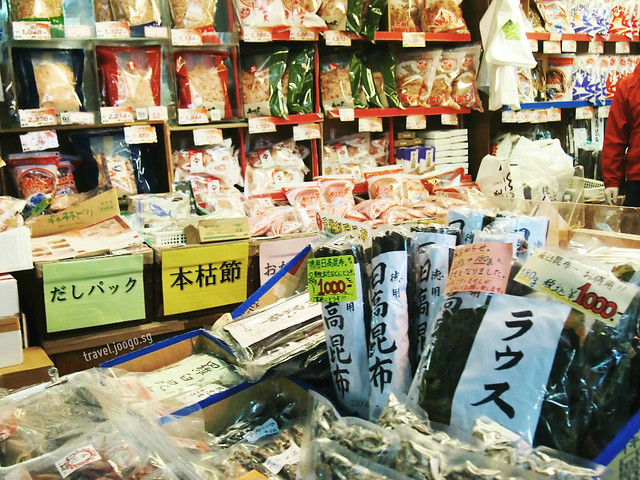
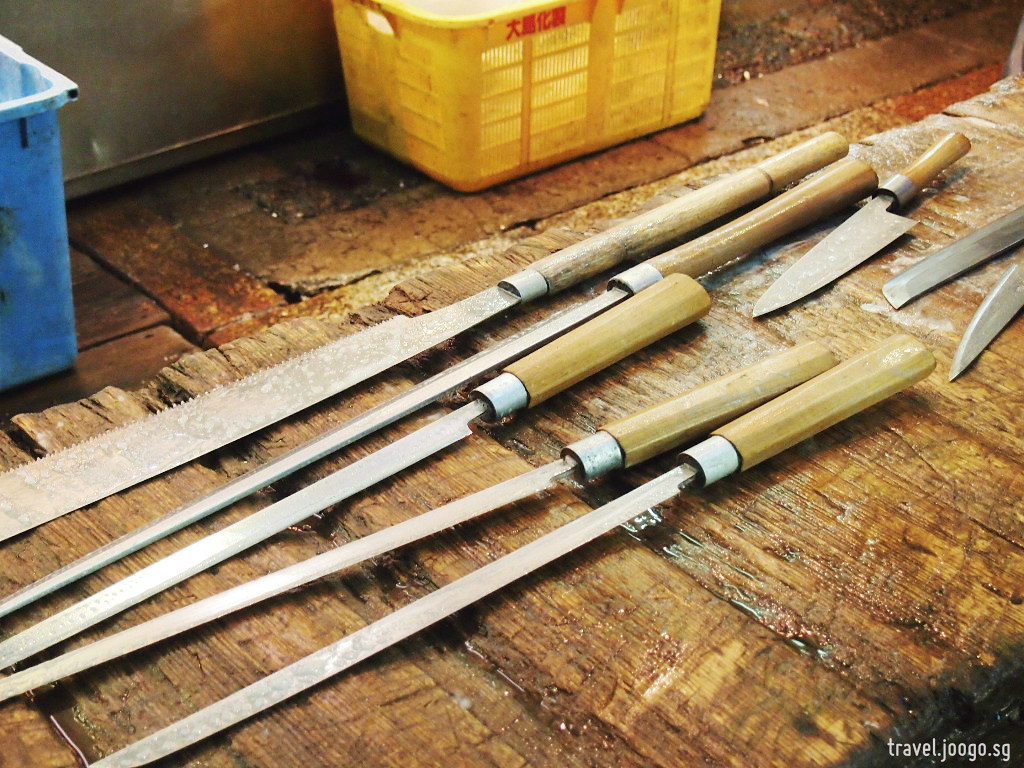
If you like to buy knives, merchandise or fresh produce in portions smaller than wholesale quantity, you can head to the outer market. This area, comprising of small retail shops and restaurants, typically opens from 5 am to 2 pm.
Tsukiji Fish Market 6 - travel.joogo.sg
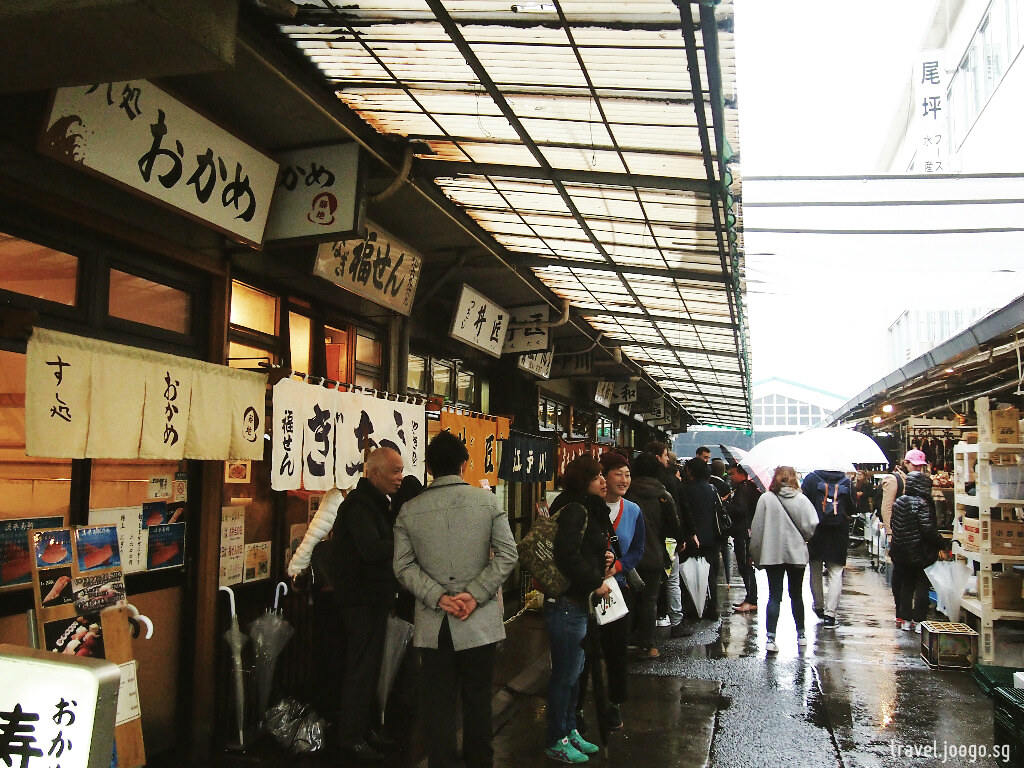
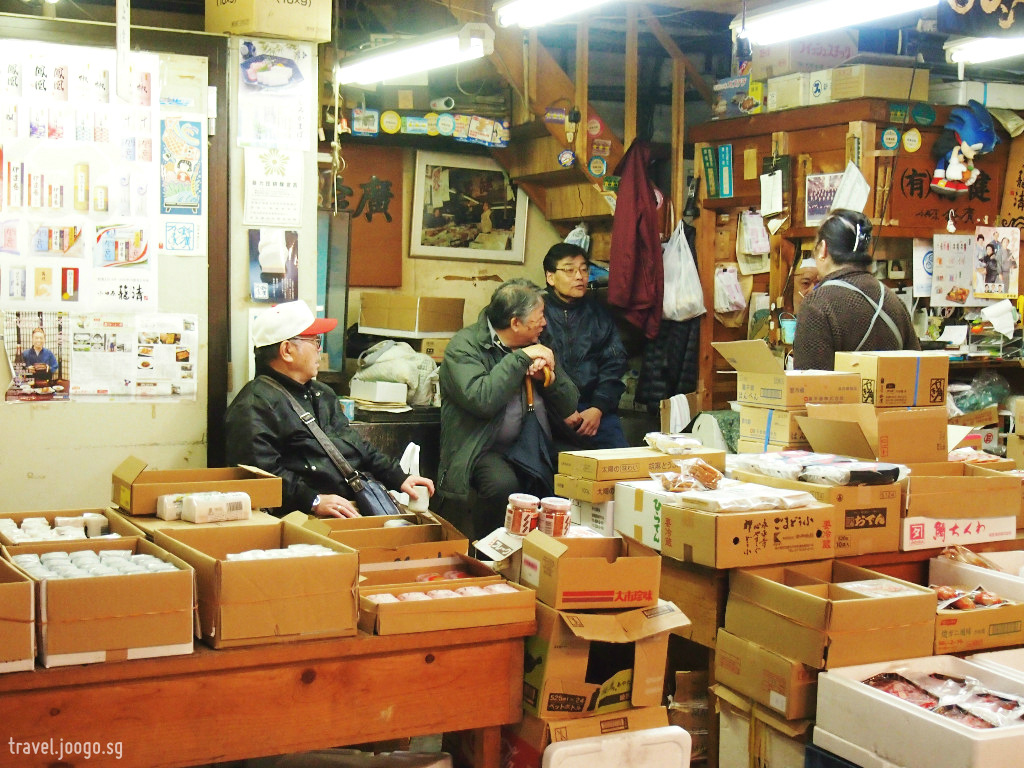
One of the recommended things to do at Tsukiji Fish Market is to have a fresh sushi breakfast or lunch at one of its restaurants. Find these restaurants in the inner and outer markets. They’re usually opened from 5:00 am to noon or early afternoon.

We didn’t eat at Tsukiji Fish Market because we had our fresh seafood at Sankaku Fish Market, Hokkaido. Compared to Sankaku, Tsukiji is way more crowded and expensive.
Tsukiji Fish Market 8 - travel.joogo.sg

Nevertheless, if Tokyo is your only stop, you should try and taste the oozing freshness at Tsukiji Fish Market. The more popular sashimi restaurants are in the inner alleys near to the main entrance. In particular, Sushi Dai (寿司大) is the most popular one and you might need to wait for 2 to 3 hours. A set of 10 sushi pieces and one roll should cost you about ¥3,900 (S$49). You can also go for Daiwa Sushi (大和寿司) if the queue at Sushi Dai is too long.

Enjoy your food and have fun at Tsukiji Fish Market!
Tsukiji Fish Market 7 - travel.joogo.sg

Information

  • www.tsukiji-market.or.jp/tukiji_e.htm
  • Opening Hours: Generally 5:00 am to 2:00 pm. Opened all mornings except for Sunday, PH and some Wednesdays.
  • Getting here:
    • Tsukiji-Shijo Station (Oedo Subway Line): We exited from Exit A1 and turn right. In a few steps, we saw a gate for vehicles to drive in and out of the market. However, you might want to walk a bit further to right into the market. It’s much safer!
    • Tsukiji Station (Hibiya Subway Line): 5 minutes walk.
    • Shimbashi JR station: 15 minutes walk.

Do you have other questions or tips about Tsukiji Fish Market? Ask or tell us below or on our Facebook Page or Instagram. Bookmark this page >> Overview Itinerary: Hokkaido and Tokyo (Winter/Spring 2016)

Doraemon Museum (Fujiko F. Fujio), Tokyo

Doraemon Museum (Fujiko F. Fujio), Tokyo

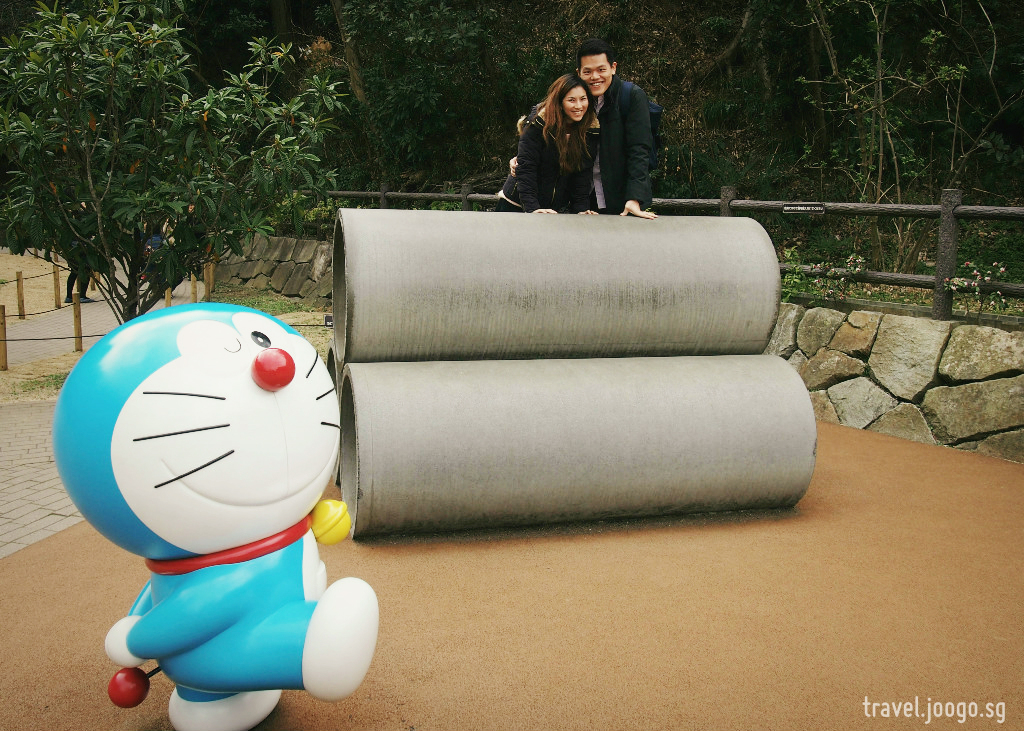
Doraemon has been around for decades and still remains popular till this date. So the museum appeals to both children and adults who grew up with the series. I am one of those who grew up watching Doraemon cartoon series! And I love it~ What better way to reminisce 

One Day Guide: Things to do in Otaru (Japan, Hokkaido)

One Day Guide: Things to do in Otaru (Japan, Hokkaido)

Otaru (小樽) is a port town steeped in rich history and home to many beautiful architecture along the picturesque canal and the busy Sakaimachi street. These rows of stone buildings were mainly former warehouses and office buildings of shipping and trade companies. They were left behind from the 

Kitaichi Glass Otaru (Hokkaido, Japan)

Kitaichi Glass Otaru (Hokkaido, Japan)

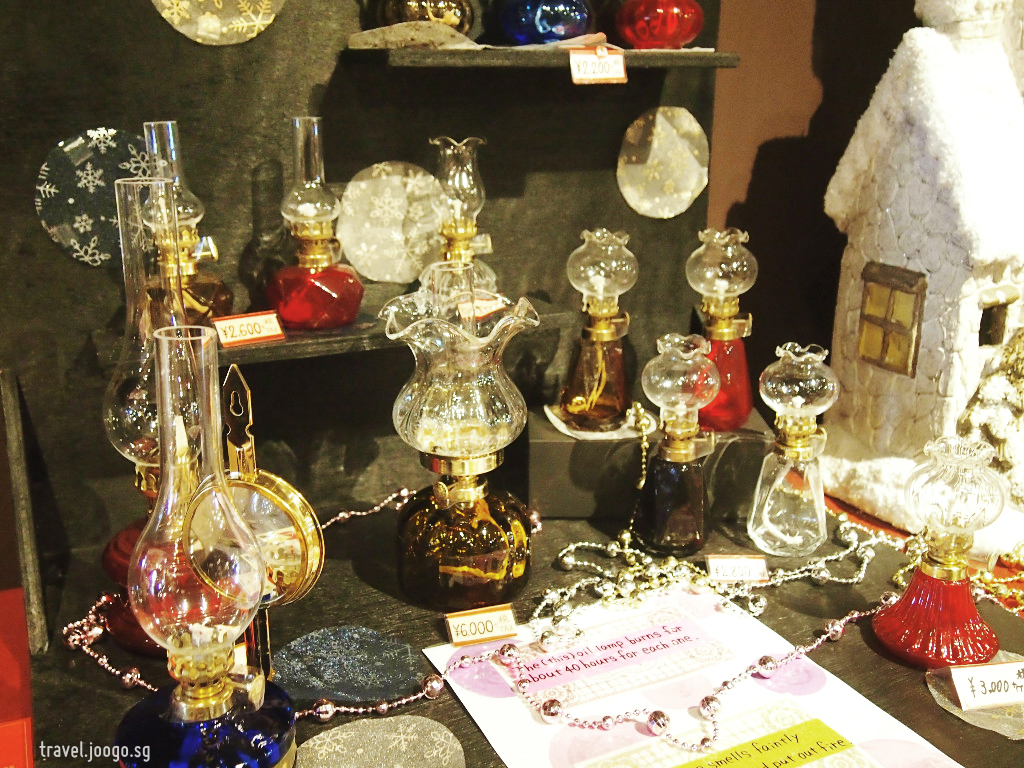
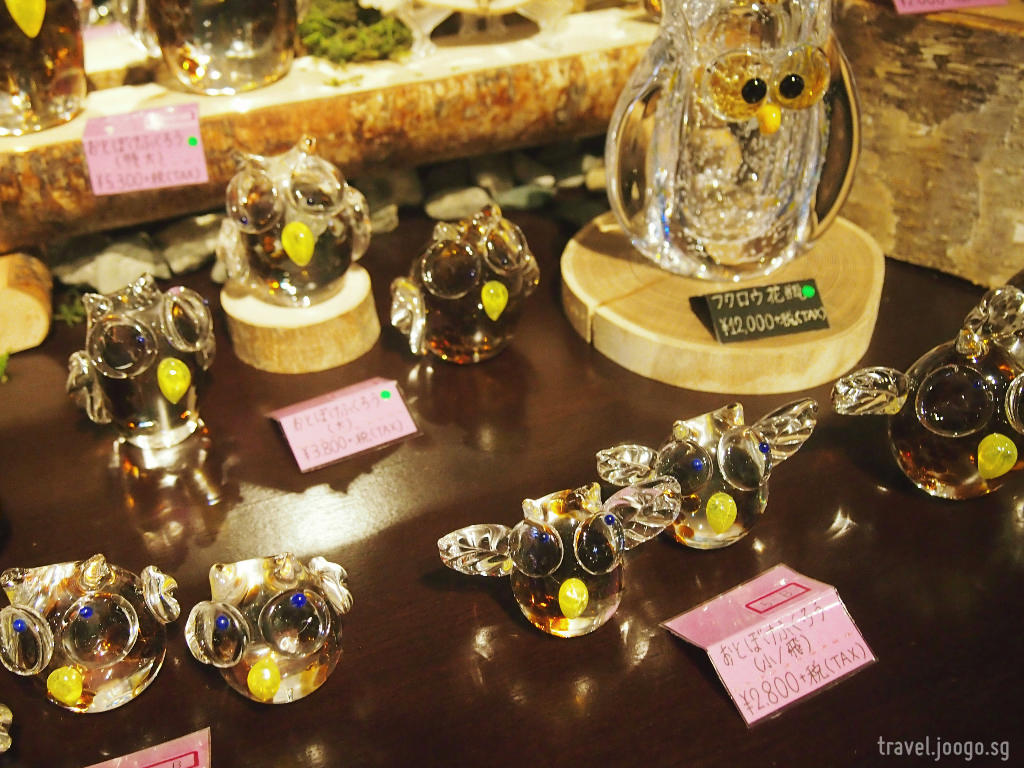
Kitaichi Glass Otaru 6 - travel.joogo.sg

Other than the desserts and music boxes, you can also find beautiful glassware in Otaru. Kitaichi Glass (“Kitaichi”) with a century-long history is the most famous and oldest place in Otaru to discover this glassy treasure. Kitaichi is the pioneer of Otaru glass when it began in 1901 with the manufacturing of kerosene oil lamps before electricity and then later produced glass buoys for Otaru’s booming herring fishery during the Meiji and Taisho eras.

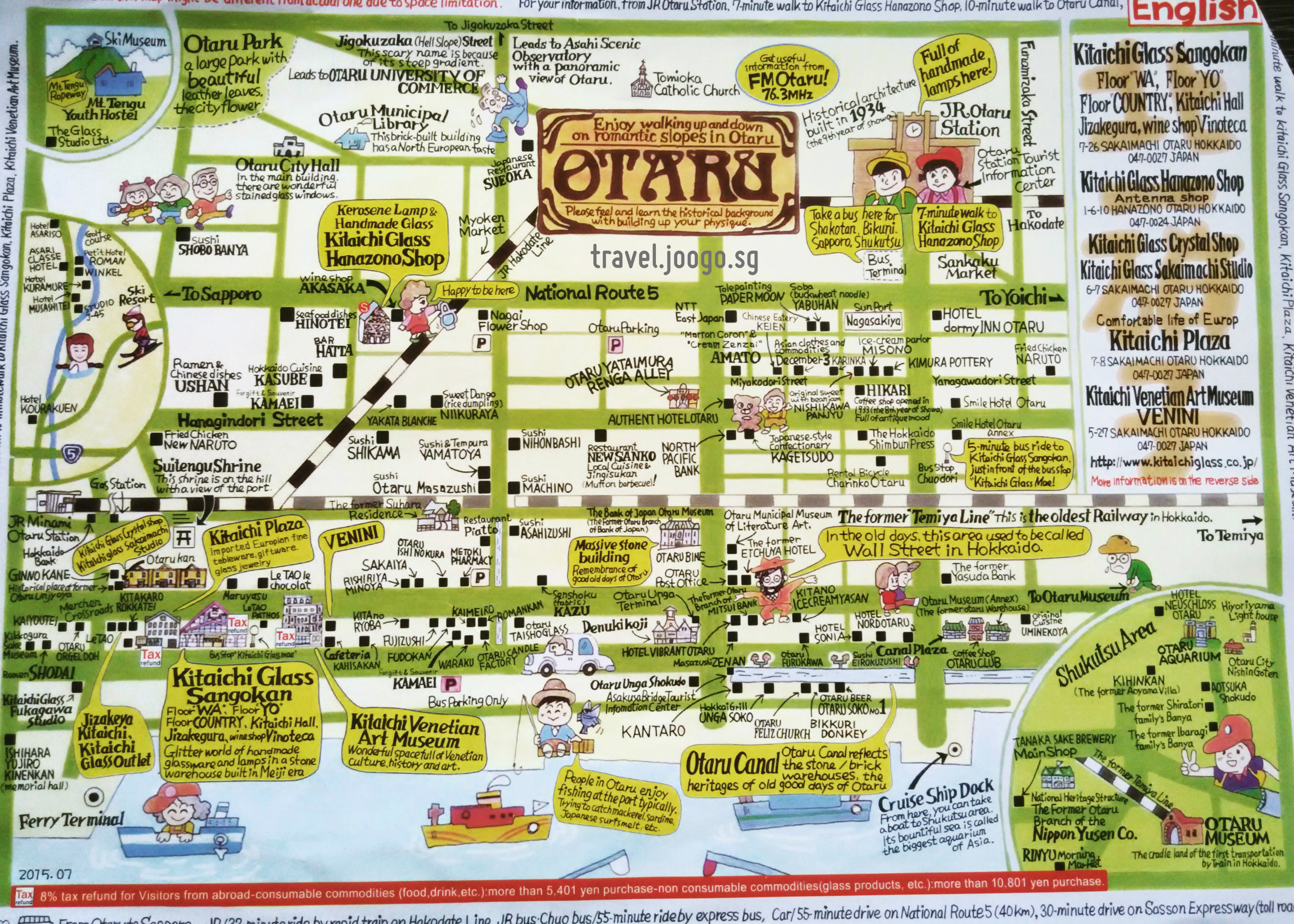
You can find some of Kitaichi’s shops, workshop and classes around within walking distance along Sakaimachi Street. Use this map to locate them. Zoom in at this high resolution map.

Otaru Map - travel.joogo.sg


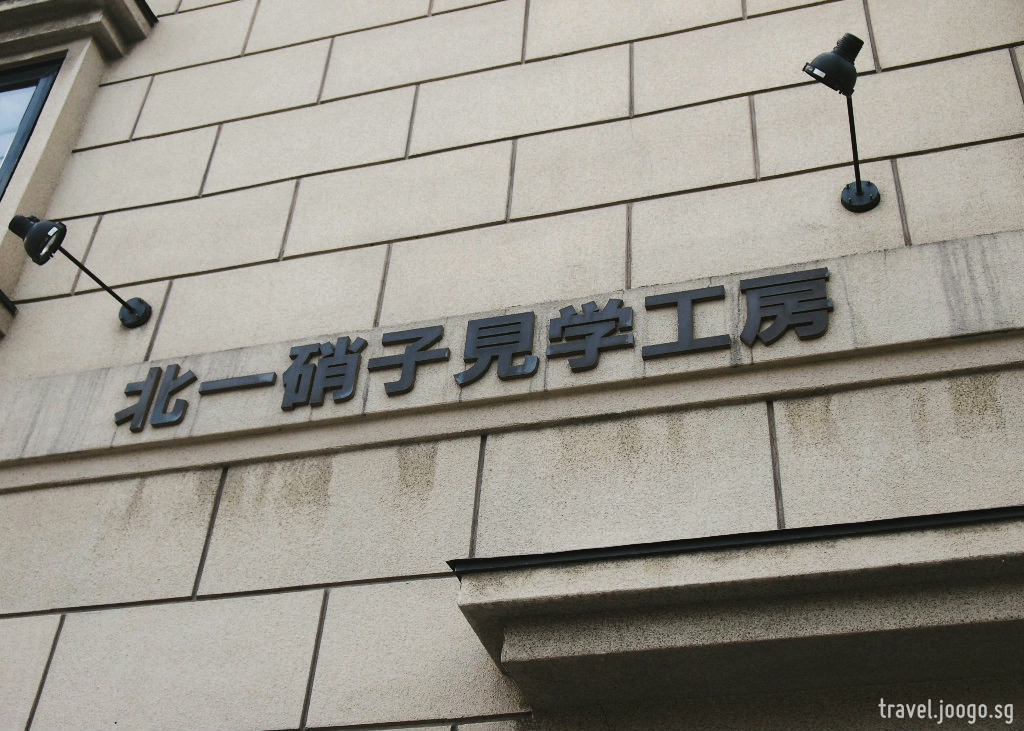
Kitaichi Glass Sangokan (Emporium No.3) (北一硝子三号館)


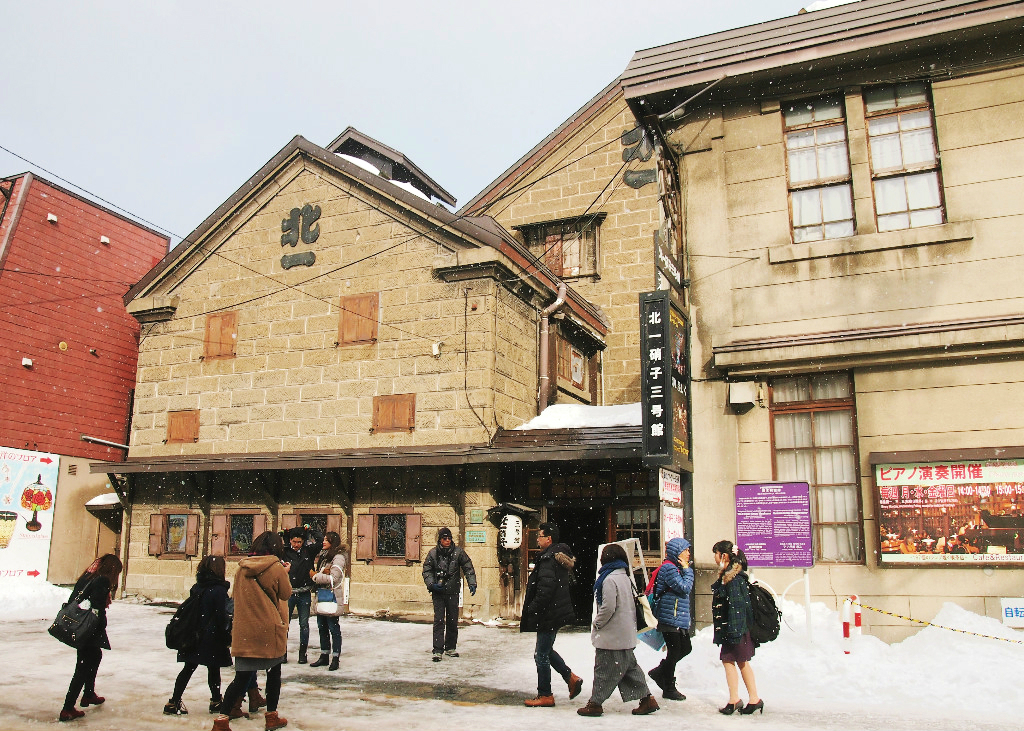
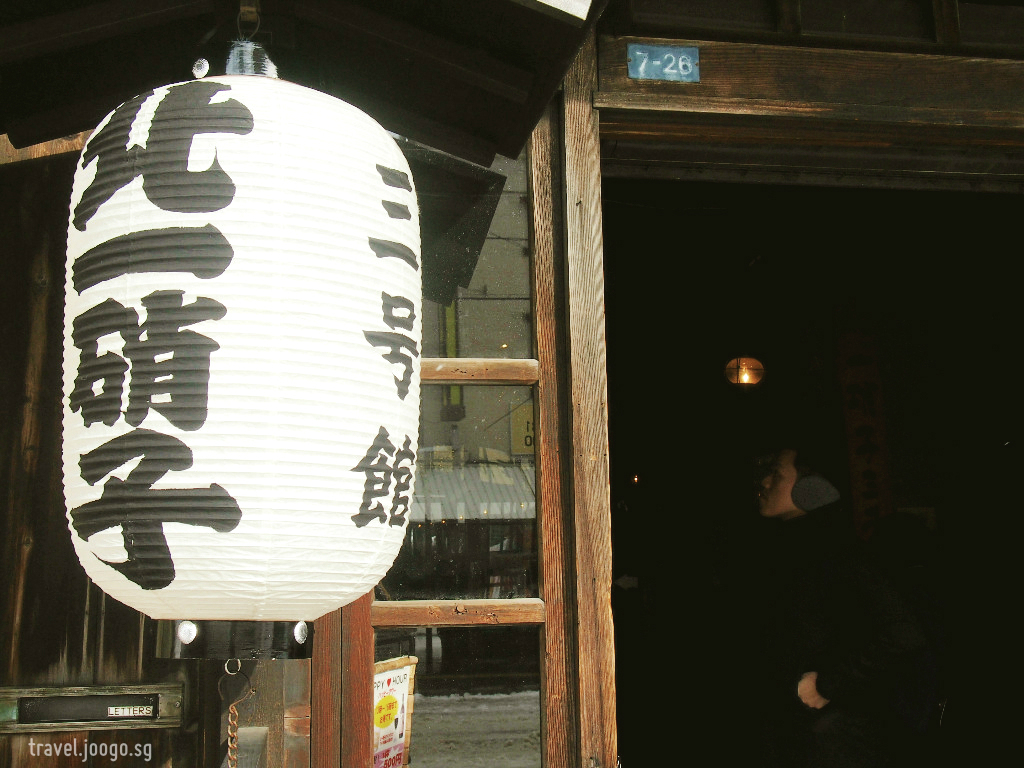
Among all its shops, Kitaichi Glass Sangokan (literally the third house 三号馆)(“Sangokan”) best represents Kitaichi Glass, you can probably consider it to be the headquarters. Sangokan is housed in a stone warehouse with timber frames that was built in 1891 when Otaru was a prospering commercial seaport.

Kitaichi Glass Otaru 2 - travel.joogo.sg

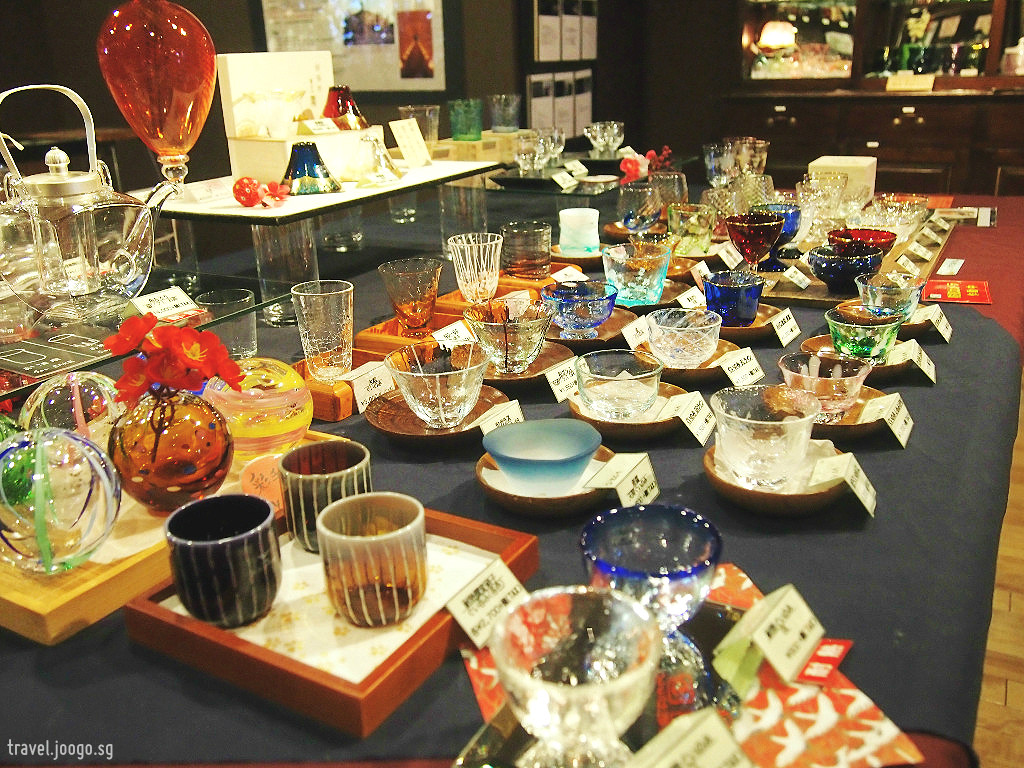
You can find a variety of glassware at Sangokan: dinnerware (plates, bowls, cups, etc), vases, accessories, decorations, stained glass lamps… there are easily thousands of high quality products made by skilled craftsman on display. Needless to say, prices are generally on the high side, even though I heard of Singaporeans flying to Otaru annually to get their glassware.

Sangokan has three floors — YO, WA and COUNTRY. At YO, you’ll find Western inspired products. At WA, there are traditional Japanese styled products. Lastly at COUNTRY, bring home homely products based on Japan’s tradition.

Kitaichi Glass Otaru 3 - travel.joogo.sg

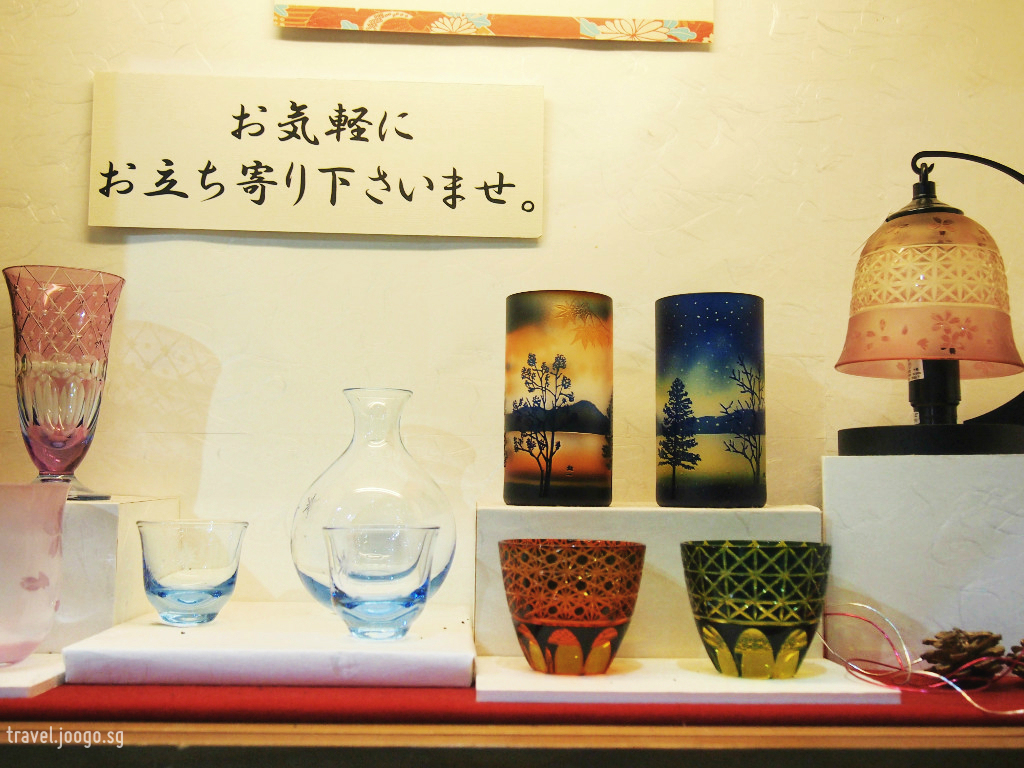
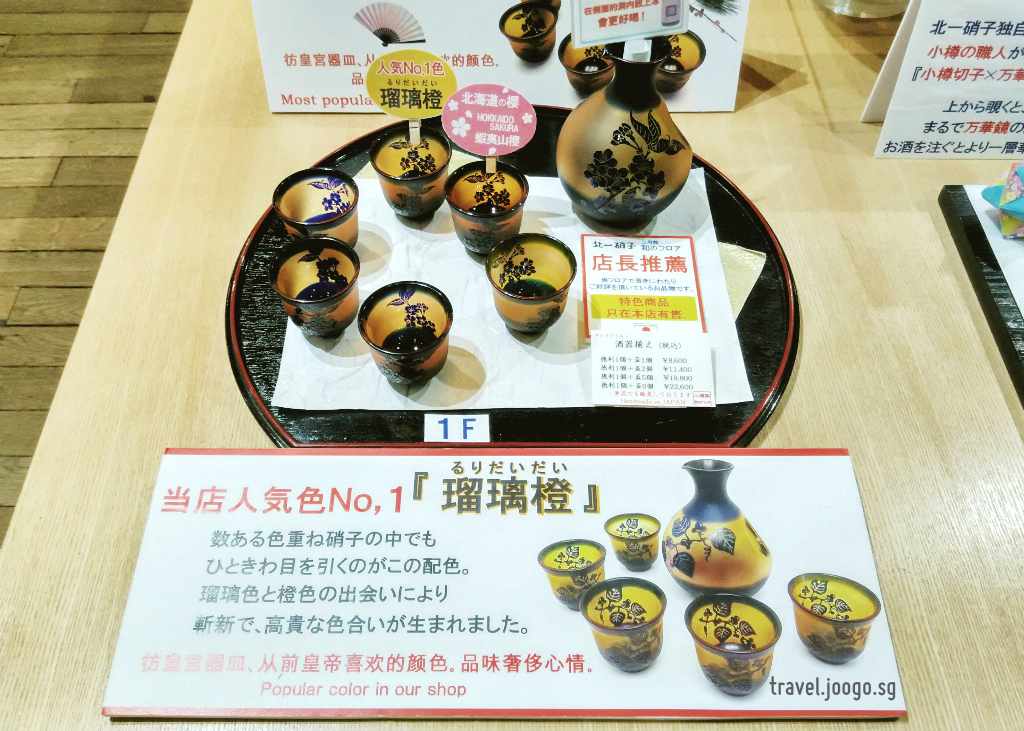
I like the two sets of glassware shown in the following two photos. One is a set of coloured printed glasses and another is a set of sake pot and glasses. They look so much better in real life!

The set of glasses with printed trees is inspired by the four seasons, with only autumn of orange and winter of blue in my photo. I wanted to take a photo of the complete set, but no photos were actually allowed. I loved them so much that I couldn’t help but sneak a photo. If I didn’t remember wrongly, these designs were limited for a period, and they had new designs coming up.

Kitaichi Glass Otaru 7 - travel.joogo.sg

Shop Info:

  • www.kitaichiglass.co.jp
  • 8:45 am – 6:00 pm
  • 7-26 SakaiMachi Otaru, Hokkaido, 047-0027 (北一硝子三号館)(In the same building as Kitaichi Hall)
    30 mins walk from JR Otaru; 10 mins walk from JR Minami Otaru

Kitaichi Glass Otaru 5 - travel.joogo.sg


Kitaichi Hall


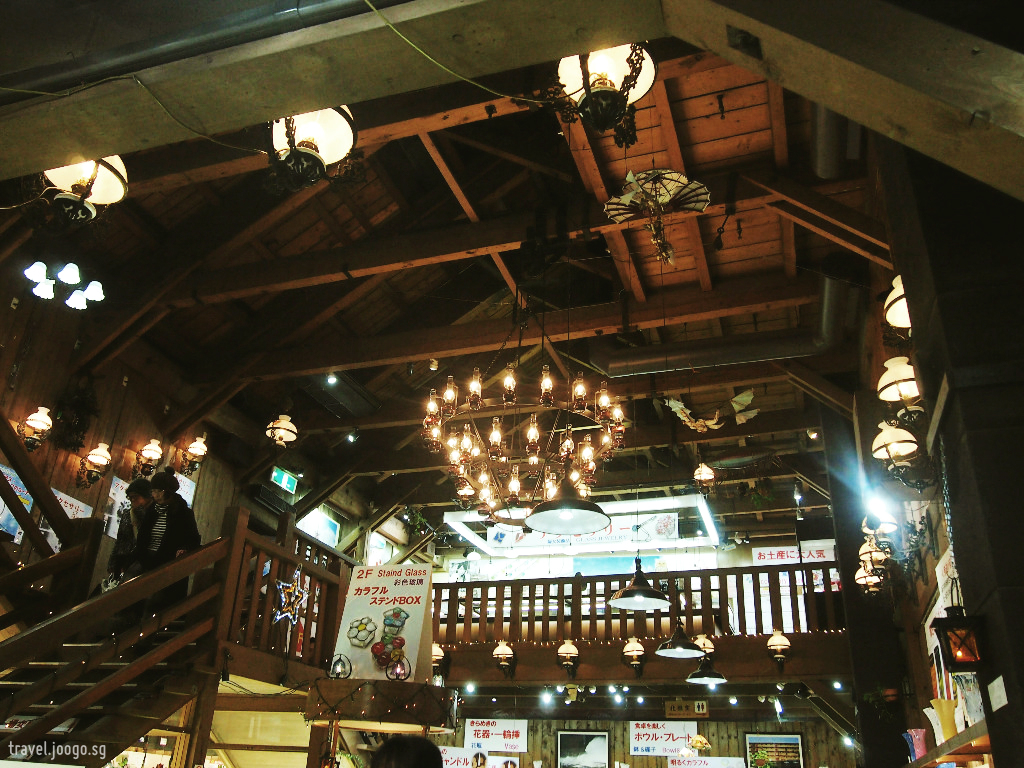
Hungry after shopping? In the same building as Sangokan, Kitaichi Hall (“Hall”) is a café with a warm and romantic ambience for you to sit in and relax. 167 oil lamps softly illuminate the whole Hall as they stand on the tables, hang along the walls and up in the ceiling chandeliers.

If you are there early when the Hall opens at 8:45am, you get to see the staff light up the lamps and lift the chandeliers up into their places. Do note that these lamps emit a peculiar and nostalgic smell from the oil burning. Before lifting the chandeliers up, tourists are allowed to come near the chandeliers and see them close up. The chandeliers will sway side to side as they are lifted slowly up a distance. :)

Kitaichi Hall - travel.joogo.sg

After the lighting ceremony, enjoy a cup of coffee or have your breakfast. Or if you are crazy enough, or have an appetite sizable enough, or a travel group big enough, try their desserts in plus size!

Their jumbo cream puff is about 15 cm in diameter! If that’s not enough for you, they serve a 6-flavoured soft ice cream layering one above another. And if that’s not enough, there’s a 12-layered soft serve during the winter season! But based on online reviews, you better save your stomach for better cream puff and ice cream around Otaru.

Kitaichi Glass Otaru 8 - travel.joogo.sg

Photo Taken in Sangokan

Shop Info:

  • www.kitaichiglass.co.jp
  • 8:45am – 6:00 pm
  • 7-26 SakaiMachi Otaru, Hokkaido, 047-0027 (In the same building as Sangokan)

Kitaichi Venetian Art Museum


Kitaichi Venetian Art Museum showcases the lifestyle and culture of Venice with its imported art pieces from Venice. There are approximately 3000 pieces of glass art and traditional furniture for you to admire. This museum was opened in 1988 and now has a costume photo studio on the 2nd floor and a cafe on the top floor (5th floor). Get to enjoy Italian beer and the ocean view of Otaru at its cafe. You can access the cafe without having to pay the museum entrance fee of  ¥700.

Museum Info:

  • www.venezia-museum.or.jp/index.html
  • Entrance: ¥700 (S$8.80)
  • Museum: 8:45 am – 6:00 pm
    Cafe: 9:30 am – 5:00 pm (last order 4:30 pm)
  • 5-27 Sakaimachi, Otaru, Hokkaido 047-0027

Kitaichi Glass Studio


Kitachi Glass Studio - travel.joogo.sg

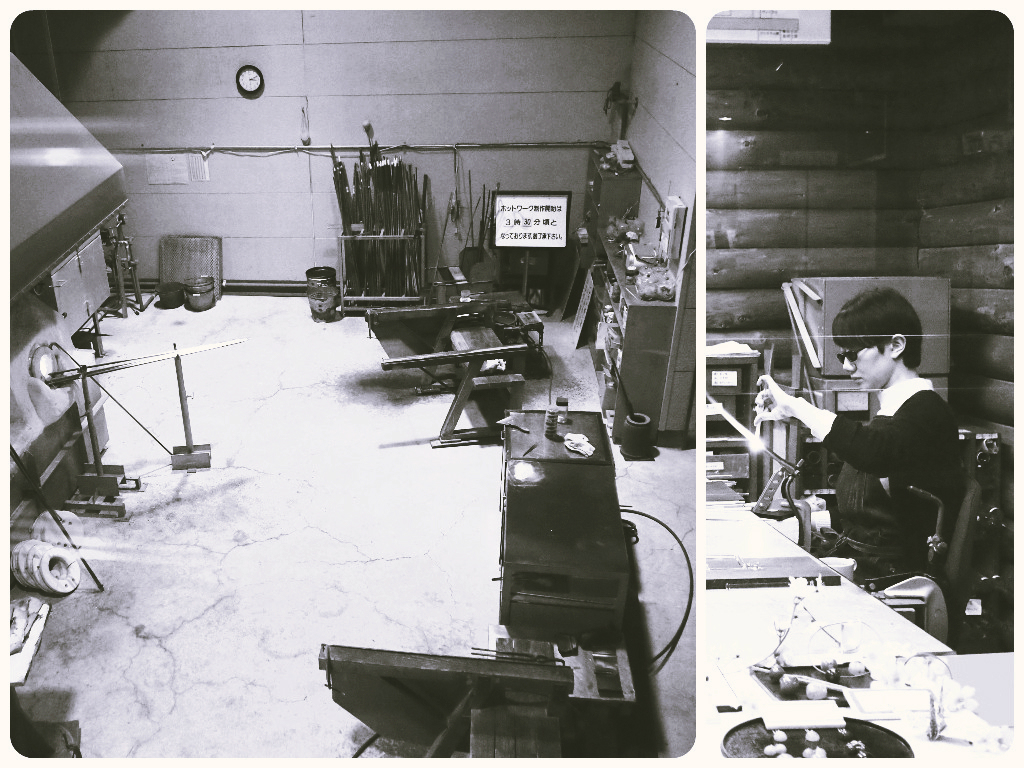
After seeing so many beautiful glass pieces, are you curious about how they were being made? Want to see highly skilled glass craftsmen at work?

At Kitaichi Glass Sakaimachi Studio, you can observe the glass making processes – glassblowing and lampworking. Glassblowing inflates molten glass into a bubble with a blowpipe while lampworking uses a torch or lamp to melt the glass and then tools and hands to shape the molten glass.

Kitaichi Glass Otaru 1 - travel.joogo.sg

Shop Info:


Kitaichi Glass Outlet


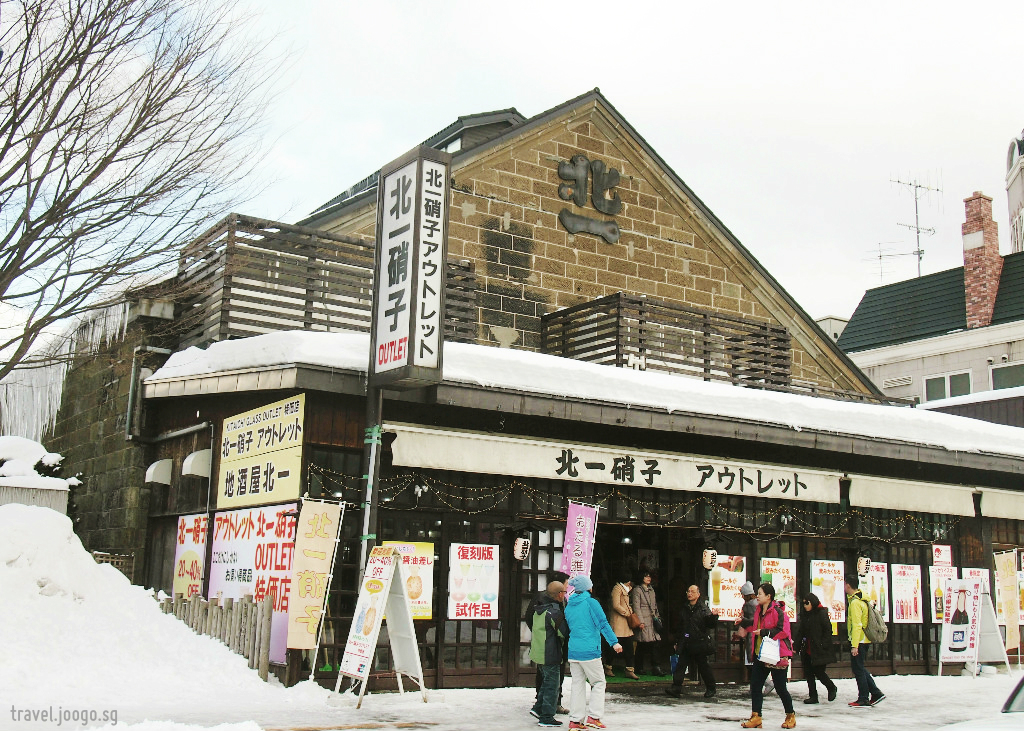
If you can’t afford the branded goods in Sangokan, there’s always an outlet store! The products sold here are discounted for reasons such as to clear stock for out of season products, for products of cancelled productions (because they’re improving on the design and reproducing based on customer feedback) and for products that did not meet the inspection criteria of fine precision and quality.

Other than glassware, there’s also a range of Japanese alcohol you can get, from the affordable to the expensive ones. As in Japanese style, most of the bottles come in pretty packaging! I was contemplating whether to buy a bottle of plum wine, but decided against carrying a glass bottle to Tokyo in our 2nd leg. Regretted it!

Kitachi Glass Outlet - travel.joogo.sg

Shop Info:


Glass Making Experience (Kitaichi Hanazono)


Other than making a music box, here’s another hands on experience! Experience glass making with Kitaichi Glass, such as making a blown-glass piece with a blowpipe or a small ornament from rods in a flame.

Sandblast Glass

Sandblast is a technique of engraving glasses by a jet of sand using compressed air. See website for the photos of the sandblast process and products.

“raku‐raku” course

  • Duration: 1.5 hr (timing: 10:30 am – 4:30 pm)
  • Selection: From limited glass selection; max 3 design sheets
  • Cost: ¥900 (experience fee), ¥1,350+ (for product)
  • Recommended for those who don’t have much time.

“okonomi” course

  • Duration: 2 hours (timing: 10:30 am – 4:30 pm)
  • Selection: Any glass with smooth surface in the shop; unlimited design sheet; any lettering
  • Cost: ¥1,300 (experience fee), ¥1,350+ (for product)
  • Recommended for those who want to have a highly original glass design.

Kitaichi Glass Otaru 4 - travel.joogo.sg

Dragonfly ball arrangement experience

See website for the photos of the products made from the following courses.

“Mobile Strap” course (ストラップコース)

  • ¥200 (experience fee); additional ¥770 (for product)
  • ~15 minutes

“Hair Rubber Band” course (ヘアゴムコース)

  • ¥100 (experience fee); additional ¥370 (for product)
  • ~10 minutes

“Necklace Pendant” course (ペンダントコース)

  • ¥100 (experience fee); additional ¥730 (for product)
  • ~10 minutes

Reservations

You can make reservations for the above courses with Kitaichi Hanazono store by phone (0134) -33-1991, by fax (0134) -29-0691 or by email [email protected].

Let them know your desired date and time, the number of people, the course name (“raku-raku”, “okonomi”, ペンダントコース, etc) and your name. They will confirm your reservation on the spot or the next day.

Shop Info (Hanazono Store):

Have fun among the glassware! :) If you are looking for more places to go in Otaru, wait for our upcoming post: “Things to Do in Otaru“.

Do you have other suggestions of where to go in Otaru? Tell us below or on our Facebook Page or Instagram. Bookmark this page >> Overview Itinerary: Hokkaido and Tokyo (Winter/Spring 2016)

Otaru Music Box Museum (Hokkaido, Japan)

Otaru Music Box Museum (Hokkaido, Japan)

Other than the desserts and exquisite glassware, you can also find beautiful music boxes in Otaru. Otaru Music Box Museum is a must go place if you ever visit Otaru. Also, under the same umbrella of Orgel Doh Group, there are a few other places related to music box. 

What to Eat in Otaru? | Desserts Edition

What to Eat in Otaru? | Desserts Edition

As mentioned in my previous post of what to eat in Otaru, we stayed for a night at Dormy Inn Premium Otaru because we were making our way to Sapporo from Niseko. Hence we were able to start our day early at Sankaku Fish Market before the Sapporo crowd arrived. Yeap, most people come to Otaru