Tag: East Asia

Nagasaki Glover Garden and Oura Church

Nagasaki Glover Garden and Oura Church

About Nagasaki Glover Garden and Oura Church Glover Garden Glover Garden (グラバー園, Glover-en) is located on the hill where Western merchants settled down after the end of Japanese government’s Seclusion Policy in 1853. It is a large sprawling garden which houses the Former Glover Residence 

5 Foods to Eat in Nagasaki

5 Foods to Eat in Nagasaki

With a baby, there are more considerations in choosing a place to eat. Food can be good, but the baby doesn’t have the patience for very long queues. And a cramped restaurant meant space was hard to come by for a baby chair. Nevertheless, it 

Nagasaki Atomic Bomb Museum and Peace Park

Nagasaki Atomic Bomb Museum and Peace Park

An elderly man sat diagonally opposite of me. Two girls in uniform stood near the door of the tram. They were talking in low voices in their beautiful Japanese language, without any cares in the world. I looked at my hubby opposite of me and wrapped my arms around our baby. My heart was jumbled with mixed emotions. We were on our way to Nagasaki Atomic Bomb Museum and Peace Park.

Nagasaki Peace Park - travel.joogostyle.com

This day was like any other day, like the day when the atomic bomb dropped on Nagasaki. Who could have expected it? It was a horrific event, but a part of me was grateful it happened to stop the world war. Otherwise, how long more should my ancestors suffer? Moreover, what’s one day of destruction compared to three and more years of suffering?

Yet a trip to the museum made me understand the brutality of atomic bomb. The catastrophic effect and after effect of a nuclear weapon. Apparently the war was soon coming to an end, this bomb just accelerated it by a bit. We never know what really went on behind the scene. Nevertheless, tragic history has been written.


Nagasaki Atomic Bomb Museum
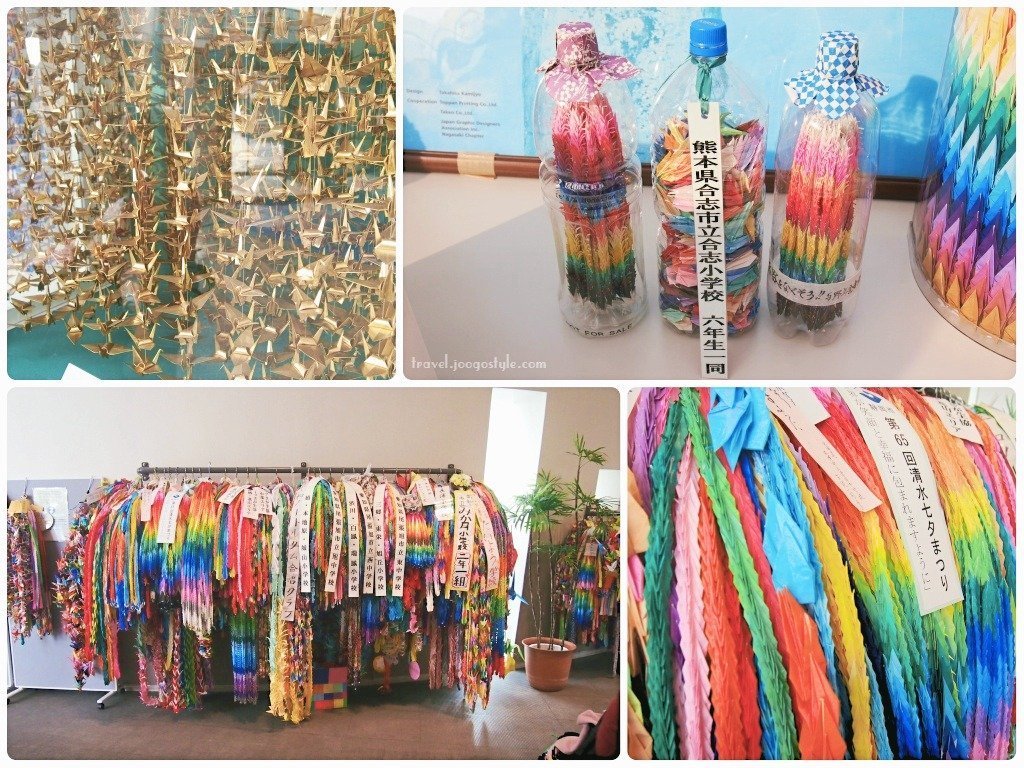

Atomic Bomb Museum Cranes - travel.joogostyle.com

Entrance

It was not easy to find Nagasaki Atomic Bomb Museum (“museum”), which was near to Ground Zero. We climbed up a slope, took a lift, and walked a distance. From where we were coming from, we could not find any obvious signboard to direct us to the museum. We almost went to the wrong building, Nagasaki City Peace Hall, which was next to the museum.

From the cold, we stepped into the museum and warm air enveloped us. “Is this the place?” Hubby and I asked in unison. Streams of colourful thousands origami paper cranes (千羽鶴 Senbazuru) welcomed us. As we walked nearer to admire them, we found art pieces of minature cranes in bottles, and cranes of special materials, such gold plated ones, encased.
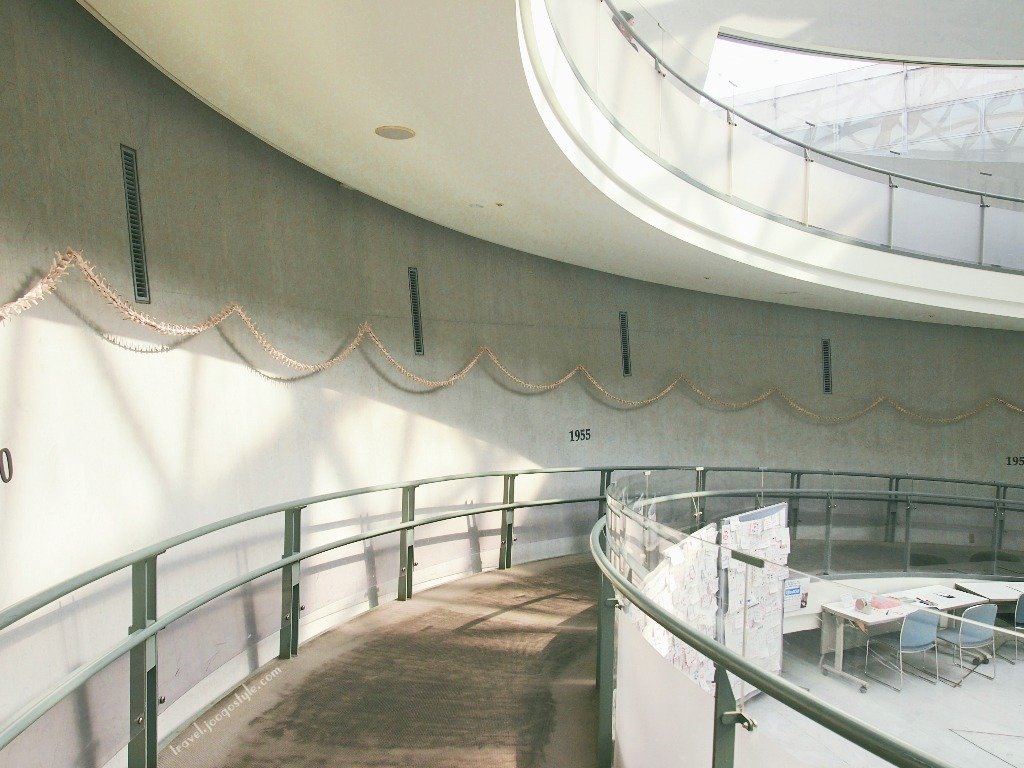
Atomic Bomb Museum Walkway - travel.joogostyle.com

A staff kindly pointed us to walk down a spiral to the ticketing booth and the exhibit entrance. We circled down as the years mounted on the wall decrease every 5 years, from present age to 1960 to 1950 to 1945, the fateful year.

A quick history lesson from Wikipedia, “During World War II, the United States detonated two nuclear weapons over the Japanese cities of Hiroshima and Nagasaki on August 6 and 9, 1945, respectively. This was after obtaining the consent of the United Kingdom, as required by the Quebec Agreement. The two bombings killed at least 129,000 people, most of whom were civilians. They remain the only use of nuclear weapons in the history of warfare.”

Atomic Bomb Museum Time - travel.joogostyle.com

Stepping In

The fateful time, 11:02 am. Students were in school, adults at work, and streets full of life. Light flashed and heat engulfed the city. It was as if the sun had fallen from the sky. In a blink, the city fell into darkness. Mr Hirotami Yamada, a survivor recalled the scene. When light returned, the city and people were charred. And for those who seemed to escape unscathed, they were not spared – most died or suffered from the radioactive effects thereafter. In a moment, lives were forever changed.

Atomic Bomb Museum - travel.joogostyle.com

What to Expect in the Museum

As we saw photos of how Nagasaki was before the atomic bombing, the next step brought us into a recreated scene of the disaster. Real remnants from the destruction were displayed. Charred cooking utensils, a school girl’s lunch box and melted glass bottles stuck together at the top. The reality of innocent lives taken away in such catastrophic disaster sank in.

It was a sombre place. As we journeyed on, we read about events leading up to the dropping of the atomic bomb. Real life accounts of eye witnesses and survivors were especially piercing to the heart. We could also read poignant poems, songs and letters that were penned to commemorate the tragic event.
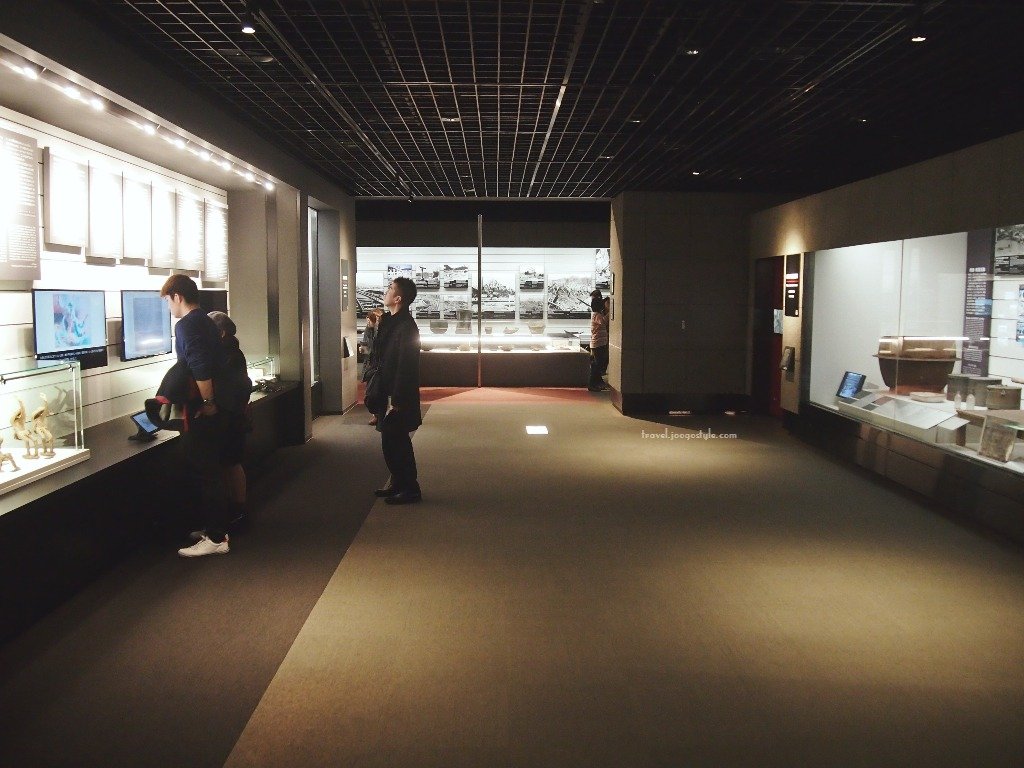
Atomic Bomb Museum - travel.joogostyle.com

The earth still continues to spin. Life still has to go on. We moved on to read about Nagasaki’s road to recovery, with the reconstruction of the city to present day. On the other hand, history of nuclear weapons development were rehashed, in hope that it will not continue and the world be peaceful and free of nuclear weapons.

I had wanted to absorb all the information and walk all the grounds. However with a baby, I could only browse through and peeked a little into the past. I guess this is better than not even grasping the tip of the iceberg.

Atomic Bomb Museum 2 - travel.joogostyle.com

Useful Information


Nagasaki Peace Park


Monuments

Nagasaki Peace Park - travel.joogostyle.com

The walk from the atomic bomb museum to Nagasaki Peace Park (“Peace Park”) is about 10 minutes. The route is not so straightforward, so you might want to ask the museum staff for directions or have them suggest a route to explore the park. The peace park covers a large area. I didn’t even know we missed out a few monuments until I started this post.

Nagasaki Peace Park - travel.joogostyle.com

For example, we missed the big Peace Statue situated near to the museum. Every year on 9th of August, a memorial service is held in front of this statue. It is a green man with “raised right hand pointing to the sky depicts the threat of the atomic bomb, and the left hand stretching horizontally symbolises eternal world peace, while the slightly closed eyes express a prayer asking that the souls of the victims may find rest.” (quoted from visit-nagasaki.com).

Moreover, there’s an interesting display along the river. A window is cut across the river bank to show the actual rubble from the blast. We didn’t see it because I think that part of the river was under construction while we were there.

Nagasaki Peace Park - travel.joogostyle.com

At the park, you can find many symbols of Peace monuments donated from around the world. As we journeyed from the museum to ground zero, across a long stretch of red bricks flooring, we noticed a heartrending monument: a mother is carrying her dead baby, and the date and time of the tragic event was etched on the base – 1945.8.9, 11:02AM.

Ground Zero
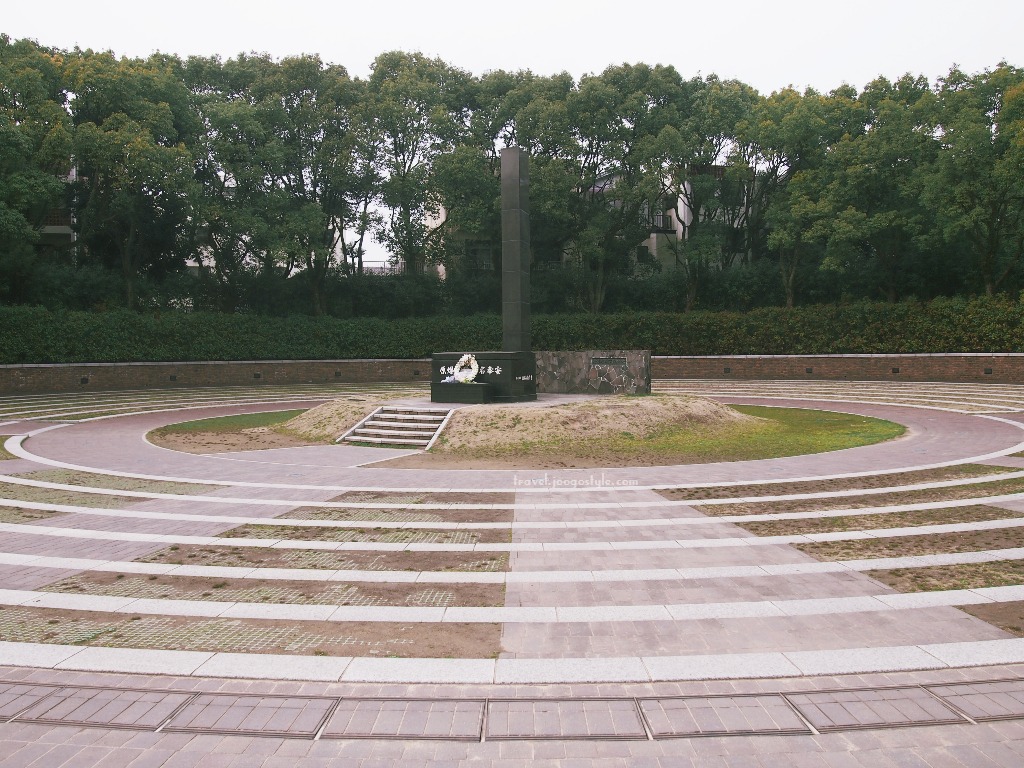
Nagasaki Peace Park - travel.joogostyle.com

The Peace Park was built at the heart of the atomic bomb explosion. A cenotaph is built upon the center of the atomic bomb’s destructive force. Ground Zero. It is at the center of concentric circles, which are likely made to illustrate the radiating effects of the impact.

It was said that grass and trees would not grow on this spot for 75 years after the explosion. However, this park is currently vibrant with plant life.

Near Ground Zero: Urakami Cathedral

Beside Ground Zero, structural remains of Urakami Cathedral stood in place. It is the actual remnants from the explosion. Urakami Cathedral was the grandest church in East Asia at that time, and now, only a beam remains.
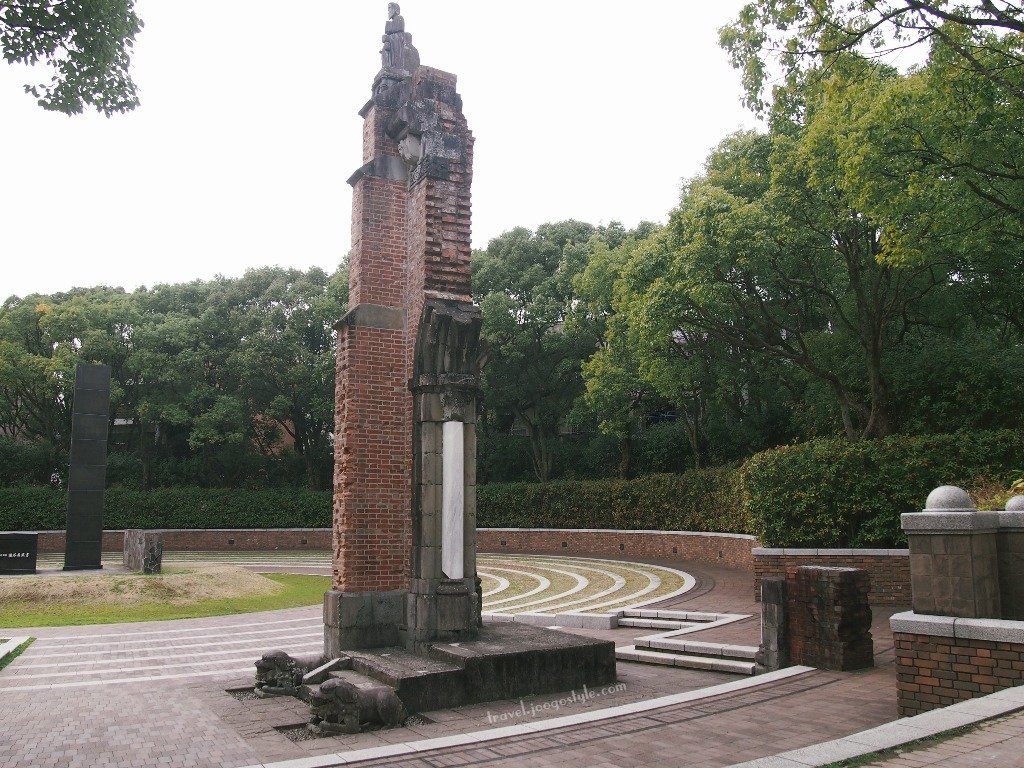
Nagasaki Peace Park - travel.joogostyle.com

Useful Information

  • Address: Matsuyama-machi, Nagasak city, Nagasaki prefecture, 〒852-8118
  • Access:
    • 4 minutes’ walk from Matsuyamamachi Streetcar stop, Denki no. 1 (One day pass 500 yen; Single trip 120 yen).
    • 15 minutes’ ride from JR Nagasaki station mae Streetcar stop)
    • Parking Available

Food: Horaiken Bekkan (Near Museum)


After a heavy-hearted tour, let’s lift our spirit with some food! It’s dinner time for us by the time we were done.
Nagasaki Peace Park - travel.joogostyle.com

Horaiken Bekkan, which offers Chinese cuisine, is near to Nagasaki Atomic Bomb Museum and Peace Park. A plausible option if you are looking to settle your lunch nearby and continue exploring the area. A good option if you want to try Nagasaki Champon. It’s like a Japanese udon cooked in Chinese style.

The Champon starts from 900 yen (S$11). Note that there might be a queue before Horaiken opens. Sadly, we had to skip this restaurant. We were rushing to catch the shuttle bus to Mt Inasa and we could not find the restaurant.

When we finally found the restaurant on our way to the tram/streetcar station, a steep flight of stairs faced us. With a baby, a stroller and tonnes of tiredness, we decided it’s too tiring and time consuming to conquer the stairs. Thus we gave Horaiken a miss. But I still managed to detour and try Champon on our drive to Kumamoto!

Useful Information

  • Website: horaiken-bekkan.jp
  • Address: 5-23 Hiranomachi, Nagasaki 852-8117, Nagasaki Prefecture
  • Tel: +81 95-846-2277
  • Operating Hours:
    • Mon-Sun, 11:00AM-3:30PM (LO 3pm) / 5:00PM – 9:00PM (LO 8:30pm)
    • Closed: 2nd and 4th Tuesday of every month (excluding 1, 3, 8, December)

To travel from Fukuoka Airport to Nagasaki, check out our “Airport Transfer Guide”.

Self-Drive in Japan: Kyushu Road Trip (Winter)

Self-Drive in Japan: Kyushu Road Trip (Winter)

You would have picked up bits and pieces of our Kyushu road trip experience in my previous articles: ‘Overview Northern Kyushu Itinerary‘, ‘Travelling with an infant‘, and ‘Fukuoka Airport to Nagasaki‘. We took a highway bus from Fukuoka airport to Nagasaki and travelled around Nagasaki 

Airport Transfer: How to get from Fukuoka Airport to Nagasaki?

Airport Transfer: How to get from Fukuoka Airport to Nagasaki?

We took a red eye flight from Singapore to Fukuoka with Singapore Airlines. When we arrived, we went straight from Fukuoka airport to Nagasaki. We travelled from 21 February to 1 March 2018. Here are a few options we considered for travelling from Fukuoka (International) 

General Guide: How to Dress Baby for Winter

General Guide: How to Dress Baby for Winter

It’s hard to travel light when you have a baby, unless you are a very chill parent, or you can afford to buy most things at your destination. To add to the load, travelling during winter meant more things to pack into the luggage.

This post is based on our 9 days of winter holiday, where we had 7 full days in Northern Kyushu, Japan. The temperatures were hovering from 0 to 15 degrees. Baby EG was only around 8 months old then. You can take a look at our itinerary.

travel.joogostyle.com - layering for an infant 4

Layering is the best way to dress for winter. It’s generally recommended to wear 3 layers: thermal wear for wicking, a sweater for insulating and a jacket for protection from weather elements. As for baby EG, we added one more layer. Scroll on to see her layers, inside out.

1. Thermal Underwear

For the first layer, EG put on ultra-warm heattech for the top and bottom. You can also get other types of thermal underwear, e.g. long johns. Prepare at least two sets to rotate. Do wear the diapers well to avoid the thermal pants and other layers from getting poo-stained.

travel.joogostyle.com - layering for an infant 4

2. Long Sleeved Romper and Leggings

Then after donning the thermal innerwear, EG wore a long-sleeved baby romper and normal leggingsnot the thick leggings you see in the photo below. This outfit is the type she wears to air-conditioned places in Singapore.

We prepared pretty sets in case we needed to take away all her jackets indoors. In the end, we didn’t get to do that often, because we rarely took off the layer after this.

Hence, baby EG re-wore many of her clothes, since it’s not dirtied with sweat (protected by the thermal wear) or dirt (protected by the jacket).

travel.joogostyle.com - layering for an infant 4

3. Jacket & Leg Warmers (Winter Leggings)

We brought two woolen-like jackets for EG to interchange (photo below). Two is a good number since jackets will appear in most photos. With two, she wouldn’t seem to be wearing the same clothes throughout the trip.

EG didn’t wear this jacket layer for her airport fashion. Instead, she wore a fleece romper (long sleeves and pants) for this layer.

For bottoms, EG wore winter leggings or leg warmers. It’s again good to have two to rotate and one as a spare for a week-long trip. You might want to consider footed leggings, and not bring so many pairs of socks.

travel.joogostyle.com - layering for an infant 4

4. Puffer Jacket

The last layer to put on is the puffer jacket! It was worn when we headed outdoors and not in a baby carrier. A puffer jacket seems to be a good choice because of its water-resistant and windproof nature. This jacket works relatively well for EG, except for high altitudes with strong wind.

A hood is superb as extra protection, or as backup when the hat is in the hotel or nowhere to be found.

We preferred a colourful jacket because it looks better in the photos, and it’s easier for us to spot the jacket in case we lost it or forgot to wear it on her. More importantly, it’s easier for us to spot the baby, if for some reason we were apart.

We got ColdControl Lite bear puffer rainbow stripe from Gap during their US online sale, at US$36. This is already out of stock, so a similar one would be this puffer jacket. Shell and Filler: 100% polyester. EG’s jacket is sized for 18–24 months so that she can grow into it, but with all the layers, it felt quite fitting at 8 months old, except that the sleeves were long.

If you look carefully at this photo, you will notice the above-mentioned 4 layers! :)

Travelling with an infant for the first time - travel.joogostyle.com

5. Head, Hands, and Feet Protection

This 3-tier protection is important, from top to bottom: head, hands, and feet.

Head

To avoid losing heat through the head, wear a hat. We got a traditional winter hat for EG and when it got extra cold, we lifted the hood of the puffer jacket over the hat. We would also pull the hat low to cover her ears as much as possible instead of bringing ear muffs.

The neck is another important part to protect from the cold. It’s hard to find turtle necks for infants, and hence as an alternative, we got a woollen scarf for her. Since it’s not easy to swing it around her neck, we sometimes simply placed it across the exposed neck area while she was lying in her pram.

Hands

Gloves for the hands. We prepared two sets in case one gets dirtied, you never know where the hands of babies will go. We got bigger sizes for her to grow in and to cover the wrists. Cotton and nylon are terrific materials for gloves.

travel.joogostyle.com - How to Dress Baby for Winter

Feet

At 8 months old, baby EG wasn’t walking yet. So we didn’t put much thought into getting a good pair of walking shoes. Micro Fleece Pull-On Booties looked like a pair of well-insulated footwear for her.

However, the booties slipped off easily as her feet shuffled around at times. Moreover, her feet felt cold when we removed them as we stepped indoors. We should have worn wool socks on her for better protection.

We are going to head to another cold country end of this year. So I will update again on what it’s like to wear a 1+ year old toddler who’s already walking.

travel.joogostyle.com - layering for an infant 4

That’s how we wore our 8-month-old infant for winter. Do you have other suggestions or questions? Let me know in the comments below. :)

Before you go, you might want to check out my other baby travel tips: travel.joogostyle.com/tag/baby-travel.

Looking for more tips on travel, home, and baby? Subscribe to my mailing list and follow me on Instagram, Facebook, and YouTube! If you like what you read here, keep it going with small support. :)


Latest @ Instagram.


Disclaimer: JoogoStyle and Christina accept no liability (whether in tort or contract or otherwise) for any loss or damage arising from any use, misuse, inaccuracy or omission of the information or other contents published on this website.

Pack for Baby Travel (Winter)

Pack for Baby Travel (Winter)

I suppose you are planning a trip with your baby and that’s why you are here. Is it going to be the first time you are travelling with an infant? Then, read about my first travel experience with 8 month old baby during winter. If 

Travelling with an infant for the first time | Winter at 8 months old

Travelling with an infant for the first time | Winter at 8 months old

Many people told us to go on a holiday as a couple, notably a babymoon, as much as possible before the little one arrived. Glad we took the advice and went for a last-minute babymoon trip to Taiwan. Travelling with a baby is a different